
Dyes & Detergents Testing and Analysis
Xinbodi provides professional dyes and detergents analysis services to help manufacturers, brands, and R&D teams understand the chemical composition and formulation structure of complex products. Our analytical solutions include chemical composition analysis, formulation analysis, ingredient identification, and impurity investigation for dyes, pigments, detergents, and specialty chemical products.
We develop customized analytical workflows based on your sample type and project objective. By combining sample separation, instrumental characterization and technical interpretation, we help identify formulation components, compare supplier samples, investigate abnormal products and support product development
Dyes and Detergents Materials We Analyze
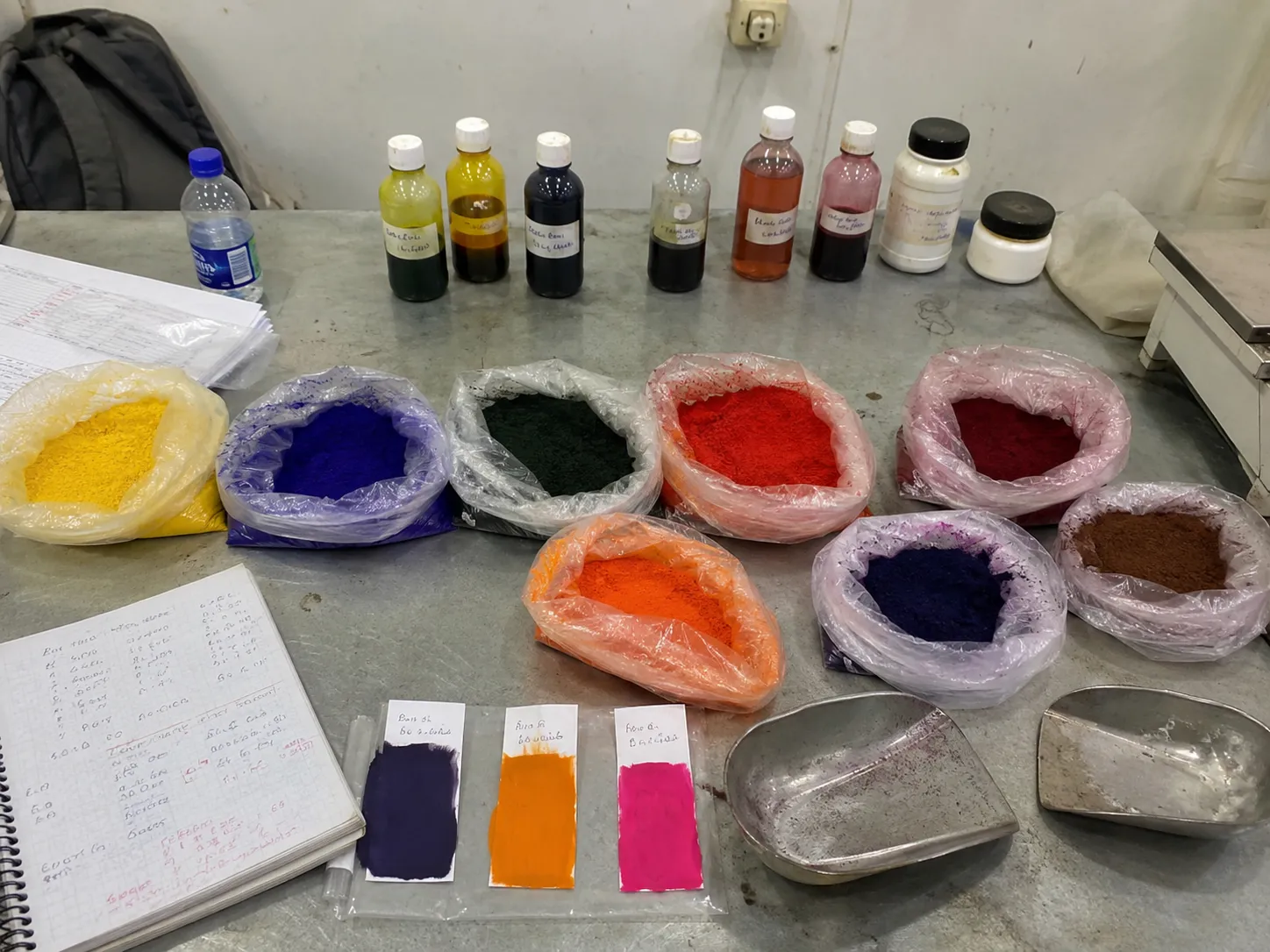
Dyes, Pigments & Colorants
Textile dyes, Organic pigments, Inorganic pigments, Pigment pastes, Colorant dispersions, Pigment dispersions, Dyeing auxiliaries, Leveling agents
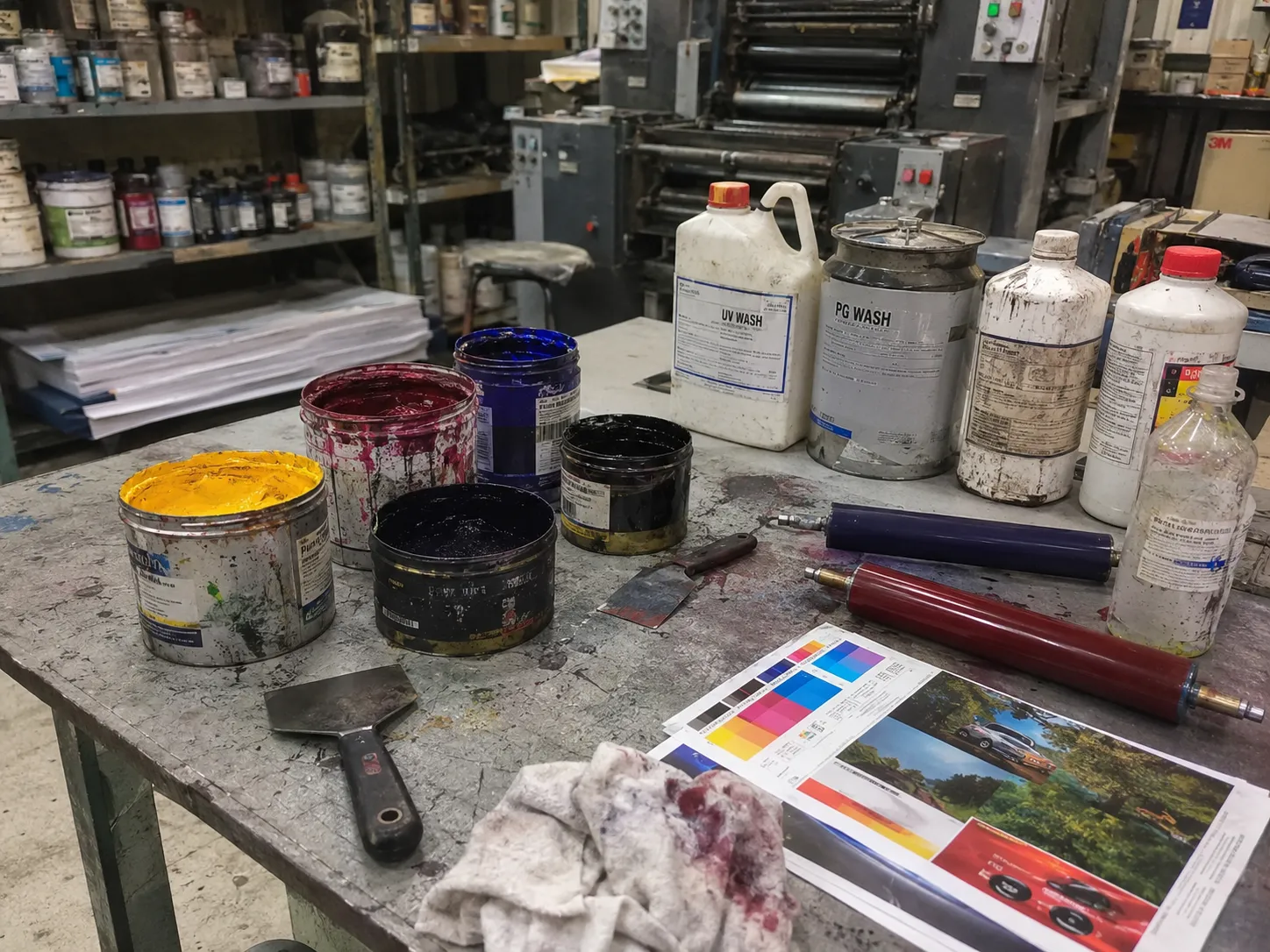
Printing Inks & Pressroom Chemicals
Water-based printing inks, Solvent-based, printing inks, UV-curable inks, Printing ink additives, Fountain solutions, Pigment dispersants, Printing press washes, Pressroom cleaning chemicals
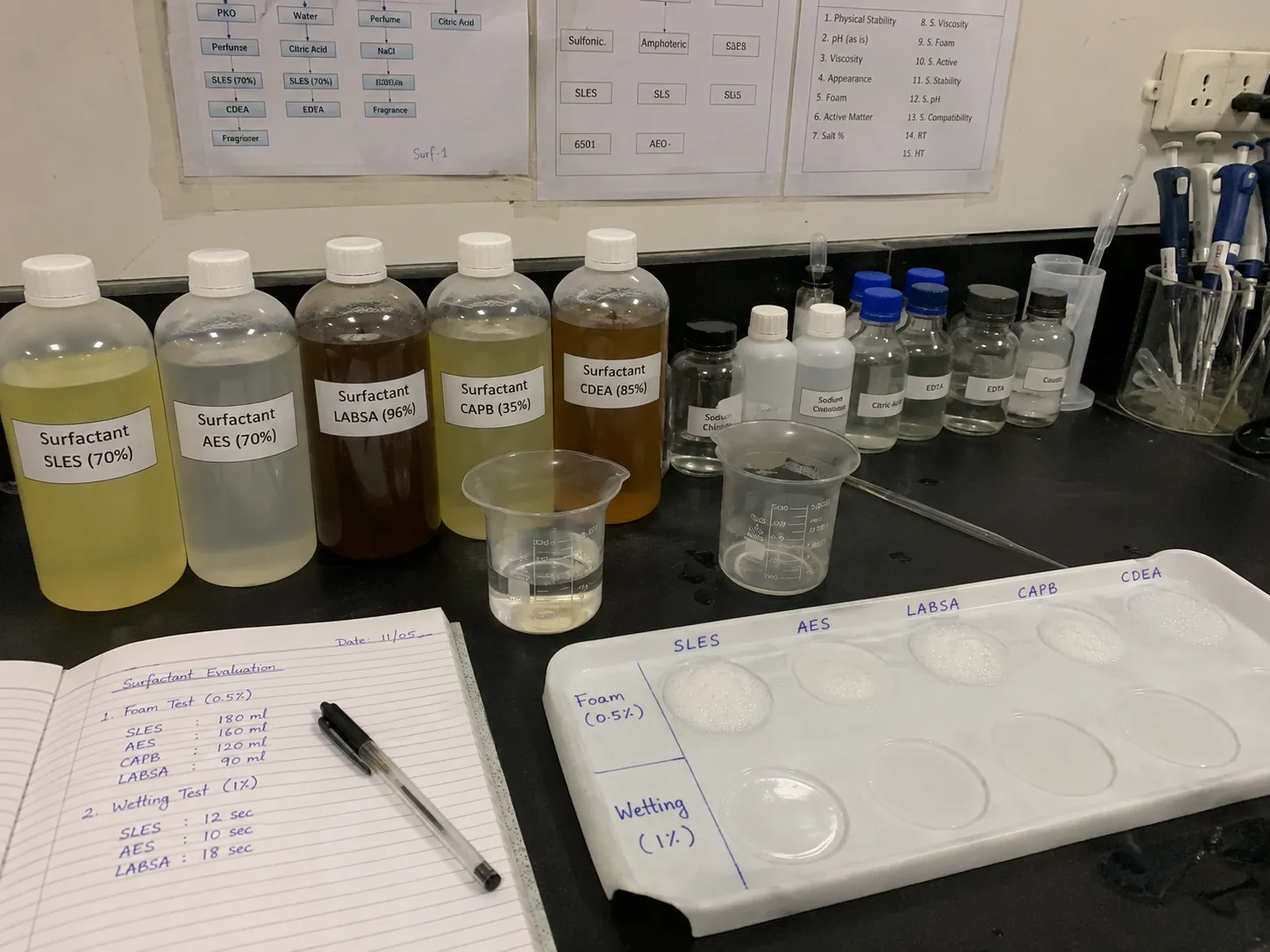
Surfactants & Functional Additives
Anionic surfactants, Nonionic surfactants, Cationic surfactants, Amphoteric surfactants, Emulsifiers, Wetting agents, Dispersing agents, Penetrating agents, Hydrotropes, Foam-control agents
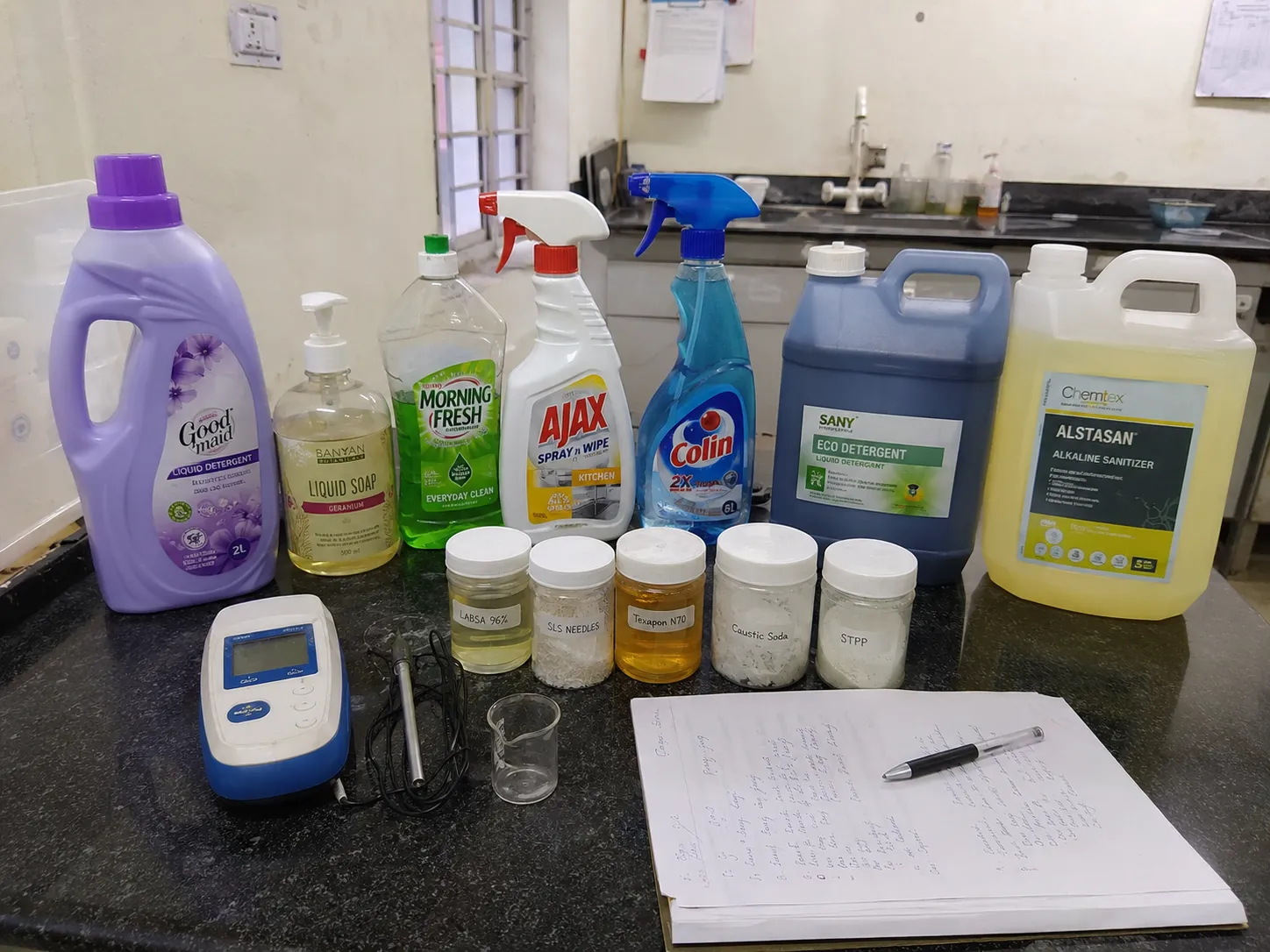
Detergents & Cleaning Products
Laundry detergents, Dishwashing detergents, Liquid soaps, Industrial cleaners, Industrial descalers, Metal degreasers, Hard-surface cleaners, Kitchen and bathroom cleaners, Electronics cleaning chemicals
Common Analysis Needs
Analyze complete dye, ink, detergent or cleaning-product formulations through sample separation, multi-method characterization and integrated data interpretation.
Typical analytical targets include:
- Active ingredients and surfactants
- Resins, binders and solvents
- Dyes, pigments and colorants
- Inorganic salts and fillers
- Preservatives and functional additives
Qualitative, quantitative or semi-quantitative results may be provided where technically feasible.
Identify an unknown raw material or additive, or analyze a specified ingredient based on the client’s project objective.
Typical targets include:
- Surfactants and emulsifiers
- Wetting and dispersing agents
- Preservatives and chelating agents
- Dyes and colorants
- Fragrance components
- Photoinitiators and active diluents
- Specific solvents and inorganic ions
Quantification may be provided when suitable methods and reference standards are available.
Characterize the primary resin, binder or film-forming system used in printing inks, pigment dispersions and related formulated products.
Typical materials include:
- Acrylic resins
- Polyurethane resins
- Epoxy resins
- Alkyd resins
- Polyamide resins
- Vinyl resins
- Cellulose derivatives
- Mixed binder systems
The results can support raw material verification, product comparison and formulation development.
Identify and estimate solvents in printing inks, cleaners, degreasers and other liquid formulations.
The analysis may include:
- Solvent identification
- Relative or semi-quantitative composition
- Aromatic and aliphatic solvent distribution
- Residual solvent screening
- Odor-related volatile compounds
- Comparison with declared formulation information
This service supports formulation verification, supplier evaluation and abnormal odor investigation.
Compare two or more samples from different suppliers, production batches, product conditions or competing formulations.
Typical projects include:
- Supplier sample comparison
- Batch-to-batch comparison
- Target versus competitor product
- Original versus replacement material
- Normal versus abnormal sample
- Imported versus locally sourced material
The comparison may cover major ingredients, surfactants, binders, solvents, colorants, inorganic components, impurities and degradation products.
Investigate chemical and material differences associated with product behavior or performance loss.
Typical problems include:
- Color shift or discoloration
- Precipitation and sedimentation
- Phase separation
- Abnormal odor
- Unstable foam behavior
- Viscosity changes
- Poor ink adhesion or curing
- Poor pigment dispersion
- Cleaning residues or deposits
- Foreign particles and contamination
Xinbodi combines analytical findings with sample comparison and technical interpretation to identify likely causes and provide practical improvement directions.
Our Customized Analytical Workflow
1. Project and Sample Review
Review the sample type, application, known formulation information, comparison samples and the specific question to be answered.
2. Sample Separation and Pretreatment
Separate organic and inorganic fractions, soluble and insoluble materials, volatile and non-volatile components, or different formulation fractions when necessary.
3. Instrumental Characterization
Select complementary analytical methods to identify major components, additives, solvents, colorants, ions, elements and abnormal substances.
4. Cross-Verification and Interpretation
Cross-check results from multiple techniques and compare reference, supplier, normal or failed samples where available.
5. Integrated Reporting
Provide analytical findings, supporting evidence, comparison conclusions and project-specific interpretation.
Testing Methods for Dyes and Detergents Analysis
For dyes, pigments, inks, surfactants, detergents, and cleaning products, multiple techniques are often combined to identify active ingredients, colorants, solvents, additives, impurities, residues, and formulation differences.
- FTIR
Identification of surfactants, resins, binders, raw materials and major organic components - GC-MS
Solvents, volatile additives, fragrances, residual substances and odor-related compounds - Headspace GC-MS
Volatile substances and abnormal odor investigation - HPLC / LC-MS
Dyes, preservatives, additives and non-volatile organic ingredients - UV-Vis Spectroscopy
Dye and colorant spectral comparison - NMR
Molecular structure confirmation and selected component analysis - Ion Chromatography
Chloride, sulfate, phosphate and other ionic components - ICP-MS / ICP-OES
Metals, trace elements and inorganic impurities - XRF
Elemental screening of pigments, fillers and inorganic materials - SEM-EDS
Insoluble particles, deposits, pigments, contamination and local elemental distribution - NMR
Molecular structure confirmation and component ratio estimation. - TGA / DSC
Organic–inorganic ratio, thermal behavior and material comparison - Py-GC-MS
Resins, polymeric binders and crosslinked or difficult-to-dissolve organic materials
Typical Questions We Help Answer
- What are the major ingredients in this detergent or cleaner?
- Which surfactants are present in the formulation?
- What is the main resin or binder used in this ink?
- Is this raw material the same as the previous supplier’s product?
- Why does the product develop an abnormal odor?
- Why are two batches different in color or stability?
- What causes precipitation or phase separation during storage?
- Does the supplier sample contain unexpected solvents or impurities?
- Can a specific additive be identified and quantified?
- What causes residue or deposits after the cleaning process?
- Why does an ink show poor adhesion, curing or dispersion?
- Can the formulation be analyzed to support product development or local substitution?
Standard projects: 5–10 working days
Rush service may be available depending on scope.
FAQs
Can you quantify “color” for finished products?
We can provide UV-Vis spectral characterization and comparison. If you have a defined color metric requirement, we can align reporting to your specification approach.
Can you identify what causes discoloration over time?
Often yes. We typically combine impurity/degradation profiling with ion/metal screening (when relevant) to identify likely drivers.
Do you support residue/film complaints (streaking/hazing)?
Yes. We can identify residue composition (organic/inorganic) and help differentiate sources such as formulation imbalance, water hardness ions, or process contamination.
What if my detergent formulation is complex?
That’s common. We use orthogonal tools and comparison strategies (reference lot) to isolate meaningful differences.
Do you need a reference/control sample?
Strongly recommended—especially for shade drift, odor changes, and stability comparisons.
Can you help with supplier qualification?
Yes. We can design an equivalency panel combining key actives, fingerprints, and relevant ions/metals to support procurement decisions.