
Failure Analysis
Determine why a failure occurred—then prevent it from happening again. Xinbodi investigates the failure history, sample condition, and material evidence to identify root causes behind cracking, delamination, corrosion, discoloration, contamination, wear, or unexpected performance loss.
What Is Failure Analysis?
Failure analysis is a structured investigation that connects a material’s history, the failure conditions, and measurable evidence from the sample to determine why a failure occurred. A “failure” can be mechanical (fracture, poor adhesion, low pull strength), chemical (corrosion/oxidation), cosmetic (discoloration, surface roughening), or functional (unexpected odor, loss of properties).
It is often critical to know whether an issue is new and isolated or an ongoing trend. When available, comparing a “good” sample against a “bad” sample can rapidly narrow root causes and validate hypotheses.
We can investigate the sample as-received, and when helpful, recreate failure conditions in the lab to confirm mechanisms and accelerate corrective actions.
Common Failure Symptoms We Investigate
- Cracking / fracture
- Delamination
- Poor adhesion
- Discoloration
- Corrosion / oxidation
- Wear / abrasion
- Contamination
- Odor / volatiles
- Property loss
Physical failures (e.g., poor adhesion, fractures, discoloration) are investigated using a combination of surface analysis, materials characterization, microscopy, and (when relevant) metallurgical and fracture analysis approaches. Sample type and scenario determine the optimal method set.
New vs. recurring issue
We evaluate production history, environment, and processing changes to determine if the failure is systematic or isolated.
Evidence-based conclusion
We connect material evidence to mechanisms (mechanical, chemical, environmental) to support corrective action.
Failure Analysis Examples
- Fatigue and other slow crack growth mechanisms
- Brittle and ductile overload failures
- Stress corrosion and hydrogen embrittlement
- Corrosion/oxidation problems
- Contamination and foreign material problems
- Wear failures
- Adhesion and bonding problems
- Discoloration and appearance changes
- Heat treatment problems
- Design/stress related failures
- Plating and surface treatment problems
Other scenarios may involve unknown materials or unexpected surface changes caused by particles, roughening, or discoloration—where identification and comparison are key to closing the investigation.
Recreating Failure Conditions
Environmental chambers are available to study the effects of UV, heat, and humidity on materials and products. When appropriate, we can recreate operating conditions in the laboratory to confirm suspected mechanisms and validate corrective actions.
Both customized test plans and established standards (including relevant ASTM methods) may be employed based on your product, industry, and acceptance criteria.
Adhesion & Delamination Failure Investigation
For adhesion and bonding failures, surface-sensitive techniques help determine which molecular and elemental species are present at the failure site. These tools can reveal whether contaminants, weak boundary layers, or surface treatments contributed to poor contact and reduced bonding strength.
- FTIR for organic functional group identification
- TOF-SIMS for highly sensitive surface molecular fragments and contamination clues
- XPS / AES for elemental/chemical states near the surface and interfacial chemistry
Imaging delaminated surfaces can also indicate the failure mechanism (e.g., adhesive vs. cohesive failure), supporting targeted process or material changes.
Materials & Sample Types
Our failure analysis lab routinely investigates failures in:
Industries We Serve

Chemicals
Agrochemicals, Industrial Chemicals, Dyes, Lubricants, Polymers, Plastics, Adhesives, Coatings, Rubber, Inks

Energy
Aerospace, Semiconductors, Oil & Gas, Minerals, Biofuels, Battery Materials

Food & Healthcare
Food, Medical Devices, Pharmaceutical

Cosmetics & Personal Care
Cosmetics Disinfection Products
Typical Failure Analysis Workflow
The potential complexity of failure analysis makes experimental design and interpretation critical. A typical workflow includes:
- Background review: service history, processing changes, environment, and failure timeline
- Visual & microscopic inspection: locate failure origin and features
- Comparative testing: “good vs. bad” sample comparison (when available)
- Targeted analysis: select methods based on failure mode and sample constraints
- Confirmation: cross-validate hypotheses with complementary techniques
- Root-cause conclusion: mechanism, contributing factors, and corrective actions
Standard projects: 5–10 working days
Rush service may be available depending on scope.
Instrumentation & Analytical Capabilities
Xinbodi has broad instrumentation in our failure analysis labs and works with specialists where deeper mechanics or fracture-mode interpretation is required. Typical tools include:
For metal and structural component failures, we can incorporate metallurgical and fracture analysis expertise to understand crack initiation, propagation, and failure origins.
What You Will Receive
Every project is delivered with a structured report designed to support engineering decisions and cross-team alignment. A typical report includes:
- Failure description, sample condition, and investigation scope
- Methods and conditions used, with supporting images/data
- Findings linked to failure mechanism(s)
- Comparison results (good vs. bad, supplier A vs. B) when applicable
- Root-cause conclusion and recommended next steps
Why Choose Xinbodi Laboratories
7×24 Customer Support
Fast technical response within 24 hours.
Fast 5–10 Day Delivery
Efficient project turnaround after sample receipt.
Advanced Lab Capacity
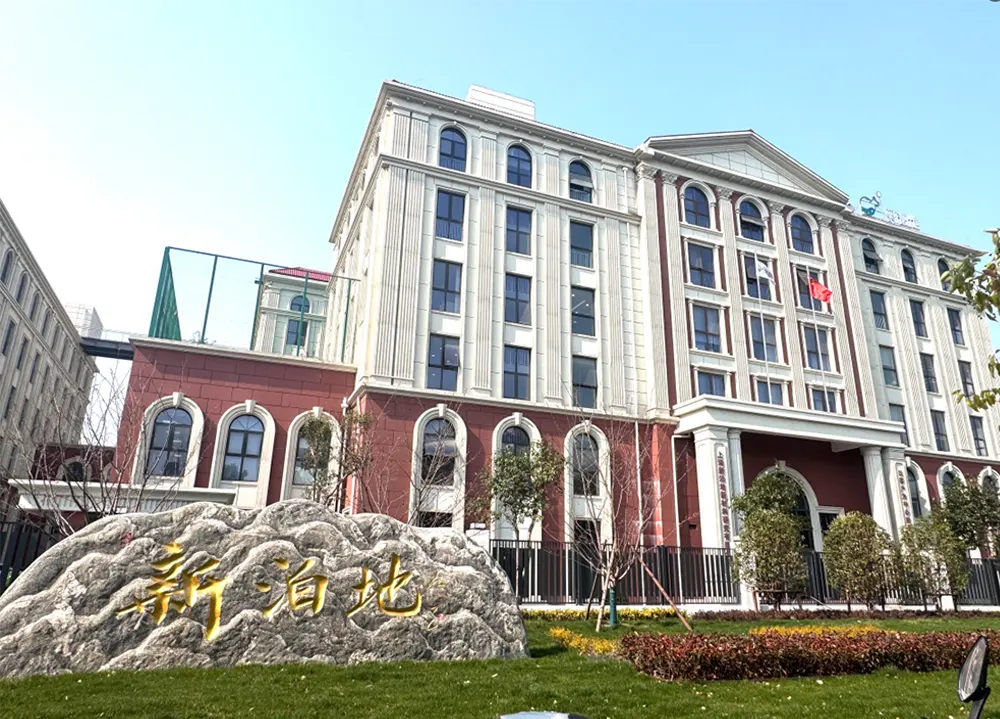
4,000+ m² R&D labs and 1000+ precision instruments.
Cost-Efficient Analytical Services
Comparable analytical capabilities at typically 50–60% of U.S. and European laboratory pricing for similar project scopes.
100+ Master’s- and PhD-Level Experts Team
Extensive experience in solving complex material challenges.
Practical R&D Support
Actionable solutions and production guidance with protected formulas and sample data.
China Supplier Comparison
Evaluate materials and sourcing alternatives.