
Adhesive Composition Analysis for Industrial Adhesives
Adhesive composition analysis is an important analytical service for manufacturers who need to understand what is inside an adhesive, why a bonding system fails, or how to improve an existing formulation.
For industrial products, adhesives are rarely simple materials. A structural adhesive may contain resin, curing agent, accelerator, toughening agent, filler, coupling agent, stabilizer, antioxidant, defoamer, dispersant and trace additives. Even small changes in these components can affect bonding strength, curing behavior, heat resistance, humidity resistance, flexibility and long-term reliability.
At Xinbodi Laboratories, we provide adhesive composition analysis for epoxy adhesives, polyurethane adhesives, acrylic adhesives, silicone adhesives, instant adhesives, structural adhesives and other industrial bonding materials. Our goal is not only to identify chemical components, but also to help clients understand how those components influence performance, failure risk and formulation improvement.
What Is Adhesive Composition Analysis?
Adhesive composition analysis is the process of identifying and, when possible, quantifying the chemical components in an adhesive sample. It can be used for raw adhesive products, cured adhesive layers, failed bonding interfaces, competitor samples, supplier comparison samples or unknown glue residues.
A complete adhesive composition analysis usually answers several practical questions:
- What is the main resin system?
- What curing agent or crosslinking system is used?
- Are there toughening agents, fillers, stabilizers or coupling agents?
- Are there VOCs, restricted substances or unknown impurities?
- Why does the adhesive fail under heat, humidity, aging or mechanical stress?
- Can the formulation be used as a reference for product development or cost reduction?
This makes adhesive composition analysis useful for R&D teams, quality managers, sourcing teams, automotive suppliers, electronics manufacturers, battery material companies, packaging producers and industrial assembly manufacturers.
When Do Manufacturers Need Adhesive Composition Analysis?
Manufacturers usually need adhesive composition analysis when they face one of the following problems.
The first situation is unknown formulation. A company may use an imported adhesive or a supplier-provided glue, but the supplier does not disclose the formula. If the adhesive is expensive, difficult to source or unstable in quality, composition analysis can help the manufacturer understand the formulation structure and evaluate local alternatives.
The second situation is bonding failure. Adhesives may fail after thermal aging, humidity exposure, salt spray, vibration, impact or long-term storage. In these cases, the problem may not come from curing conditions alone. It may be related to resin selection, filler structure, additive migration, substrate contamination, hydrolysis, insufficient coupling agent or poor interface compatibility.
The third situation is supplier comparison. Two adhesives may look similar but perform differently. Adhesive composition testing can compare resin type, filler ratio, additive system and trace components to explain why one product performs better than another.
The fourth situation is product development. For manufacturers developing a new adhesive, deformulation and composition analysis can provide a reference direction, reduce blind trial-and-error testing and shorten the development cycle.
Xinbodi’s Adhesive Composition Analysis Workflow
Xinbodi uses a multi-method analytical workflow according to the adhesive type, sample condition and client objective.
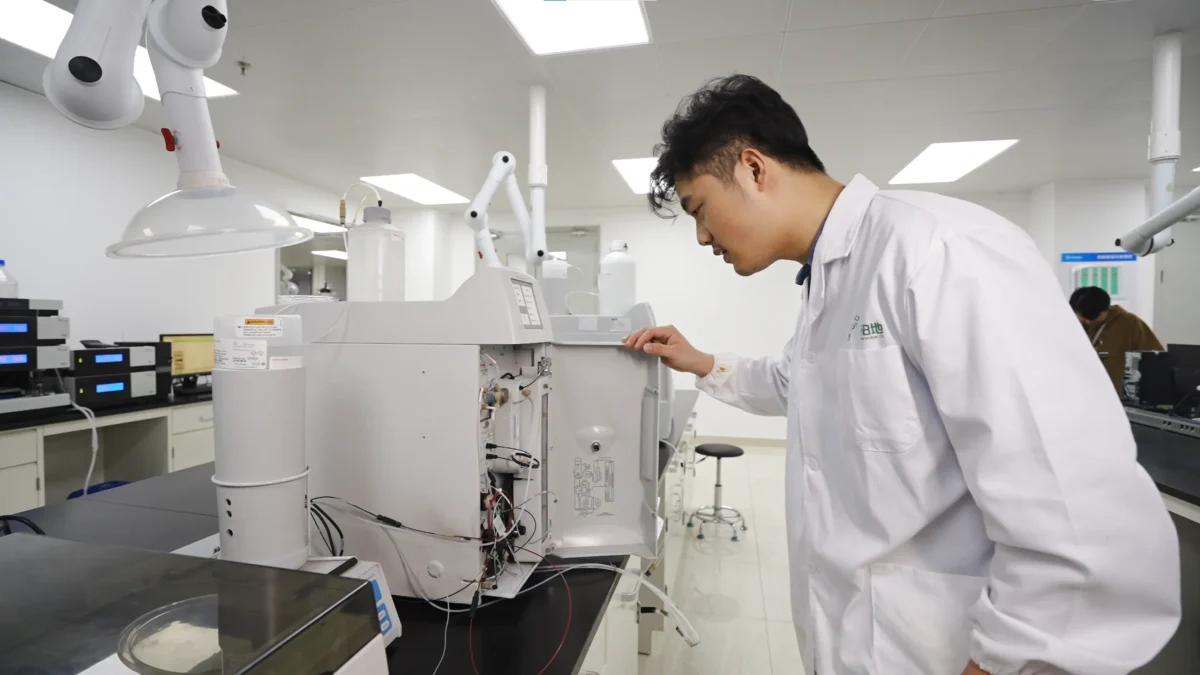
For uncured adhesives, we can analyze A/B components separately to identify resin, curing agent, solvents, additives and volatile substances. For cured adhesives, we may use extraction, pyrolysis and thermal analysis to break down or separate the crosslinked structure. For failed adhesive interfaces, we can examine both the adhesive layer and the substrate surface to determine whether the failure is caused by formula weakness, additive migration, contamination or substrate corrosion.
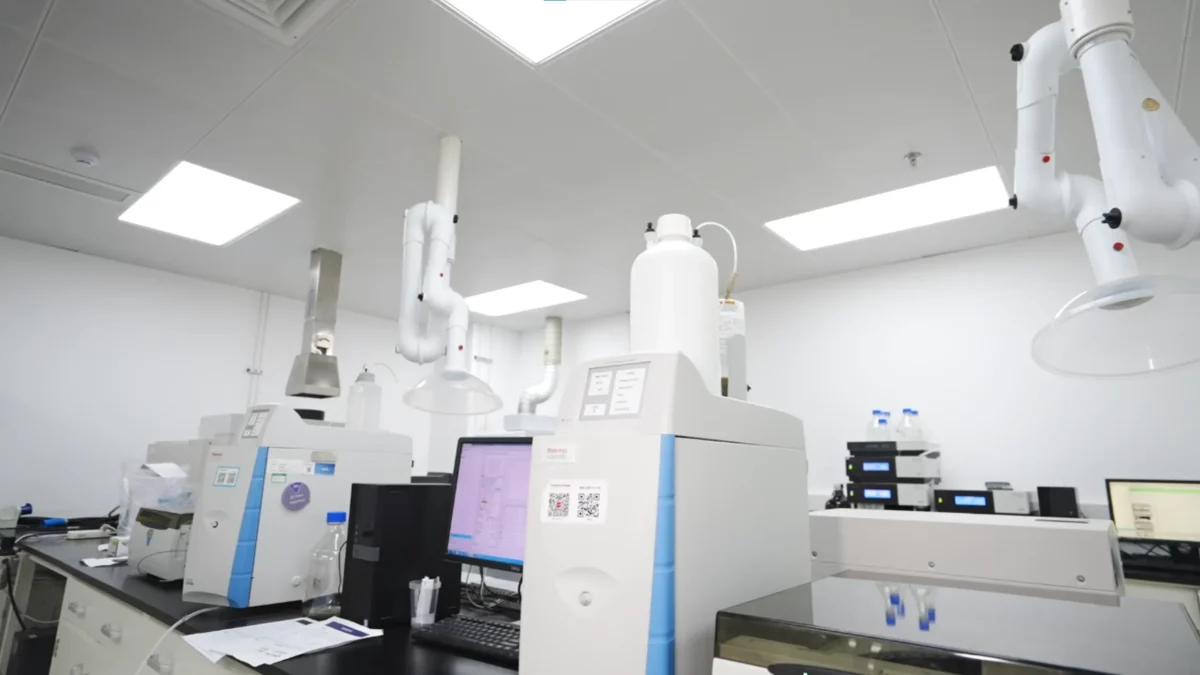
Common techniques include:
FTIR analysis for identifying main functional groups and resin types.
GC-MS analysis for analyzing cured or insoluble polymer networks through pyrolysis fragments.
LC-MS analysis for detecting polar, thermally unstable or trace organic additives.
TGA–DSC analysis for determining organic content, inorganic filler ratio, curing behavior and thermal properties.
ICP-MS and XRF analysis for inorganic elements, fillers, catalysts and restricted substances.
SEM–EDS analysis for interface morphology, particle distribution and elemental composition.
HS-GC analysis for VOCs and residual solvents in uncured adhesive systems.
This combined workflow helps Xinbodi move beyond simple component identification and provide practical formulation and failure analysis insights.
Case Study: Epoxy Structural Adhesive Composition Analysis
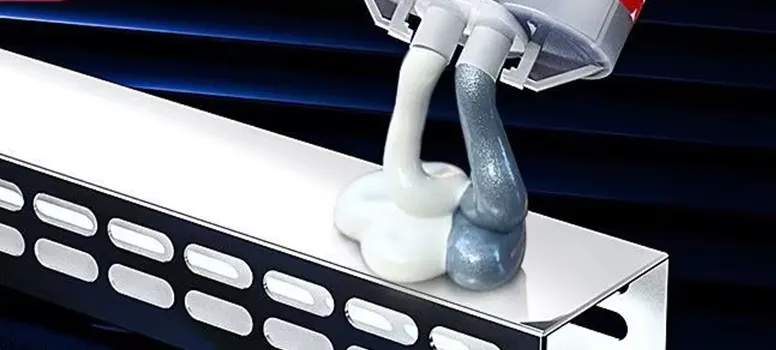
One automotive parts manufacturer contacted Xinbodi for an imported two-component epoxy structural adhesive used in battery housings and aluminum die-casting part bonding. The client needed full qualitative and quantitative composition analysis, formulation reverse engineering, high-temperature and high-humidity debonding root cause investigation, and support for replacing the imported adhesive with a local alternative. The submitted samples included A-component resin, B-component curing agent and cured adhesive residue from failed bonding parts.
The client faced strong cost pressure because the imported adhesive was expensive and monthly consumption was high. More importantly, after 85°C / 85% RH aging testing, about 30% of aluminum bonded parts showed interfacial debonding and a sharp drop in bonding strength. Adjusting coating thickness, curing temperature and baking time did not solve the problem.
Xinbodi used a multi-instrument analytical approach, including FTIR-ATR, Py-GC-MS, LC-MS, TGA-DSC, ICP-MS/XRF, SEM-EDS and HS-GC. The purpose was to separate the adhesive into organic matrix, curing system, functional additives, inorganic fillers, volatile substances and failed-interface residues.
The analysis identified a formulation structure containing a bisphenol A epoxy resin system, polyether-modified epoxy toughening resin, modified cycloaliphatic amine curing agent, imidazole latent accelerator, amino silane coupling agent, organotin hydrolysis stabilizer, antioxidant, defoamer, active spherical silica powder and ultrafine calcium carbonate. The case also showed that the debonding problem was strongly related to hydrolysis under high-temperature humidity conditions and migration of low-molecular polar substances to the bonding interface.
Based on the results, the formulation was optimized by increasing hydrolysis stabilizer content, replacing ordinary filler with active spherical silica powder and adjusting the silane coupling agent ratio for aluminum bonding. After optimization, the sample passed 500 hours of 85°C / 85% RH aging without bonding strength decay. The client also reduced adhesive material cost and accelerated local replacement of the imported product.
This case shows why adhesive composition analysis is not only about listing ingredients. For industrial adhesives, the real value is to connect composition data with bonding performance, aging resistance, interface stability and formulation decisions.
What Can Be Identified in Adhesive Composition Testing?
A complete adhesive composition testing project may identify the following component categories:
Main resin system, such as epoxy resin, polyurethane, acrylic resin, silicone resin or modified polymers.
Curing agents, including amines, anhydrides, isocyanates, peroxides or latent curing systems.
Toughening agents, such as rubber, polyether, polyurethane or core-shell modifiers.
Fillers, including silica, calcium carbonate, alumina, talc, glass powder or other inorganic particles.
Coupling agents, such as silane coupling agents used to improve bonding with metal, glass or mineral surfaces.
Stabilizers and antioxidants used to improve heat, humidity and aging resistance.
Plasticizers, defoamers, wetting agents, dispersants and other processing aids.
Volatile solvents, VOCs and residual monomers.
Heavy metals, restricted substances and environmentally sensitive components.
The final report can support formulation development, supplier comparison, quality control, failure analysis and compliance documentation.
Sample Submission Guide for Adhesive Composition Analysis
To improve analytical accuracy, Xinbodi recommends submitting both the adhesive sample and relevant comparison samples.
For uncured adhesives, send A-component and B-component separately if it is a two-component system. For failed products, send the failed bonded part, residual adhesive, substrate material and a normal control sample if available. For competitor comparison, send both the target adhesive and the reference adhesive.
Useful background information includes application scenario, substrate material, curing conditions, failure description, aging test conditions, batch information, supplier information and the main questions you want the analysis to answer.
The more complete the sample background, the more targeted the analytical strategy can be.
Need Adhesive Composition Analysis?
If you need to identify an unknown adhesive, compare supplier samples, analyze bonding failure, reduce material cost or improve formulation performance, Xinbodi Laboratories can help.
Send us your adhesive sample, failed product, control sample and project background. Our technical team will design a suitable adhesive composition analysis plan and provide practical technical interpretation within 24h, and the report will be delivered in 3–7 business days.
Contact Xinbodi Laboratories for adhesive composition analysis, adhesive deformulation and adhesive failure analysis.