Chemical Analysis & Testing Services
Xinbodi is an independent chemical analysis laboratory providing chemical analysis services and chemical testing for manufacturers, R&D teams and quality investigations. Our capabilities include composition analysis, materials testing, failure analysis, impurity and contamination investigation, deformulation and reverse engineering, formulation reconstruction, and material modification support.
Chemical Analysis Services for Materials and Products
Chemical analysis services help manufacturers understand the chemistry of raw materials, finished products, formulations, residues, contaminants, and failed components.
Depending on the project, the objective may be to identify unknown substances, measure selected components, compare two products, investigate impurities, determine the source of a failure, or understand how a commercial product is formulated.
Xinbodi Lab combines chemical, thermal, microscopic, elemental, and surface-analysis techniques according to the sample and the technical question. Complex products often require several complementary methods because no single analytical technique can characterize every organic, inorganic, polymeric, and trace component.
What Can a Chemical Testing Lab Determine?
Supplier or Batch Changed?
Supplier A vs. Supplier B
Old Batch vs. New Batch
We can identify measurable differences in composition, additives, fillers, solvents or impurities.
Product Performance Problem?
Cracking, Discoloration, Odor
Delamination, Poor adhesion, residue
chemical analysis can be combined with failure analysis to investigate possible root causes.
What Is in a Product?
Our composition analysis services can identify major ingredients, material components and selected component levels. Identify unknown substance.
Compare a Competitor Product?
Your Product vs. Competitor Product
We can investigate formulation differences to support deformulation, reverse engineering and product development.
Unknown Contaminant or Particle?
Identify unknown particles, residues or chemical contaminants and compare them with possible raw-material, process or packaging sources.
Incoming Material or Supplier Qualification?
Verify material identity, compare incoming materials with approved references, and investigate measurable composition differences before supplier approval.
Our Chemical Analysis & Testing Services

Materials Testing
Mechanical, thermal, chemical, and physical property evaluation of materials.

Compositional Analysis
Determine ingredients, additives, fillers, and ratios using advanced analytics.

Deformulation
Break down complex formulations and reconstruct processing/material insights.

Failure Analysis
Root-cause investigation of defects, cracking, corrosion, and performance loss.

Impurity Analysis
Detect and quantify trace impurities impacting quality, safety, and reliability.

Surface Analysis
Surface morphology and chemistry analysis for coatings, adhesion, and interfaces.
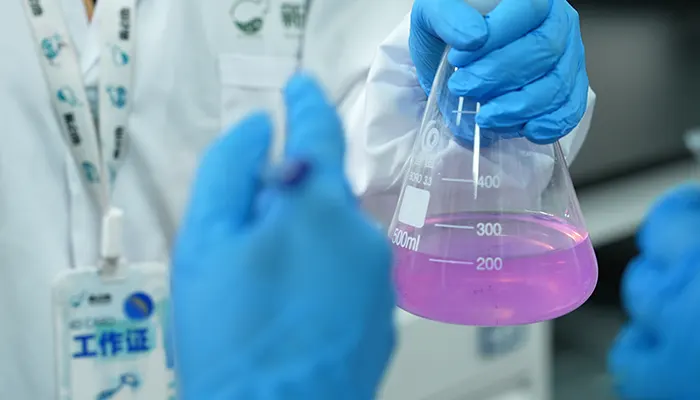
Composition & Materials ID
Identify unknown materials, foreign particles, or contamination sources.
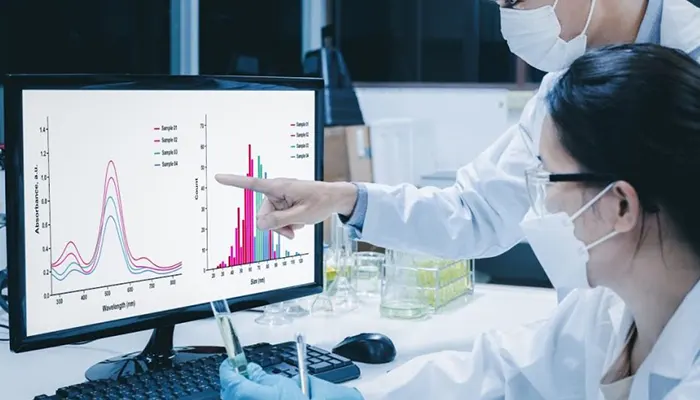
Materials Characterization
In-depth characterization to support R&D, benchmarking, and optimization.
Samples and Products We Analyze
Chemicals
Liquids, solvents, additives, process chemicals
Polymers & Plastics
Resins, films, molded parts, unknown plastics
Rubber & Resin
Rubber compounds, seals and resin products
Cosmetics & Personal Care
Cosmetics, Skincare, Disinfection Products
Adhesives & Sealants
Epoxy, polyurethane, acrylic and silicone systems
Coatings & Inks
Paints, coatings, printing inks and pigments
Lubricants & Fluids
Oils, greases and process fluids
Veterinary & Agricultural Chemicals
Veterinary drugs, pesticides, active ingredients
Chemical Analysis & Testing Methods
| Analytical need | Typical techniques | Information obtained |
|---|---|---|
| Polymer and molecular identification | FTIR, Raman, Py-GC-MS, NMR | Polymer family, molecular structure, functional groups |
| Organic compounds and additives | GC-MS, HPLC, LC-MS, HRMS | Solvents, oils, additives, active ingredients, unknown organics |
| Elemental and inorganic analysis | ICP-MS, ICP-OES, XRF, SEM-EDS | Metals, trace elements, fillers, particles |
| Thermal composition | TGA, DSC | Polymer/filler fractions, thermal transitions, material differences |
| Crystalline phases | XRD | Minerals and crystalline compounds |
| Surface chemistry | XPS, TOF-SIMS | Surface composition, contamination, thin-layer chemistry |
| Material morphology | SEM, microscopy | Particles, layers, fracture morphology, interfaces |
The methods listed above are examples, not a fixed test package. Final method selection depends on sample matrix, concentration range, sample quantity, and project objective.
How Our Chemical Testing Service Works
1. Tell Us What You Need to Test
Provide your sample type and testing objective.
2. Receive a Testing Recommendation & Quote
Our team reviews the project and recommends appropriate analytical methods within 24H.
3. Send Your Samples
Worldwide samples can be shipped to the laboratory.
4. Receive Results & Technical Report
Results are delivered together with interpretation and conclusions in 5-10 working days.
Reports in 7–10 working days
24/7 Expert Support
100% Confidential / NDA Protected
Rush service may be available depending on scope.
What Should You Send Us?
The most useful starting package is simple:
The incoming, candidate or abnormal material
An approved or known-good reference, if available
The specification, SDS or certificate of analysis
A short description of what changed
The application and production step where the material is used
The decision you need to make
If you do not have all of this information, send what you have. We can begin with chemical screening and refine the plan after the first findings.
What You Will Receive
Depending on project scope, a chemical analysis report may include:
- identified major and minor components;
- quantitative or semi-quantitative results where technically appropriate;
- detected additives, fillers, contaminants, or impurities;
- comparison between reference and submitted samples;
- spectra, chromatograms, thermal curves, images, or elemental maps;
- analytical methods and sample-preparation information;
- interpretation of meaningful differences;
- stated analytical limitations; and
- recommendations for further testing where additional validation is required.
For comparison projects, the report should distinguish clearly between what was directly measured, what was identified analytically, and what is being inferred from the evidence.
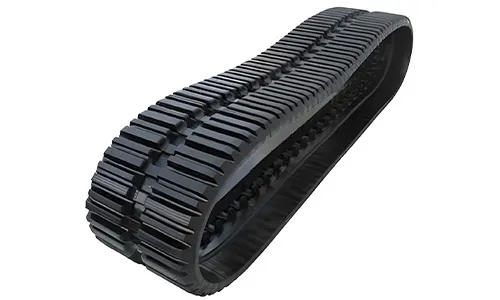
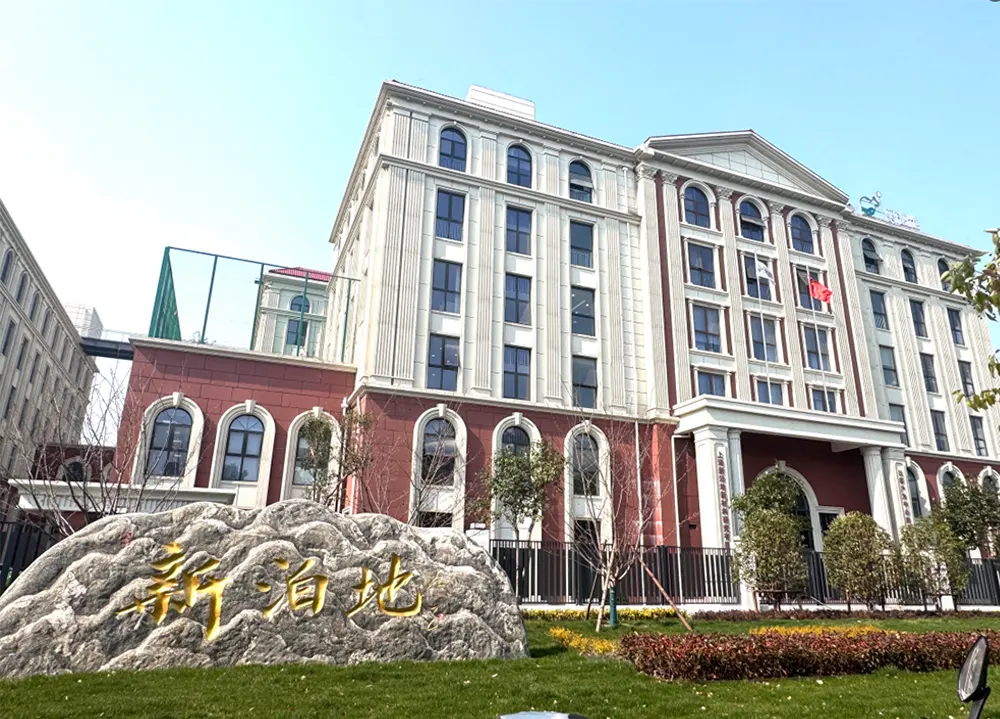
Our Chemical Analysis & Testing Case Studies



Why Choose Xinbodi Laboratories
7×24 Customer Support
Fast technical response within 24 hours.
Fast 7–10 Day Delivery
Efficient project turnaround after sample receipt.
Advanced Lab Capacity
4,000+ m² R&D labs and 1000+ precision instruments.
Cost-Efficient Analytical Services
Comparable analytical capabilities at typically 50–60% of U.S. and European laboratory pricing for similar project scopes.
100+ Master’s- and PhD-Level Experts Team
Extensive experience in solving complex material challenges.
Practical R&D Support
Actionable solutions and production guidance with protected formulas and sample data.
China Supplier Comparison
Evaluate materials and sourcing alternatives.
FAQs
What can chemical analysis and testing tell me about my sample?
Chemical analysis can help identify major components, additives, impurities, contaminants, elements, solvents, and other chemical characteristics of a material or product. The exact information available depends on the sample type, testing objective, and analytical techniques used.
Can you identify an unknown material or chemical?
Yes. Unknown samples can often be investigated by combining techniques such as FTIR, GC-MS, LC-MS, ICP, Raman, XRF, or other analytical methods.
Depending on the sample, we may identify the material type, major components, contaminants, or possible sources of an unknown substance.
Do I need to know which testing method I need?
No. Tell us what the sample is and what you need to find out.
Our technical team can recommend an appropriate testing approach based on the sample matrix, target components, required sensitivity, and project objective.
How much sample should I send for chemical testing?
Sample quantity depends on the material type, number of tests, analytical methods, and required detection limits.
Before shipping, send us your sample information, photos, and testing goal. We can confirm the recommended quantity and packaging requirements.
Can you compare two samples, suppliers, or production batches?
Yes. Comparative chemical analysis can be used for:
- Supplier A vs. Supplier B
- Old batch vs. new batch
- Good sample vs. failed sample
- Your product vs. competitor product
Can chemical analysis identify every ingredient and its exact percentage?
Not always.
Major components and many additives can often be identified, but trace ingredients, reactive compounds, degradation products, proprietary mixtures, or components without suitable reference standards may require additional testing or may only be estimated.
Quantitative accuracy depends on the chemistry of the sample, available standards, and analytical method.
How long does chemical analysis and testing take?
Turnaround time depends on the sample complexity, number of tests, and analytical methods required.
Most projects receive a defined testing scope and estimated delivery time before testing begins.
How much do chemical analysis services cost?
Pricing depends on:
- Sample type
- Testing objective
- Number of samples
- Analytical methods required
- Detection or quantification requirements
- Overall project complexity
Send us your sample information and testing goal to receive a customized quotation. It usually starts at a few thousand dollars.
What will I receive in the chemical analysis report?
Depending on the project, your report may include:
- Analytical methods used
- Identified components
- Quantitative results where applicable
- Elemental or compositional data
- Spectra or chromatograms
- Sample-to-sample comparisons
- Technical interpretation
- Key findings and conclusions
Can you develop a custom testing approach for unusual samples?
Yes. Not every material or technical problem fits a standard test method.
For complex products, unknown contaminants, unusual matrices, or R&D projects, multiple analytical techniques may be combined to build a custom testing approach around the specific question you need to answer.
Can you support formulation development and scale-up after testing?
We provide more than analytical data. Depending on the project, our technical team can help interpret the results, identify formulation or material issues, and provide practical recommendations for R&D.
For formulation-related projects, support may also include:
- Technical interpretation of test results
- Formulation adjustment recommendations
- Small-scale trial formulation support
- Raw material and supplier comparison
- Performance optimization suggestions
- Scale-up considerations for industrial production
Our goal is to help clients move from lab data to practical product development and production decisions.