
Introduction: More Than Testing, Chemical Analysis Lab Helps Reveal Why Materials Behave Differently
In modern manufacturing industries, chemical composition directly determines product performance, reliability, and consistency. However, many industrial problems cannot be solved by simply checking specifications or comparing raw material lists.
A product may fail because of:
- Unexpected impurities introduced during production
- Small formulation differences between suppliers
- Degradation of additives during processing
- Unknown components affecting performance
- Changes in raw material quality
- Differences between prototype and commercial products
A professional chemical analysis laboratory helps companies understand what is inside a material, identify the causes behind performance differences, and provide scientific evidence for product development, quality control, and failure investigation.
At Xinbodi, we combine multiple analytical technologies with practical material knowledge to analyze complex chemical systems, including polymers, adhesives, coatings, lubricants, additives, cleaning agents, and specialty chemicals.
What Can Chemical Analysis Lab Solve?
1. Identifying Unknown Materials or Components
Manufacturers may receive an unknown sample from:
- Competitors
- Suppliers
- Failed products
- Recycled materials
- Customer complaints
The key question is not only:
“What substances are present?”
but also:
“Which components influence the final performance?”
Through advanced instrumental analysis, laboratories can identify organic compounds, inorganic elements, additives, fillers, and trace components.
2. Investigating Product Performance Differences
Two materials may appear identical based on basic testing but perform differently in real applications.
Examples:
- Two adhesives have similar composition but different bonding strength
- Two coatings show different durability
- Two lubricants have different friction performance
- Two polymers have different aging behavior
Chemical analysis helps identify hidden differences that cannot be observed through appearance or routine testing.
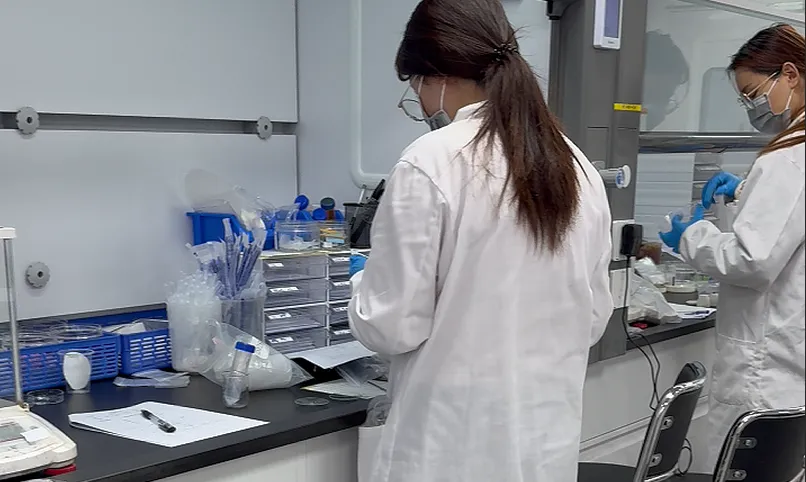
Case Study: Why Two Similar Adhesives Showed Different High-Temperature Peeling Performance
1. Customer Challenge
A manufacturer provided two pressure-sensitive adhesive samples:
- One was a self-developed formulation
- The other was a competitor product
The customer found that the two samples had very similar chemical compositions, but their practical performance was different.
The key problem:
Why did one adhesive show stronger peeling resistance under high-temperature conditions?
2. Initial Chemical Analysis Result
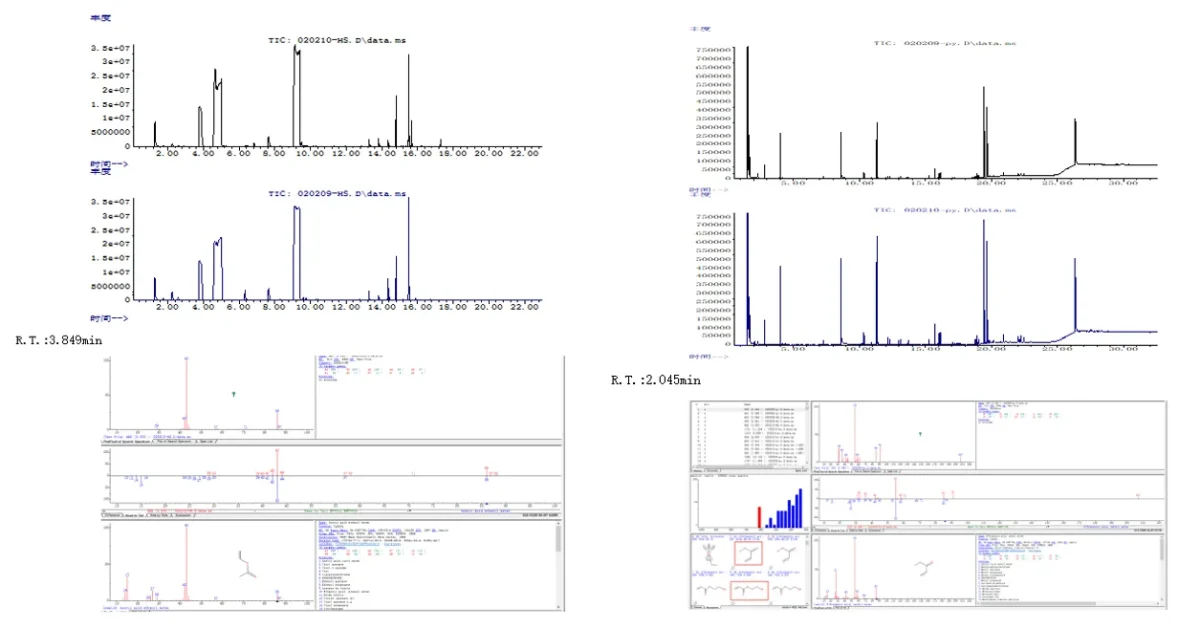
Through formulation comparison and analytical testing, we found that:
- Main polymer components were highly similar
- Monomer composition showed no obvious difference
- Py-GC/MS and HS-GC/MS results showed comparable major chemical signals
From a conventional composition perspective, the two samples appeared almost identical.
However, performance differences still existed.
This indicated that the key factor might not be the main formulation components, but minor differences in trace additives or formulation balance.
3. Further Investigation: Identifying Hidden Formulation Differences
Based on the material behavior and analytical data, our technical team proposed a hypothesis:
The performance difference may come from:
- Residual additives
- Crosslinking-related components
- Minor formulation modifiers
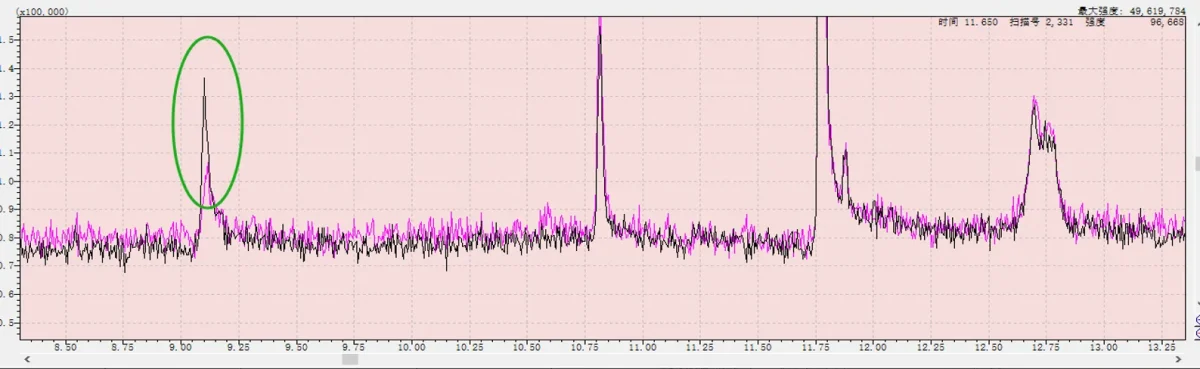
We performed further analysis focusing on trace components.
The results showed that the self-developed adhesive contained different levels of residual functional additives and related compounds.
These small formulation differences affected the secondary crosslinking behavior during high-temperature exposure.
4. Final Conclusion
The difference in peeling performance was not caused by the main polymer structure, but by the amount and interaction of minor additives within the formulation.
This analysis helped the customer:
- Understand the performance mechanism
- Optimize their adhesive formulation
- Improve product competitiveness
This case demonstrates an important principle:
In complex chemical systems, small composition differences can create significant performance changes.
Why Choose Xinbodi Chemical Analysis Lab?
1. Extensive Industry Service Experience
Xinbodi Lab has provided chemical composition analysis, formula analysis, failure investigation and reverse engineering services for more than 20,000 companies worldwide. Through decades of project experience, we have built a proprietary database containing over 5 million raw material spectra and analytical reference records, enabling faster and more accurate component identification and comparative analysis.
2. Multi-Technique Analysis Strategy
Our laboratory operates 100+ advanced analytical instruments, including FTIR, GC-MS, Py-GC-MS, XRF, DSC, TGA, ICP, IC, NMR, and GPC. By integrating multiple analytical techniques, we can effectively characterize complex formulations containing polymers, additives, fillers, surfactants, solvents, and trace ingredients.
For formulation analysis and reverse engineering projects, Xinbodi Lab achieves an average reconstruction accuracy of over 90%, helping manufacturers understand competitor products, identify alternative raw materials, troubleshoot quality issues, and accelerate product development.
3. 24/7 Technical Support, Results in 7–10 Working Days
We provide direct technical director support and a dedicated project communication team. Clients receive responses within 24 hours, and analytical reports for many projects within 7–10 working days after sample receipt, helping manufacturers reduce development cycles and solve problems faster.
Beyond testing, We help translate test data into formulation improvement, failure diagnosis, process direction, and next-step validation. we provide suggested product manufacturing process direction to support small-scale validation, production adjustment, or further product development.
4. China Supply Chain Advantage
Located in Shanghai, Xinbodi Lab helps global clients evaluate suppliers, identify China-based alternative raw materials, benchmark competitor products, make informed sourcing decisions and support localization projects within China’s manufacturing ecosystem.
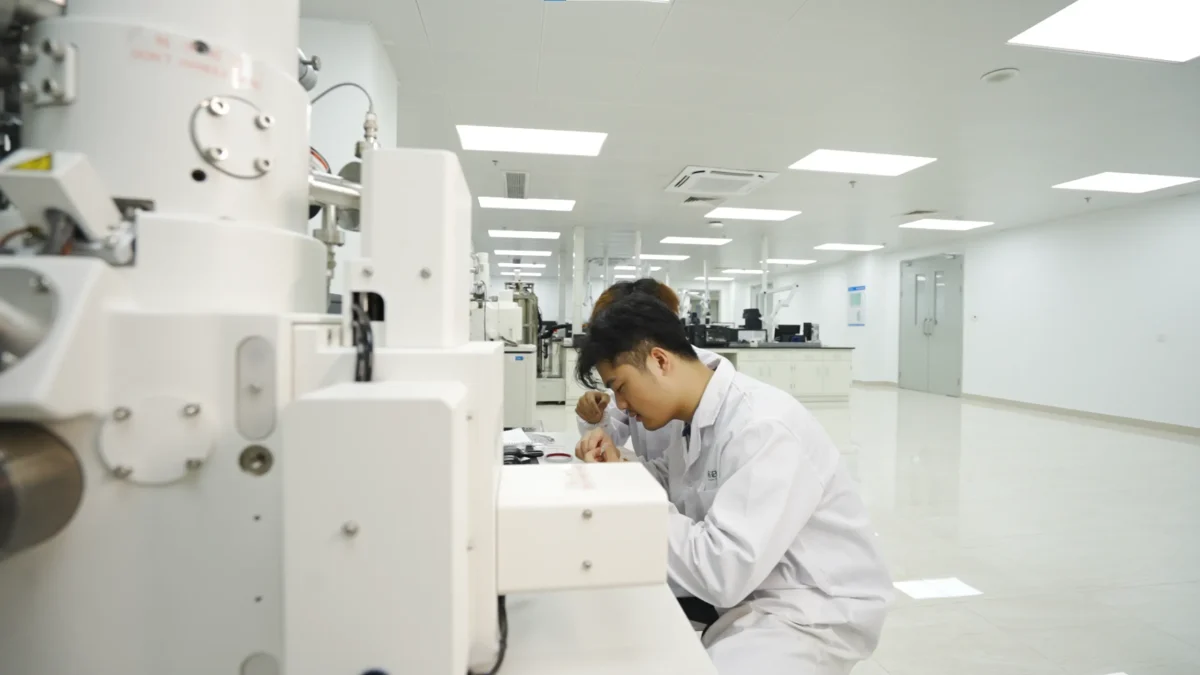
Why Multiple Analytical Techniques Are Often Required
Many customers initially expect one instrument to identify everything.
However, chemical systems are usually complex mixtures.
For example:
FTIR may identify the polymer backbone.
But it may not reveal:
- Trace additives
- Minor organic compounds
- Low concentration impurities
GC-MS may identify volatile components.
But it may not fully characterize:
- Non-volatile substances
- Inorganic fillers
- High molecular weight materials
Therefore, professional chemical analysis often requires a combination of techniques.
The value comes from connecting different analytical results into a meaningful material interpretation.
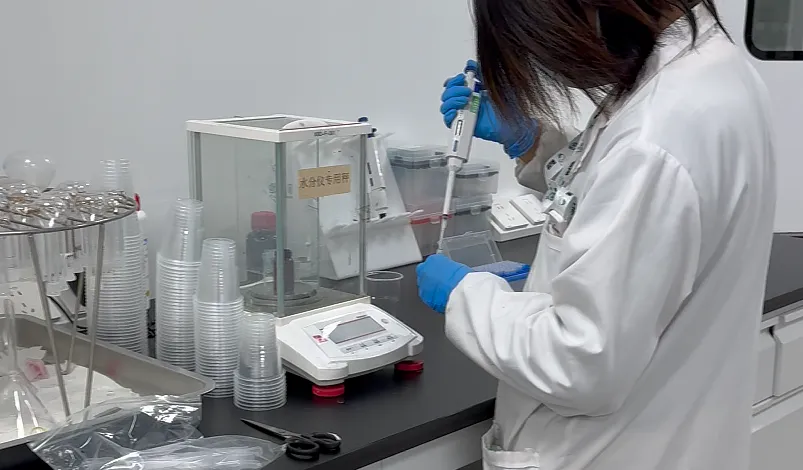
Applications of Chemical Analysis Lab Services
Adhesives and Sealants
- Resin systems
- Tackifiers
- Additives
- Curing components
Polymer and Plastic Materials
- Polymer identification
- Additives
- Fillers
- Degradation products
Coatings and Surface Treatment Materials
- Resins
- Solvents
- Pigments
- Functional additives
Lubricants and Industrial Fluids
- Base oils
- Additives
- Contaminants
- Performance-related components
Specialty Chemicals
- Unknown formulations
- Raw materials
- Competitor products
Frequently Asked Questions
What is the difference between chemical testing and chemical analysis?
Chemical testing focuses on obtaining measurable data, while chemical analysis focuses on interpreting that data to understand composition, structure, and material behavior.
Can a laboratory identify an unknown chemical product?
In many cases, yes. By combining multiple analytical techniques, laboratories can identify major components, material structures, and functional ingredients within unknown samples.
Why are multiple analytical techniques needed?
Because complex industrial products often contain many different chemical systems. No single technique can provide complete information about polymers, additives, fillers, solvents, and trace components.
How long does chemical analysis take?
The timeline depends on sample complexity and analytical requirements. Many projects can be completed within 7–10 working days after sample receipt, while more complex investigations may require additional analysis.
How much do chemical analysis laboratory services cost?
The cost depends on sample type, analytical objectives, required methods, and project complexity.
Projects typically start from several thousand US dollars. Contact Xinbodi Lab with your sample information, and our technical team can provide a customized quotation within 24 hours.