
What Is Hydraulic Oil Analysis?
Hydraulic oil analysis is a laboratory testing process used to evaluate the chemical composition, additive condition, contamination level, and performance changes of hydraulic fluids.
Hydraulic oils play a critical role in industrial hydraulic systems by transferring power, lubricating moving components, controlling temperature, and protecting equipment from wear and corrosion. When hydraulic oil quality changes due to oxidation, contamination, additive depletion, or formulation inconsistency, hydraulic pumps and other precision components may experience abnormal wear, overheating, and reduced service life.
Unlike routine oil inspection methods that mainly evaluate basic properties such as viscosity, appearance, and water content, advanced hydraulic oil analysis combines multiple chemical characterization techniques to identify hidden differences in lubricant composition and determine possible failure causes.
Xinbodi provides chemical composition analysis services for lubricants, polymers, coatings, and industrial materials, helping customers compare unknown samples, verify product consistency, and investigate material performance issues.

Why Hydraulic Oil Analysis Is Important
Many hydraulic oil problems cannot be identified through conventional quality inspection alone.
A hydraulic fluid may meet basic acceptance requirements while still having differences in:
- Base oil composition
- Additive package concentration
- Anti-wear protection performance
- Oxidation stability
- Contamination level
For industrial equipment manufacturers and lubricant users, these hidden differences may lead to:
- Increased component wear
- Hydraulic pump noise
- Higher operating temperature
- Reduced oil service life
- Unexpected equipment downtime
Professional hydraulic oil analysis helps identify whether the lubricant matches the expected formulation and whether chemical changes are contributing to equipment problems.
Common applications include:
- Hydraulic fluid quality verification
- Lubricant batch comparison
- Supplier quality evaluation
- Equipment failure investigation
- Lubricant formulation comparison
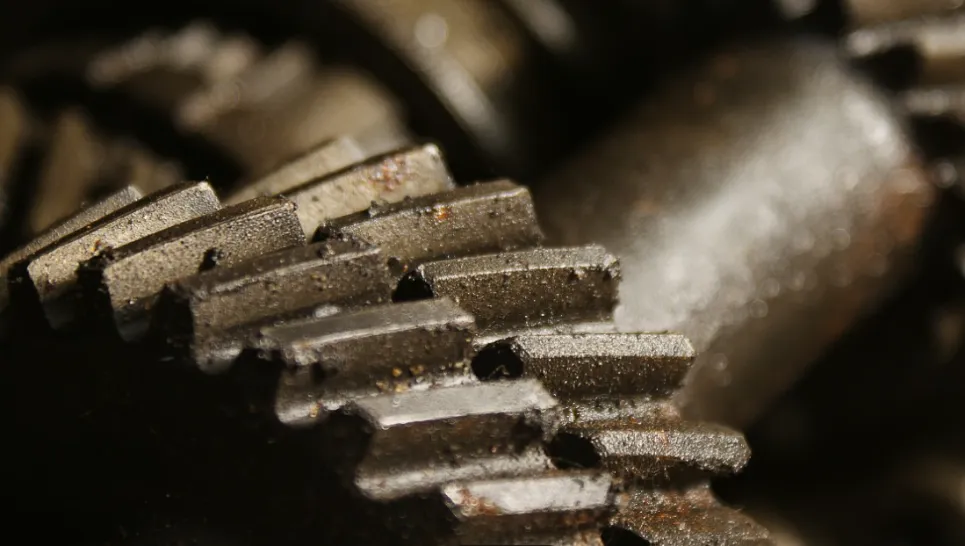
Key Testing Methods for Hydraulic Oil Analysis
Viscosity and Physical Property Testing
Physical property testing is usually the first step in hydraulic oil evaluation.
Common parameters include:
- Kinematic viscosity
- Viscosity index
- Flash point
- Water content
- Appearance
Viscosity is especially important because hydraulic systems require stable fluid flow and lubrication performance under different operating temperatures.
However, physical properties alone cannot determine whether the lubricant contains the correct additive system or whether formulation differences exist between qualified and abnormal samples.
FTIR Analysis for Hydraulic Oil Composition Evaluation
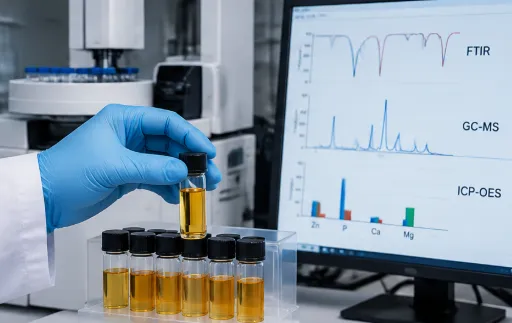
Fourier Transform Infrared Spectroscopy (FTIR) is widely used for lubricant chemical analysis because it can identify characteristic chemical structures and changes within oil samples.
FTIR analysis can help evaluate:
- Oxidation products
- Additive-related compounds
- Organic contamination
- Differences between reference and unknown lubricant samples
By comparing FTIR spectra, laboratories can identify whether a hydraulic oil has experienced chemical degradation or whether its composition differs from an approved reference sample.
FTIR testing follows established infrared spectroscopy principles described in the ASTM E1252 standard practice for infrared spectral analysis.
ICP-OES Elemental Analysis for Additive Evaluation
Hydraulic oils usually contain additive packages designed to improve anti-wear performance, oxidation resistance, and corrosion protection.
ICP-OES elemental analysis is commonly used to detect elements associated with lubricant additives, including:
- Zinc (Zn)
- Phosphorus (P)
- Calcium (Ca)
- Magnesium (Mg)
Significant differences in additive-related elements may indicate additive depletion, formulation variation, or incorrect lubricant composition.
Elemental analysis of lubricants is commonly performed according to methods such as ASTM D5185 for multi-element determination of used and unused lubricating oils by ICP-OES.
GC-MS Analysis for Organic Component Identification
Gas Chromatography-Mass Spectrometry (GC-MS) provides additional information about organic components in hydraulic oils.
GC-MS analysis can support:
- Base oil composition comparison
- Organic additive identification
- Unknown component screening
- Lubricant formulation evaluation
For lubricant benchmarking and quality investigations, GC-MS provides chemical information that cannot be obtained from basic physical testing.
Wear Performance Testing
Chemical composition analysis can be combined with performance testing to evaluate whether lubricant formulation differences affect protection capability.
For example, four-ball wear testing can evaluate anti-wear performance by measuring the lubricant’s ability to reduce friction and surface damage under controlled conditions.
Four-ball testing methods are commonly referenced in ASTM D4172 standard test method for wear preventive characteristics of lubricating fluid.
Hydraulic Oil Failure Analysis Case Study: Identifying Hidden Formulation Differences
An industrial equipment manufacturer experienced abnormal hydraulic system performance after introducing a new batch of hydraulic oil.
During incoming quality inspection, the new oil passed conventional acceptance checks. Parameters including viscosity, flash point, and appearance were within the expected acceptance range, and no obvious quality issue was identified.
However, after approximately one month of operation, multiple hydraulic pumps developed abnormal noise and increased wear. The hydraulic system operating temperature was approximately 5–8°C higher than the normal working condition.
Because routine inspection could not explain the equipment performance changes, the customer requested a comprehensive hydraulic oil analysis to compare the abnormal batch with a qualified reference sample.
The analytical program included:
- FTIR spectroscopy for chemical composition comparison
- ICP-OES elemental analysis for additive evaluation
- GC-MS analysis for organic component comparison
- Physical property testing
- Four-ball wear performance testing
The laboratory analysis identified significant differences between the qualified sample and the abnormal batch.
The key findings included:
- The concentration of key anti-wear additive elements in the abnormal sample was approximately 40% of the qualified reference sample.
- The abnormal sample showed significant differences in additive package characteristics.
- Four-ball wear testing showed that the maximum non-seizure load of the abnormal hydraulic oil was approximately 63% of the qualified reference sample.
These results indicated that although the hydraulic oil passed routine incoming inspection, its chemical formulation did not provide the expected anti-wear protection required for long-term hydraulic equipment operation.
The reduced additive protection contributed to increased friction, higher operating temperature, and accelerated hydraulic component wear.
Applications of Hydraulic Oil Analysis
Hydraulic Fluid Quality Verification
Hydraulic oil analysis helps manufacturers and industrial users confirm whether supplied lubricants meet expected formulation requirements.
Typical applications include:
- Incoming oil quality control
- Supplier batch verification
- Reference sample comparison
- Lubricant consistency evaluation
Chemical analysis provides deeper information than routine physical inspection and helps identify differences that may affect equipment reliability.
Hydraulic Oil Failure Investigation
When hydraulic systems experience abnormal conditions such as:
- Pump noise
- Increased wear
- Overheating
- Reduced operating efficiency
- Shortened lubricant life
laboratory analysis can help determine whether lubricant-related factors contributed to the failure.
Xinbodi’s failure analysis services combine chemical testing and material characterization methods to investigate possible root causes and provide evidence-based conclusions.
Lubricant Formulation Comparison and Reverse Engineering
Hydraulic oil analysis is also widely used for lubricant development and benchmarking projects.
Applications include:
- Additive package comparison
- Product quality verification
- Competitive lubricant evaluation
- Formulation improvement
By combining multiple analytical techniques, engineers can better understand lubricant composition differences and optimize product performance.
Why Choose Xinbodi for Hydraulic Oil Analysis?
Xinbodi provides laboratory-based chemical analysis services for lubricants, polymers, coatings, and industrial materials.
Our analytical approach combines:
- Chemical composition analysis
- Additive identification
- Elemental analysis
- Organic component characterization
- Failure investigation
Through comprehensive testing methods, Xinbodi helps customers identify chemical differences that cannot be detected through conventional inspection methods.
For companies requiring lubricant quality verification, hydraulic system troubleshooting, or formulation comparison, lubricant testing services provide scientific evidence for better technical decisions.
Conclusion
Hydraulic oil analysis provides a deeper understanding of lubricant performance by evaluating not only physical properties but also chemical composition and additive systems.
A hydraulic fluid may pass routine inspection while still containing formulation differences that influence equipment reliability. Through FTIR, ICP-OES, GC-MS, and performance testing, laboratory analysis can identify hidden lubricant issues and support failure prevention.
For industrial equipment manufacturers, lubricant suppliers, and maintenance teams, hydraulic oil analysis is an effective approach for improving lubricant quality control, reducing unexpected failures, and extending equipment service life.