Impurity Analysis
Identify, quantify and investigate unknown impurities, trace contaminants, unexpected peaks, residues and degradation products with a testing strategy designed around your sample and technical question. Xinbodi Laboratories combines chromatography, mass spectrometry, spectroscopy, microscopy and elemental analysis to turn an unexplained signal into clear, decision-ready evidence.
Impurity Analysis Service for Unknown and Trace Contaminants
An unexpected peak, particle or trace element can indicate a change in raw materials, processing, packaging, storage or product stability. The challenge is not simply to detect that something is present, but to determine what it is, how much is present and what the result means for the material.
Our impurity analysis services support manufacturers, R&D teams, quality departments and product developers when the main material or formulation is known but an unwanted low-level component must be investigated.

How Impurity Analysis Service Helps Your Team
Impurity analysis is critical in ensuring the safety, quality, and compliance of products across various industries. Our impurity analysis services help you identify contaminants and resolve quality concerns at the earliest stage of production or development.
Why is Impurity Analysis Important?
Reduced product quality: Impurities can affect performance and reduce effectiveness
Regulatory non-compliance: Failure to meet regulatory limits can result in legal and financial penalties
Contamination risks: Impurities may pose risks to consumer safety, especially in food, pharmaceuticals, and medical products
Increased production costs: Detecting and addressing impurities early helps avoid costly product recalls or rework
Common Problems We Help Investigate
- Unknown chromatographic peaks
Identify unexpected signals observed in GC, HPLC, GC-MS or LC-MS data. - Batch-to-batch variation
Compare conforming and nonconforming samples to locate chemical or elemental differences. - Unexpected odor or discoloration
Screen for volatile compounds, degradation products, oxidation products or process-related residues. - Particles, films and residues
Characterize foreign matter found on a product, surface, filter, production line or package. - Trace metals and ionic contaminants
Detect and quantify elemental or ionic species associated with raw materials, catalysts, corrosion, equipment wear or processing. - Degradation and stability concerns
Investigate new components produced by heat, light, oxidation, hydrolysis, aging or storage.
Applications of Impurity Analysis
Our chemical impurity testing capabilities support liquids, powders, solids, films, particles, residues, formulated products, and material surfaces across a wide range of industrial applications:
- Industrial Chemicals & Raw Materials: Identifying process impurities, reaction by-products, residual solvents, and contaminants in raw materials, intermediates, and finished products.
- Polymers, Plastics, Rubber & Resins: Analyzing residual monomers, additives, plasticizers, foreign contaminants, and degradation products in polymer materials and formulations.
- Coatings, Paints, Inks, Adhesives & Sealants: Detecting unexpected components, solvent residues, formulation impurities, and contamination that may affect appearance, adhesion, curing, or product performance.
- Lubricants, Greases, Metalworking Fluids & Petrochemical Products: Investigating wear metals, oxidation products, process contaminants, and unexpected chemical changes in oils and formulated fluids.
- Consumer Products, Cosmetics & Personal-Care Formulations: Identifying unknown ingredients, residues, contaminants, and degradation products for product development, quality investigation, and troubleshooting.
- Electronic, Semiconductor & Battery Materials: Detecting trace metals, ionic residues, organic contaminants, particles, and surface impurities that may affect material quality or performance.
- Packaging, Medical-Device & Pharmaceutical Materials: Supporting R&D and technical investigations involving residues, foreign materials, degradation products, and material-related impurities.
Industries We Serve

Chemicals
Agrochemicals, Industrial Chemicals, Dyes, Lubricants, Polymers, Plastics, Adhesives, Coatings, Rubber, Inks
Energy
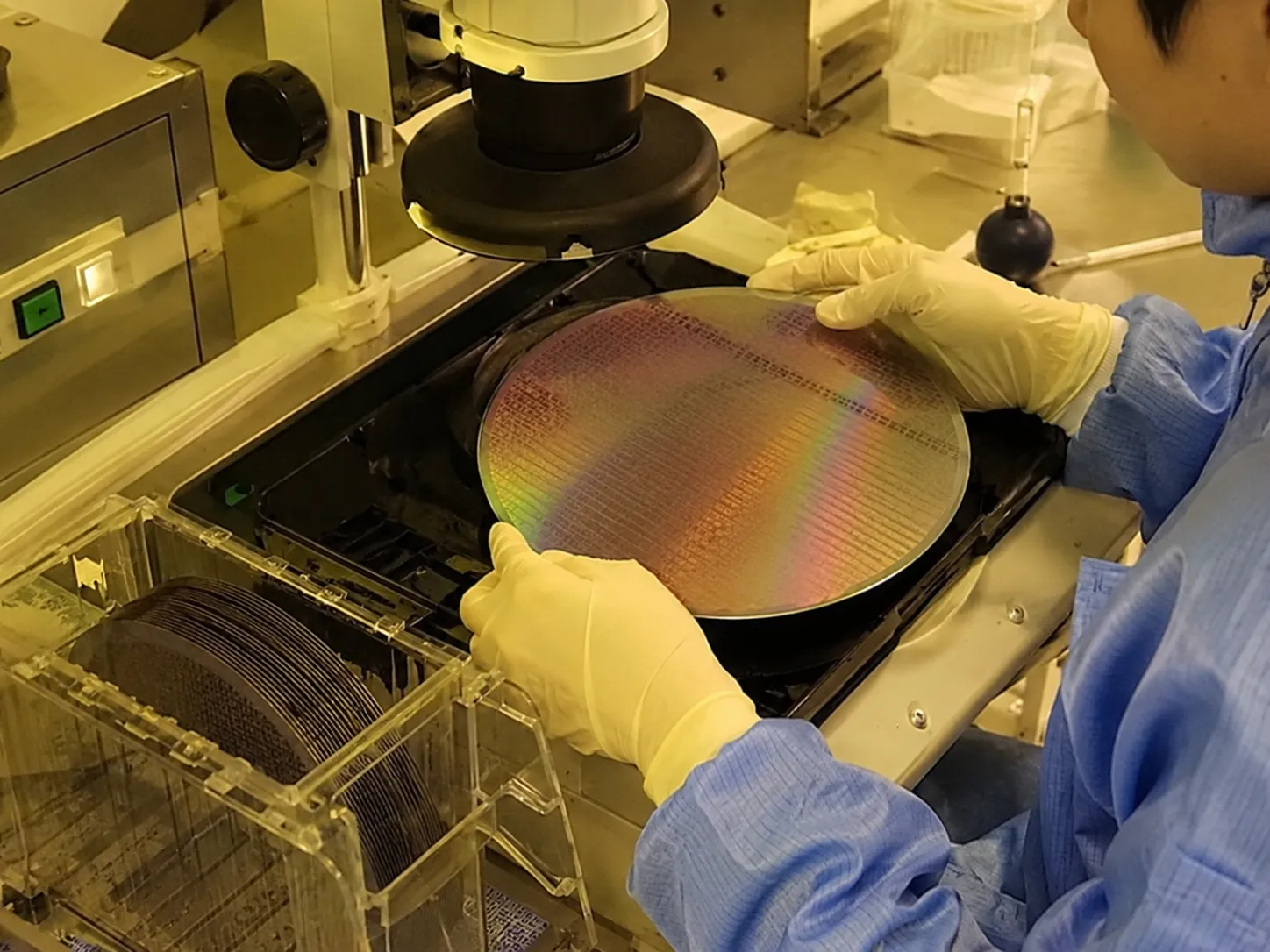
Aerospace, Semiconductors, Oil & Gas, Minerals, Biofuels, Battery Materials
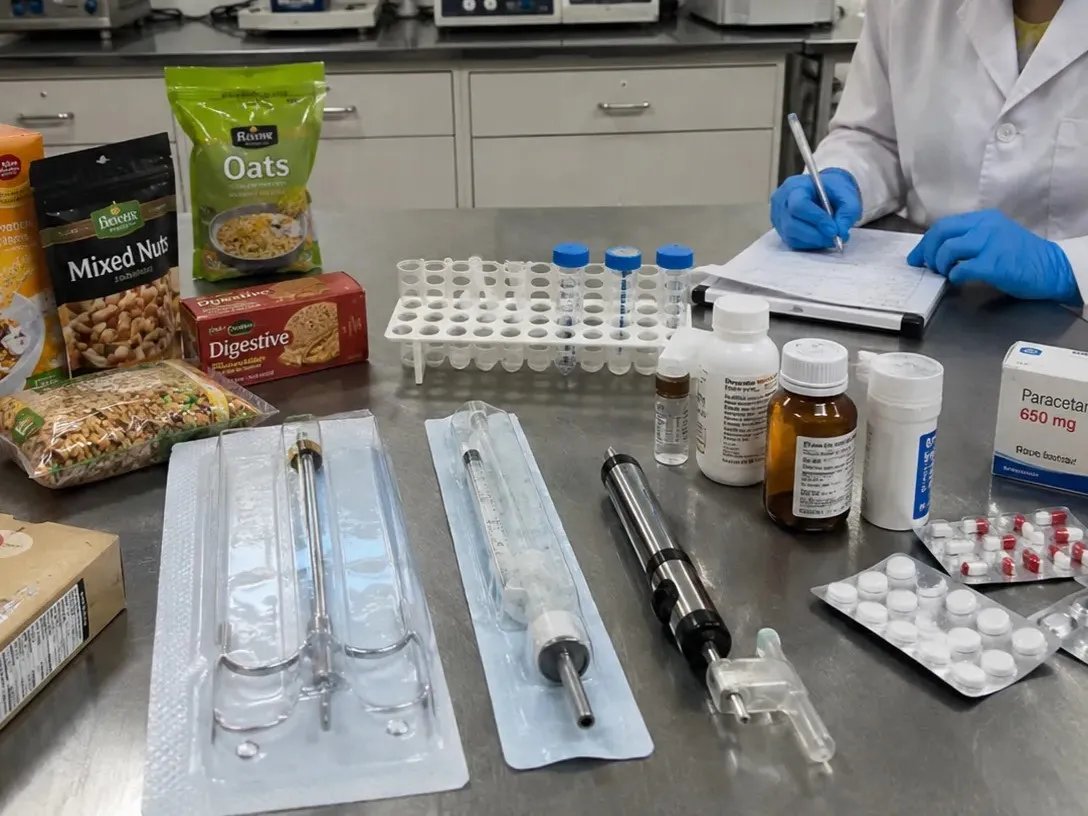
Food & Healthcare
Food, Medical Devices, Pharmaceutical
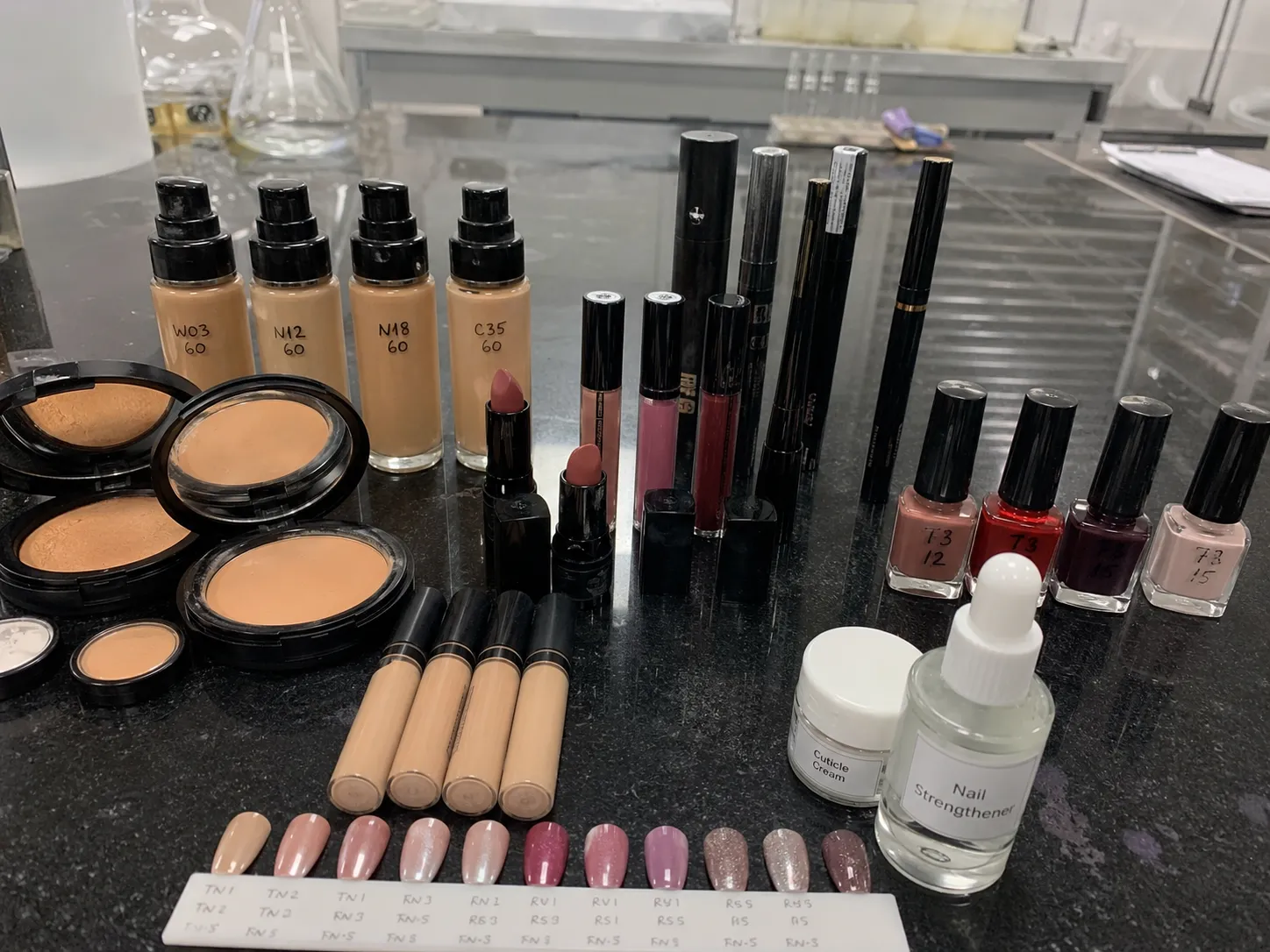
Cosmetics & Personal Care
Cosmetics Disinfection Products
Standard projects: 5–10 working days
Rush service may be available depending on scope.
Example Impurity Investigation Routes
Unexpected Peak in a Chemical or Formulated Product
Problem: A new peak appears in a routine chromatogram or in one production batch.
Possible approach: Compare the affected and reference samples, isolate the differentiating signal and use GC-MS, LC-MS, HRMS or NMR according to the compound’s properties.
Decision supported: Determine whether the signal is consistent with a raw-material impurity, by-product, degradation product or other unexpected component.
Trace Contamination in a Polymer, Coating or Adhesive
Problem: The material develops discoloration, odor, deposits or inconsistent performance.
Possible approach: Combine FTIR or Raman screening with GC-MS, Py-GC-MS, SEM-EDS or elemental analysis, depending on the form and suspected source of the impurity.
Decision supported: Compare batches or suppliers and identify chemical differences that may guide process or formulation troubleshooting.
Elemental or Ionic Contamination in an Industrial Material
Problem: Trace metals, salts or ions are suspected after a process change, equipment issue or quality deviation.
Possible approach: Use ICP-MS, ICP-OES or IC with appropriate blanks, controls and comparison materials.
Decision supported: Measure target species and compare the pattern with possible raw-material, water, equipment or environmental sources.
How Our Impurity Investigation Works
1. Define the Problem
We review the material, observed abnormality, process history, target concentration if known, existing analytical data and the decision you need to make. This prevents unnecessary testing and establishes what a successful result should answer.
2. Design the Screening Strategy
Our team selects sample preparation and analytical methods according to the likely impurity class, expected concentration and matrix. When the impurity is completely unknown, we may recommend a staged program that begins with broad screening.
3. Detect, Separate and Characterize
The sample is analyzed using the agreed methods. Depending on the problem, the work may involve chromatographic separation, mass-spectral interpretation, spectral matching, elemental measurement, microscopic examination or surface analysis.
4. Confirm and Quantify
Where the project requires it and the available evidence allows, suspected identities are checked with complementary techniques, comparison samples or reference standards. Quantitative analysis is performed using an appropriate calibration approach; otherwise, results are clearly reported as semi-quantitative or qualitative.
5. Interpret and Report
We integrate the findings into a structured report that distinguishes confirmed results from tentative assignments, explains relevant limitations and identifies practical next steps. Where appropriate, the data can be compared with raw materials, supplier samples, process residues or conforming batches to investigate a possible source.
What You Should Send
You do not need to know the correct analytical method before contacting us. To help us evaluate the project efficiently, provide as much of the following information as possible:
Material or product name, composition and physical form
The abnormality observed and when it began
Suspected impurity or target concentration, if known
Relevant production, supplier, storage or packaging changes
Existing chromatograms, spectra, certificates of analysis or test results
A conforming sample, blank, raw material or suspected source for comparison
Required reporting format, decision deadline and intended use of the data
Comparison samples are especially valuable. A good-versus-failed or before-versus-after comparison often provides stronger evidence than testing the affected sample alone.
What You Will Receive
Deliverables are defined in the quotation and may include:
Project objective, sample description and analytical scope
Sample preparation and test methods used
Relevant chromatograms, spectra, images or elemental data
Identified impurities and an appropriate confidence assessment
Clear separation of confirmed, tentative and material-class assignments
Qualitative, semi-quantitative or quantitative results, as agreed
Detection or quantification limits when established for the method
Comparison of affected and reference samples
Interpretation of findings in relation to the question investigated
Method limitations and recommended follow-up work, where needed
Beyond a comprehensive analytical report, our experts provide clear interpretation of the findings and practical recommendations to support troubleshooting, process improvement, and future production decisions.

Why Choose Xinbodi for Impurity Analysis?
- 7×24 Customer Support: Fast technical response within 24 hours.
- Fast 5–10 Day Delivery: Efficient project turnaround after sample receipt.
- Advanced Lab Capacity: 4,000+ m² R&D labs and 1000+ precision instruments.
- 60,000+ Samples Tested: Rich experience in industrial projects.
- 90%+ Reconstruction Accuracy: Reliable support for suitable deformulation cases.
- R&D Insight: Actionable solutions and production guidance with protected formulas and sample data.
- China Supplier Comparison: Evaluate materials and sourcing alternatives.