
As an independent third-party laboratory, Xinbodi delivers advanced materials testing services and comprehensive materials characterization for global industries.
When manufacturers send a sample to a testing laboratory, they are usually not looking for raw data alone.
They want answers:
- Why did this product fail?
- What material is it made of?
- Why does a competitor’s product perform better?
- Can a lower-cost raw material replace the current one?
- What changed between two production batches?
At Xinbodi Lab, materials testing projects typically deliver practical technical outputs such as:
- Material identification
- Chemical composition analysis
- Fomulation reverse engineering
- Additive and filler identification
- Contamination and impurity analysis
- Failure cause investigation
- Supplier sample comparison
- Raw material substitution support
- Product improvement recommendations
For manufacturers, these conclusions are often more valuable than the test results themselves.
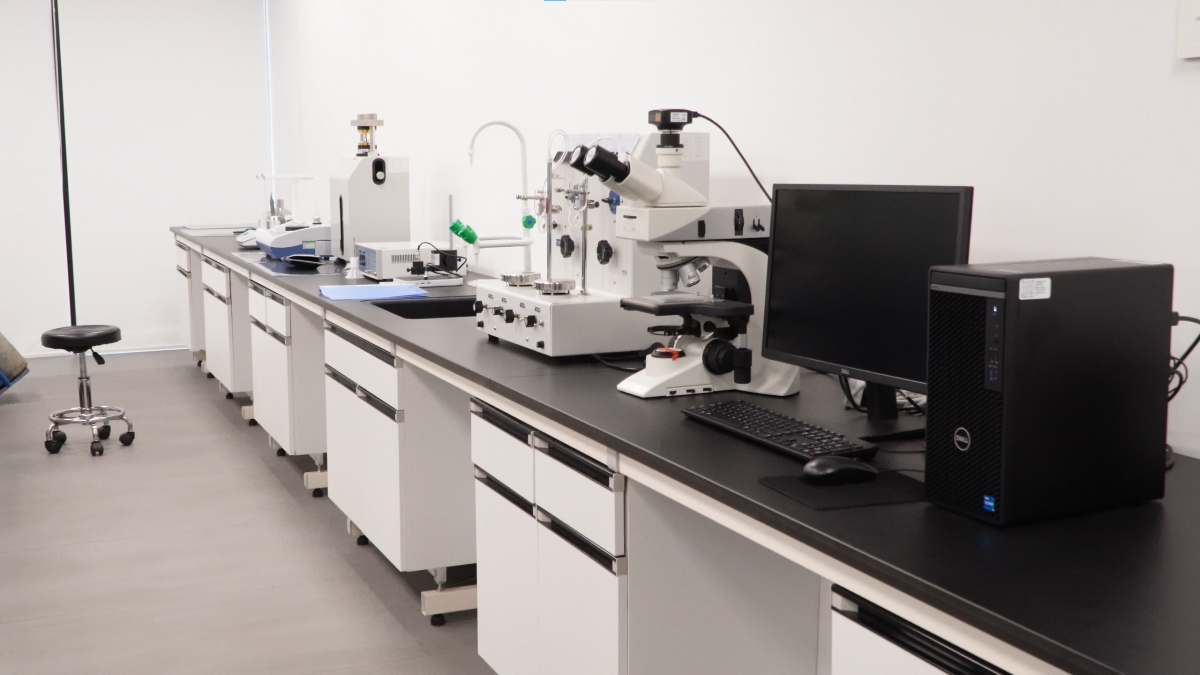
A Typical Materials Testing Project
Recently, a manufacturer submitted two TPU-coated textile samples.
The customer reported that Sample A showed significantly better abrasion resistance and weatherability than Sample B, despite both products being marketed as “TPU coated fabrics.”
The testing objective was straightforward:
Identify material differences and determine which factors may contribute to performance variation.
Step 1: Material Identification
The first step was material verification using FTIR spectroscopy.
The spectra confirmed that both samples contained thermoplastic polyurethane (TPU), but clear differences appeared in several characteristic absorption regions.
This indicated that the polymer base was similar, but the formulation and additive package were likely different.
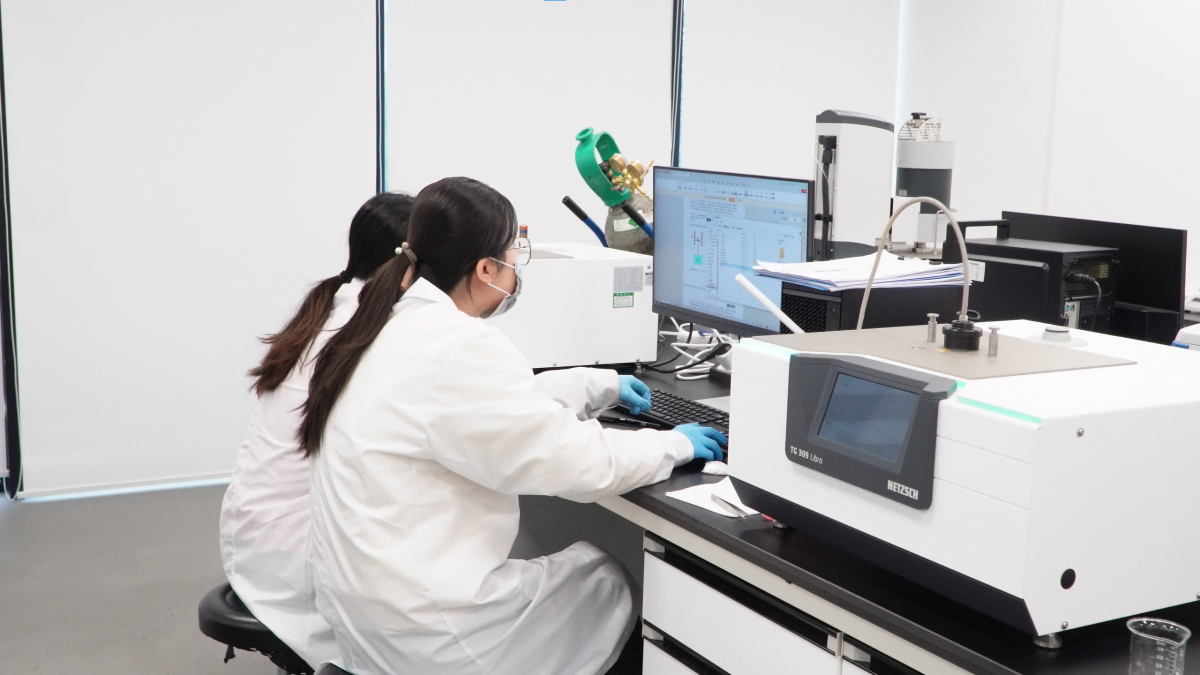
Step 2: Thermal Analysis
TGA and DSC analysis were then performed.
The results showed:
- Different inorganic filler contents
- Different thermal stability profiles
- Variations in melting and crystallization behavior
These findings suggested differences in both filler loading and polymer formulation.
Step 3: Surface and Elemental Analysis
SEM-EDS examination revealed noticeable differences in surface morphology.
Elemental mapping detected varying levels of silicon and calcium compounds.
The presence of these materials suggested that different fillers or processing aids had been incorporated into the formulations.
Step 4: Organic Component Screening
GC-MS analysis identified several organic additives associated with UV stabilization and weather resistance.
The higher-performing sample contained a more complex stabilizer package, which may contribute to improved outdoor durability.
Final Technical Conclusion
Although both materials were TPU-based systems, the differences in filler content, additive selection, and formulation design likely contributed to the performance gap.
For the customer, the most important outcome was not simply confirming that both samples were TPU. The real value was understanding which formulation factors should be evaluated during future product development.
Materials Testing for Failure Analysis
For example, a PC housing used in an electronic product developed cracks after several months of use.
Material testing may follow a workflow such as:
- FTIR to confirm material type
- DSC to evaluate thermal history
- SEM to observe fracture morphology
- EDS to identify contamination or foreign particles
- GC-MS to screen potential chemical exposure
In many cases, the root cause is not a single factor.
Stress concentration, material degradation, processing conditions, contamination, and environmental exposure can all contribute to failure.
The purpose of testing is to narrow down possible causes and provide evidence-based conclusions.
Materials Testing for Product Development
A manufacturer may submit a competitor’s UV-coating sample and ask:
“Why does this coating show better weather resistance than ours?”
A typical analytical workflow may include:
- FTIR for resin identification
- GC-MS for additive screening
- ICP-OES for elemental analysis
- TGA for filler content determination
- SEM-EDS for coating structure evaluation
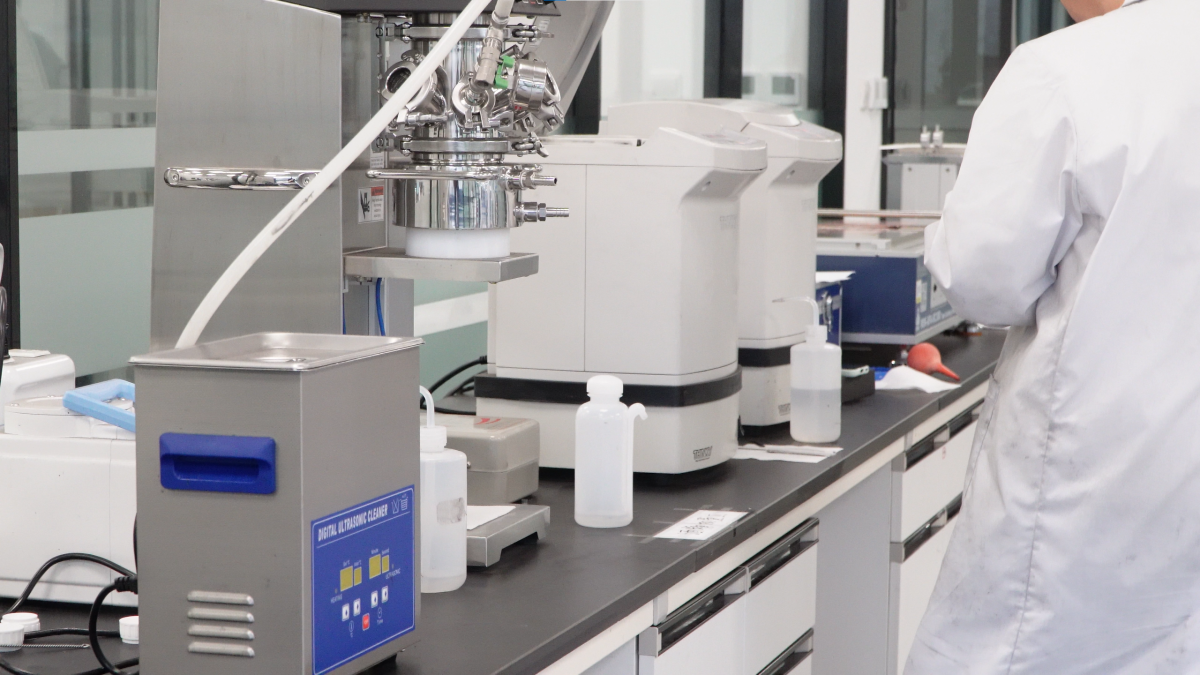
By combining multiple analytical techniques, manufacturers can gain insight into formulation strategy, material selection, and potential performance drivers.
This information can support:
- Product benchmarking
- Formulation optimization
- Raw material substitution
- Cost reduction projects
- New product development
What Materials Can Be Tested?
Xinbodi Lab supports testing for a wide range of materials and products, including:
- Plastics (PC, ABS, PP, PA, PBT, POM)
- Rubber materials
- TPU and TPE products
- Coatings and paints
- Adhesives and sealants
- Composite materials
- Electronic materials
- Fibers and films
- Chemical auxiliaries
- Industrial chemicals
Different sample types require different analytical strategies. The most effective testing plan depends on the customer’s technical question, not simply the sample itself.
Why Choose Xinbodi Lab Supports Materials Testing Services
Composition and ratio analysis
Backed by 4,000+ m² R&D labs, 100+ precision instruments, and 60,000+ sample orders, we apply multi-method analysis to complex chemical and material samples. We identify key ingredients, additives, fillers, impurities, and estimated component proportions where technically possible.
Raw material selection guidance
We explain the role of key raw materials and support supplier comparison, material substitution, and cost reduction. Based in Shanghai, we help global manufacturers evaluate China-based alternatives and make informed sourcing decisions.
Formulation reverse engineering and optimization support
For suitable projects, internal experience shows reconstruction accuracy can exceed 90%, depending on sample complexity. We help manufacturers compare formula differences, improve product performance, and reduce R&D trial-and-error.
Beyond testing: R&D recommendations
We help translate test data into formulation improvement, failure diagnosis, process direction, and next-step validation. we provide suggested product manufacturing process direction to support small-scale validation, production adjustment, or further product development.
Dedicated technical communication team
We provide technical director support and a dedicated project communication team. Also provide a response within 24 hours, confidential project handling, and results for many projects in about 7–10 working days after sample receipt.
Need Materials Testing Support?
Whether you are investigating a failed PC component, comparing TPU formulations, evaluating a UV-coating system, or looking for raw material alternatives, Xinbodi Lab can help transform sample analysis into practical technical direction.
Contact Xinbodi Lab to discuss your sample, testing objective, and recommended analysis plan.