
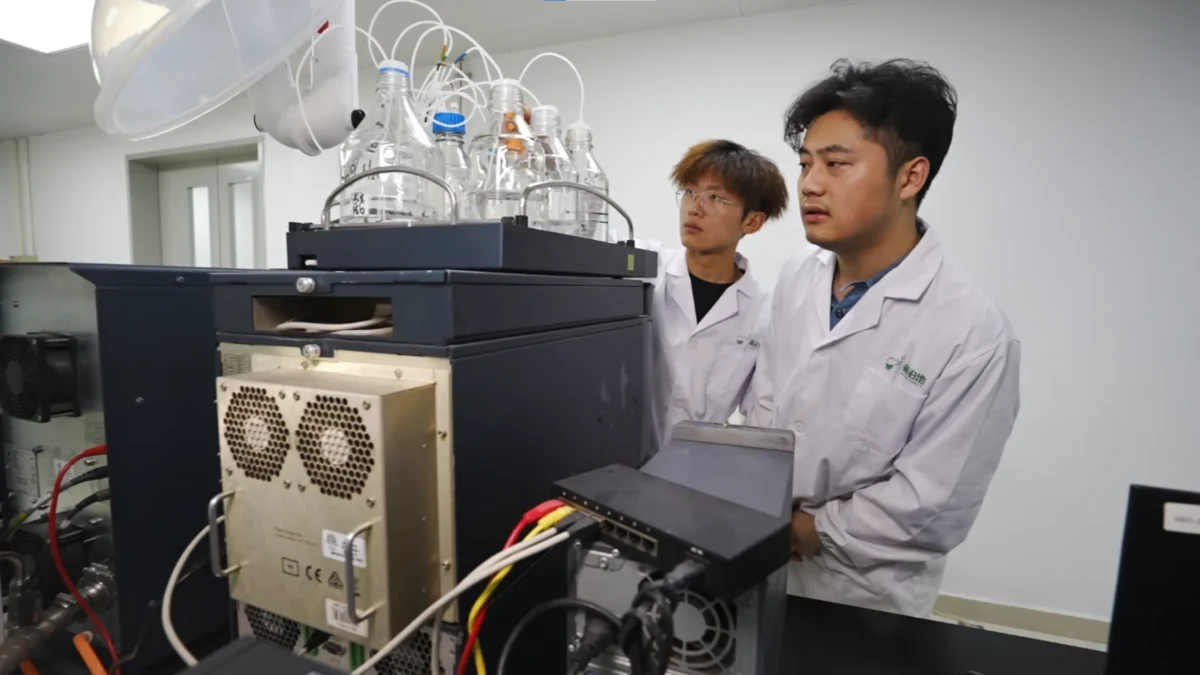
In modern manufacturing industries such as rubber, plastics, coatings, adhesives, and electronic materials, product performance is no longer determined only by raw material selection. Small changes in additives, fillers, processing conditions, or contamination can significantly affect final quality. A polymer test lab is not just a testing service provider. It is a technical support system that helps companies understand materials at a deeper level—supporting quality control, failure analysis, reverse engineering, and product development.
As products become more complex and performance requirements increase, many companies face recurring issues:
- Products crack or fail earlier than expected
- Performance differences between batches are difficult to explain
- Imported materials cannot be easily substituted
- New product development cycles are too long
- Quality issues appear only after mass production
These challenges are difficult to solve through production adjustments alone. This is where a polymer test lab becomes essential.
What Does a Polymer Test Lab Do?
1. Material Identification
Determining what a material is made of, including polymer type, additives, and fillers.
2. Failure Analysis
Identifying why a product fails, such as cracking, discoloration, odor, or loss of strength.
3. Formulation Reverse Engineering
Analyzing competitor or imported products to understand formulation systems.
4. Product Development Support
Helping optimize existing formulations to improve performance or reduce cost.
In practice, most industrial clients do not come for “testing alone.” They come because they have a problem that cannot be solved internally.
When Do Companies Need a Polymer Test Lab?
Most companies turn to a polymer test lab when they face one or more of the following situations:
- Rubber products develop surface blooming or powder formation
- Plastic parts become brittle after aging
- Adhesives lose bonding strength unexpectedly
- Coatings peel off under humidity or heat
- Industrial cleaning agents show inconsistent performance
- Suppliers deliver materials with unstable quality
- New product development fails repeated trials
- Import substitution is required but formulation is unknown
In these cases, trial-and-error development becomes expensive and slow. A polymer test lab helps move from guessing to data-driven decisions.
Industrial Case Studies
Case 1: Rubber Surface Blooming Issue
A rubber sealing product showed white powder formation after storage, affecting appearance and customer acceptance.
Analysis findings:
- Excess low-molecular-weight additives migrated to the surface
- Improper compatibility between plasticizer and polymer matrix
Result:
After formulation adjustment, blooming was eliminated and product shelf life increased from 3 months to over 12 months.
Case 2: Import Substitution of Cleaning Agent
A manufacturer relied on imported industrial cleaning fluid with unstable supply and high cost.
Analysis findings:
- Core system identified as nonionic–anionic surfactant blend
- Presence of amine-based corrosion inhibitors confirmed
Result:
A localized formulation was developed with equivalent cleaning performance and 30–35% lower cost.
Case 3: Adhesive Bond Failure
An industrial adhesive failed under high humidity conditions.
Analysis findings:
- Insufficient crosslinking density
- Improper curing agent ratio
- Moisture sensitivity of additive system
Result:
After formulation optimization, bonding strength improved significantly and failure rate dropped sharply in production.
Key Techniques Used in a Polymer Test Lab
A modern polymer test lab uses multiple analytical techniques to ensure accurate results. Each method provides different types of information.
FTIR (Fourier Transform Infrared Spectroscopy)
Used to identify polymer types such as PE, PP, PVC, NBR, EPDM.
It helps answer: “What is the base material?”
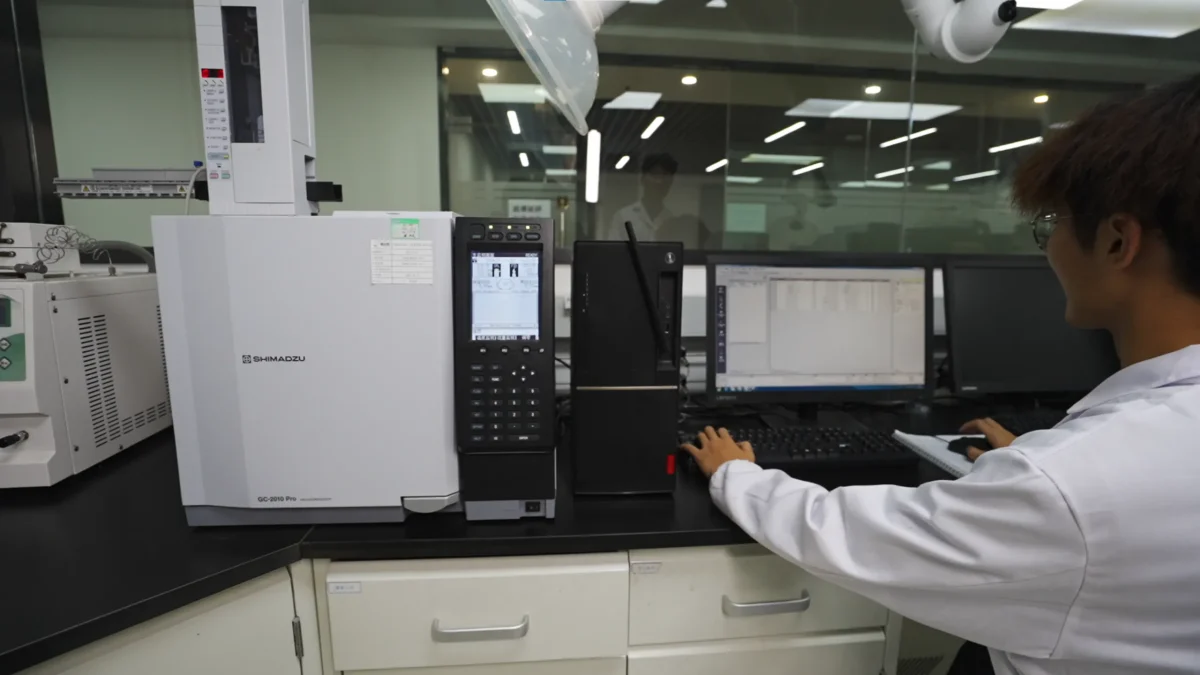
GC-MS (Gas Chromatography–Mass Spectrometry)
Used to analyze organic additives such as plasticizers, antioxidants, solvents, and VOCs.
It helps detect small but critical formulation components.
ICP-OES / ICP-MS
Used for detecting trace metal elements and inorganic fillers.
Important for catalysts, stabilizers, and contamination analysis.
TGA (Thermogravimetric Analysis)
Measures weight loss under heat to estimate filler content and thermal stability.
DSC (Differential Scanning Calorimetry)
Used to analyze melting point, glass transition temperature, and crystallization behavior.
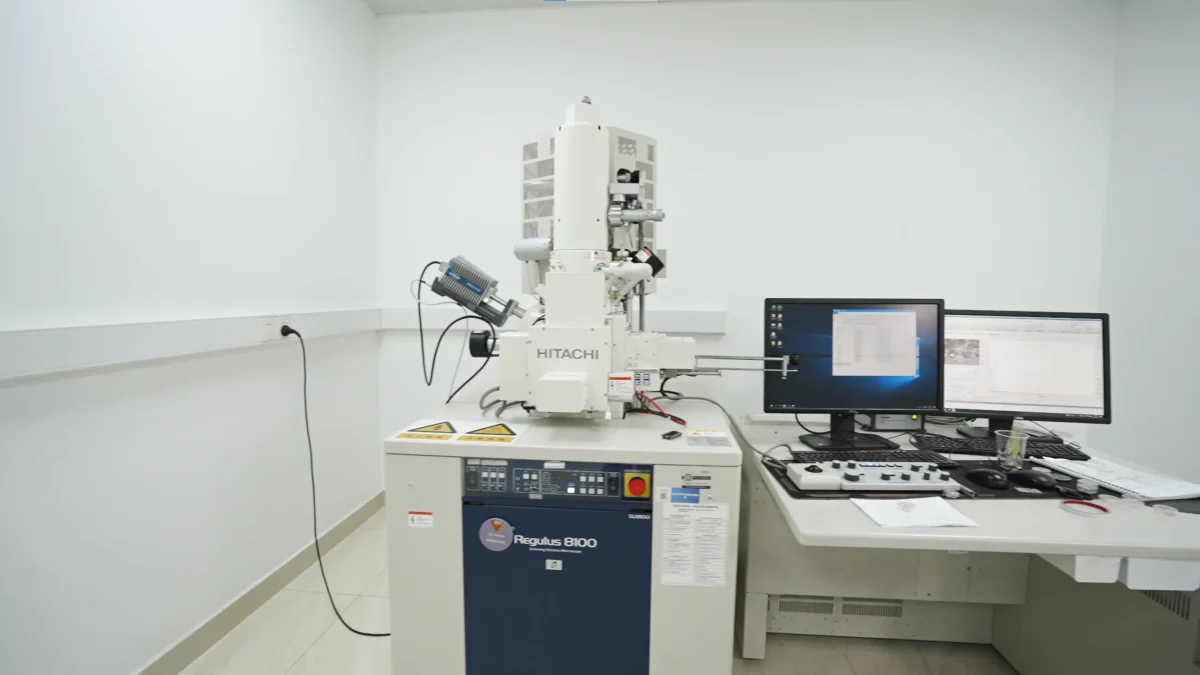
SEM (Scanning Electron Microscopy)
Used to observe surface morphology, cracks, and dispersion quality.
Each method alone is not sufficient. A reliable polymer test lab always combines multiple techniques to confirm conclusions.
Why Choose Xinbodi Lab
Fast Response & Efficient Turnaround
Get a response within 24 hours, with technical director support and results for many projects delivered in about 7-10 working days after sample receipt.
Advanced Lab Capacity & Testing Methods
Backed by 4,000+m² R&D labs, 100+ precision instruments, and 60,000+ sample orders, we apply multi-method analysis to complex chemical and material samples.
High-Accuracy Formulation Reconstruction
For suitable deformulation and formulation reconstruction projects, internal experience shows reconstruction accuracy can exceed 90%, depending on sample complexity.
Beyond Testing: R&D Support
We turn test data and component analysis into formulation insights, failure diagnosis, raw material guidance, and next-step technical recommendations to help reduce cost and improve development efficiency.
China Supply Chain Advantage
Based in Shanghai, we help global manufacturers compare supplier samples, evaluate China-based alternatives, and make informed sourcing decisions.
Confidential Project Handling
We protect proprietary formulations, samples, supplier information, and IP-sensitive data throughout the testing and reporting process.