
PVC products can contain much more than PVC resin. Flexible formulations may include plasticizers, stabilizers, fillers, lubricants, pigments, fragrances and other functional additives that directly affect flexibility, durability, surface condition and long-term performance.
When a PVC product becomes oily, sticky, brittle, loses fragrance, develops surface deposits or performs differently from a qualified reference, confirming that the material is “PVC” is not enough.
PVC analysis helps identify plasticizers and additives, compare formulations, investigate migrated substances and determine which compositional differences may be related to product failure.
Xinbodi provides chemical analysis services for plastics and formulated materials, including composition analysis, material comparison and failure investigation.

What Can PVC Analysis Identify?
A PVC analysis program can be designed around the specific problem rather than applying the same test package to every sample.
| Analysis Area | What Can Be Investigated |
|---|---|
| PVC resin | Polymer identity and major resin characteristics |
| Plasticizers | Plasticizer type and selected concentration |
| Stabilizers | Calcium/zinc and other stabilization systems |
| Fillers | Calcium carbonate, silica and other inorganic materials |
| Organic additives | Lubricants, processing aids and selected functional additives |
| Fragrance components | Volatile and semi-volatile fragrance compounds |
| Surface deposits | Chemical composition of oily residue, bloom or exudate |
| Formulation differences | Benchmark vs. in-house or qualified vs. abnormal material |
| Migration | Components moving toward the surface or into contacting materials |
For more complex projects, Xinbodi’s composition analysis services can combine organic, thermal and elemental methods to build a broader formulation profile.
Can PVC Analysis Identify Plasticizers?
Yes. Plasticizer analysis is one of the most common applications of PVC testing.
Flexible PVC may contain phthalates, citrates, adipates, trimellitates, terephthalates, polymeric plasticizers or other systems depending on the application.
GC-MS, FTIR, thermal analysis and targeted quantitative methods may be combined to determine the plasticizer type and estimate or quantify its concentration.
Plasticizer identification is important because different systems can influence:
- flexibility and hardness;
- low-temperature performance;
- volatility;
- extraction resistance;
- migration behavior;
- compatibility with other additives.
However, plasticizer identity alone does not predict migration.
A peer-reviewed study on PVC plasticizer migrability found that migration behavior depends on factors including plasticizer chemistry, concentration, polymer compatibility and the contacting material.
Why Do Plasticizers and Other Additives Migrate from PVC?
Most conventional PVC plasticizers are physically incorporated into the polymer matrix rather than chemically bonded to the PVC chains.
Under certain conditions, mobile molecules can gradually diffuse through the material and reach the surface or transfer into another material.
Migration can be influenced by:
- plasticizer molecular structure;
- concentration;
- PVC formulation;
- temperature;
- storage time;
- contact material;
- fillers and other additives;
- processing history.
A broader review of PVC plasticizer migration and mitigation strategies also describes migration as a formulation-dependent problem rather than a property controlled by one ingredient alone.
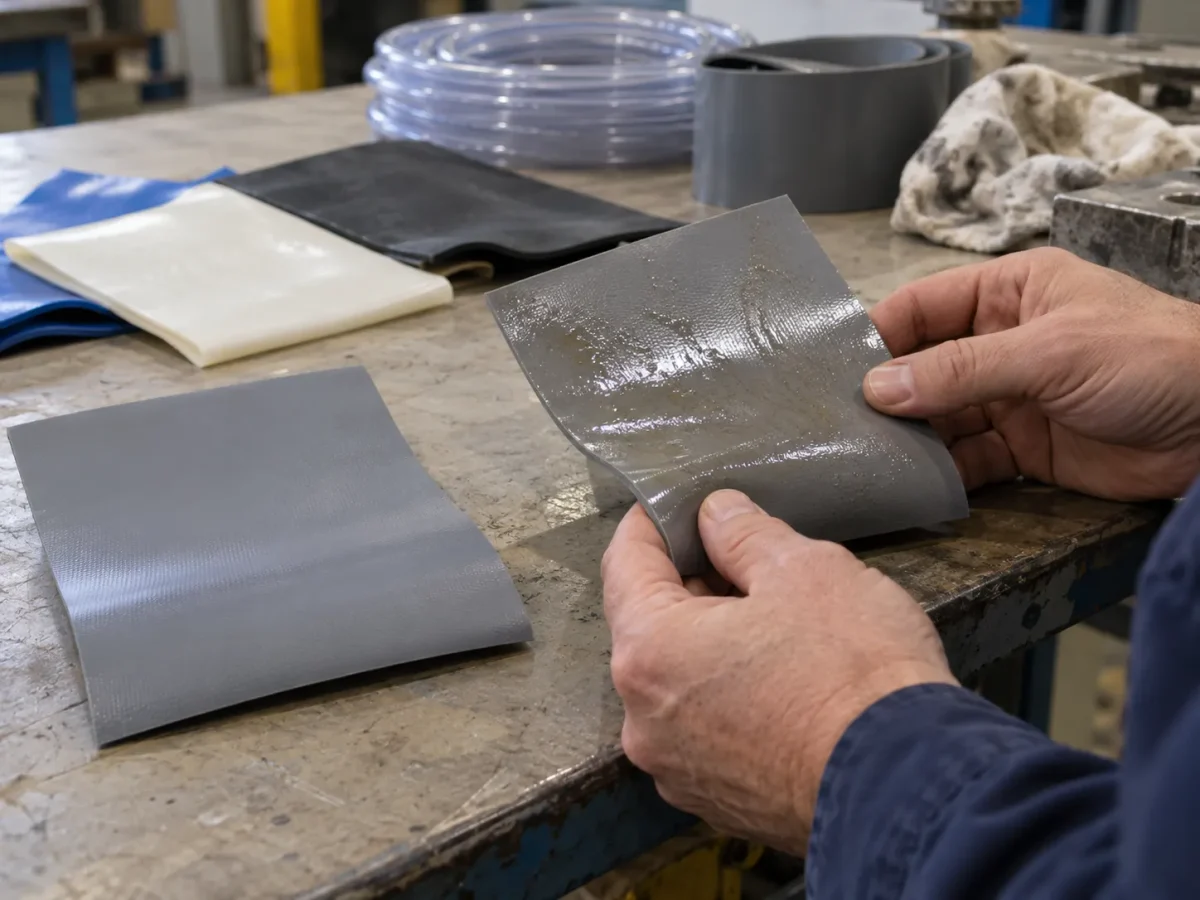
Does an Oily PVC Surface Always Mean Plasticizer Migration?
No.
Surface oil may contain plasticizer, but it can also contain:
- fragrance oil;
- lubricant;
- processing aid;
- stabilizer-related material;
- other low-molecular-weight additives.
In some cases, the surface deposit is a mixture.
This is why the exuded material itself should be analyzed whenever possible instead of assuming that all visible oil is plasticizer.
Can PVC Analysis Investigate Fragrance Loss?
Yes. This is particularly useful for scented PVC products, toys, decorative products and other materials designed to release fragrance over time.
Fragrance loss may involve:
evaporation into air, diffusion through the plasticized PVC matrix, or migration toward the product surface.
Simply adding more fragrance does not necessarily increase fragrance lifetime. If the formulation cannot retain the fragrance effectively, a higher loading may instead increase surface oiliness and accelerate loss.
Headspace GC-MS or controlled-aging comparisons can be used to follow selected fragrance markers over time and compare different formulations under the same conditions.
Which Laboratory Methods Are Used for PVC Analysis?
No single instrument can completely characterize a compounded PVC formulation.
FTIR Identifies PVC and Major Organic Chemistry
FTIR is commonly used to confirm the polymer and screen major organic functional groups.
It is useful for:
- PVC identification;
- plasticizer screening;
- reference-sample comparison;
- surface-deposit screening.
Because different formulation components may have overlapping absorption bands, FTIR is generally combined with other methods for detailed composition analysis.
GC-MS Identifies Plasticizers and Organic Additives
GC-MS is particularly useful for extractable organic ingredients such as:
- plasticizers;
- fragrance compounds;
- lubricants;
- processing aids;
- selected organic additives.
For migration investigations, surface residue can be analyzed separately and compared with the bulk PVC material.
TGA Compares Plasticizer, Polymer and Filler Fractions
Thermogravimetric analysis measures mass changes as the sample is heated.
It can help compare:
- volatile or plasticizer-rich fractions;
- polymer decomposition;
- inorganic residue;
- overall filler level.
TGA is valuable for formulation comparison, but overlapping decomposition steps mean it normally cannot assign an exact percentage to every individual ingredient by itself.
Elemental Analysis Supports Filler and Stabilizer Identification
XRF, ICP-OES or SEM-EDS may provide supporting information for inorganic components such as:
- calcium carbonate;
- silica;
- titanium-containing pigments;
- calcium/zinc stabilization systems.
Elemental results should be interpreted together with organic and thermal analysis because identifying an element does not automatically identify its exact chemical compound.
Can PVC Analysis Determine the Complete Formula?
It can provide a detailed formulation profile, but not every ingredient can always be assigned an exact concentration.
A useful report should distinguish between:
| Result | Meaning |
|---|---|
| Identified | Chemical identity supported by analytical evidence |
| Quantified | Concentration measured using an appropriate quantitative method |
| Semi-quantitative | Approximate level determined analytically |
| Formulation estimate | Estimated by integrating several analytical methods |
| Comparative finding | Difference observed between two samples |
When the goal is to reconstruct a competitor or benchmark formulation, the project can be extended into deformulation and reverse engineering.
Case Study: PVC Analysis for Fragrance Loss and Surface Exudation
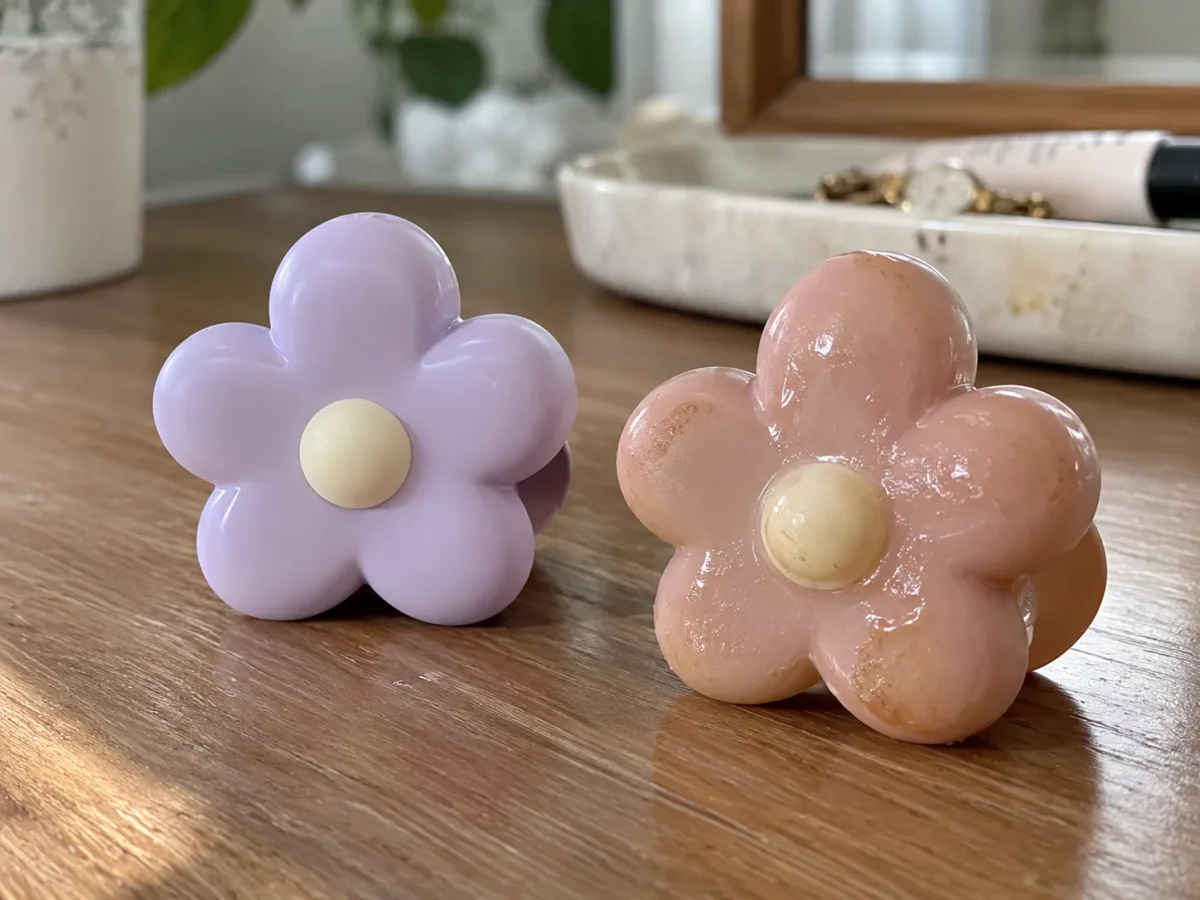
A manufacturer of scented PVC decorative products found that its in-house material did not retain fragrance as long as a benchmark product.
During storage, oily residue also appeared on the surface.
Increasing the fragrance dosage made the surface oiliness worse without providing the required long-term fragrance retention.
The manufacturer submitted:
- a benchmark scented PVC product;
- the in-house PVC product;
- oily residue collected from the affected surface.
The objective was to determine whether the difference originated from the PVC resin, plasticizer, fragrance system, filler or other formulation components.
What Did the PVC Composition Comparison Find?
FTIR, GC-MS, TGA and complementary elemental analysis showed that the PVC resin fraction was similar between the two products.
The larger differences were found in the plasticizer system, fragrance-retention strategy and filler level.
The values below are approximate formulation estimates based on combined analytical evidence rather than direct single-instrument measurements.
| Component | Benchmark | In-House Product |
|---|---|---|
| PVC resin | ~58.2 wt% | ~57.6 wt% |
| ATBC-type citrate plasticizer | ~28.5 wt% | — |
| DEHP/DOP-type phthalate plasticizer | — | ~26.8 wt% |
| Fragrance-related fraction | ~4.2 wt% | ~3.0 wt% |
| Porous silica associated with fragrance system | ~3.5 wt% | Not detected as comparable system |
| Calcium carbonate filler | ~4.1 wt% | ~9.8 wt% |
| Calcium/zinc stabilization system | ~1.5 wt% | ~1.3 wt% |
The stabilizer levels were relatively similar, making them less likely to explain the large performance difference.
What Was Migrating to the PVC Surface?
GC-MS analysis of the oily residue detected fragrance-related compounds together with a smaller contribution from the phthalate-type plasticizer.
This finding was important because the failure was not simply “plasticizer bleeding.”
The visible surface material was strongly associated with the fragrance system itself.
The technical question therefore became:
Why was the in-house formulation unable to retain its mobile fragrance components as effectively as the benchmark?
Why Did the Two PVC Formulations Behave Differently?
The Plasticizer Systems Were Different
The benchmark and in-house products used different plasticizer systems.
However, it would be scientifically incorrect to conclude that ATBC always has lower migration than DEHP or other phthalates.
Research has shown that relative migration depends strongly on the experimental environment and formulation. The relevant finding in this project was that the two complete PVC systems had different compatibility and migration behavior, not that one plasticizer is universally superior.
The Benchmark Used a Porous Fragrance-Carrier System
A silica-rich porous component was identified in the benchmark but not in the in-house material.
The analytical evidence was consistent with some fragrance being associated with this carrier rather than existing entirely as free mobile liquid in the PVC phase.
This provided a plausible mechanism for improved fragrance retention, although the exact release mechanism requires performance testing rather than being inferred from silica detection alone.
The In-House Product Contained More Mineral Filler
The in-house formulation contained substantially more calcium carbonate.
Higher filler loading changes the available polymer/plasticizer phase and can affect the distribution and mobility of other formulation ingredients.
The filler difference therefore formed part of the overall formulation explanation, although calcium carbonate alone could not be identified as the sole cause of migration.
How Did the Analysis Support PVC Formulation Optimization?
Based on the comparative results, the manufacturer adjusted the formulation around three areas:
- The plasticizer system was changed toward the benchmark formulation architecture.
- A porous fragrance-carrier system was introduced.
- Calcium carbonate loading was reduced.
The development objective was not simply to copy individual ingredients.
It was to improve the balance between:
PVC resin + plasticizer + fragrance + carrier + filler.
Under the customer’s project-specific validation conditions, the revised formulation showed no obvious oily exudation after approximately 12 weeks of room-temperature storage.
Fragrance-retention testing also approached the benchmark under the same comparative conditions, and the customer reported that practical fragrance retention increased from approximately 2–3 weeks to more than 8 weeks.
These results apply only to this specific project and should not be interpreted as general performance claims for any individual plasticizer or additive.
Can PVC Analysis Be Used for Supplier Quality Control?
Yes.
Manufacturers can establish an approved PVC product as a reference and compare future batches or alternative suppliers against it.
PVC analysis can help answer questions such as:
Has the Plasticizer System Changed?
GC-MS and supporting methods can compare plasticizer chemistry between batches.
Has the Filler Content Increased?
TGA and elemental analysis can identify meaningful differences in inorganic content.
Has the Stabilizer or Additive System Changed?
Elemental and chemical analysis can compare selected formulation indicators.
What Is Causing New Surface Deposits?
The surface material can be analyzed separately and compared with the original PVC formulation.
This is particularly useful when routine hardness, appearance or basic material specifications remain acceptable but product performance changes.
What Samples Should Be Sent for PVC Analysis?
Comparative samples provide the strongest evidence.
For quality-control projects, send the abnormal or new batch together with an approved reference.
For migration investigations, send the PVC product together with any surface deposit or contacting material when available.
For product-development projects, provide both the benchmark material and the current prototype.
Background information such as storage conditions, operating temperature, time before failure and known formulation details can also help determine the most appropriate analytical plan.
How Xinbodi Supports PVC Analysis
Xinbodi provides PVC analysis, plasticizer identification, additive analysis, formulation comparison and migration investigation for flexible and rigid PVC products.
Depending on the problem, the analytical workflow can combine FTIR, GC-MS, thermal analysis, elemental analysis and targeted migration or headspace evaluation.
Our broader chemical analysis and testing services can also support composition analysis, material identification, deformulation and failure investigation for complex product problems.
For PVC and other polymer materials, polymer and plastic testing services can be used for supplier comparison, formulation development, material replacement and product failure investigations.
The goal of PVC analysis is not simply to confirm that a sample contains PVC. It is to determine which plasticizers and additives are present, what is migrating, how the formulation differs from the reference, and which differences matter to product performance.