
Reverse engineering a rubber component is not always difficult because of the main elastomer. In many cases, the real challenge is finding the low-level additives hidden inside a highly filled and crosslinked rubber matrix.
An Indonesian rubber manufacturer encountered this problem while developing a local alternative to a German automotive rubber component designed for exposure to acidic and alkaline environments.
The development compound could meet basic structural requirements, but its chemical resistance remained below the benchmark. An earlier third-party laboratory analysis had not identified any specific component that could explain the performance difference.
Xinbodi was therefore asked to perform a more targeted rubber formulation analysis.
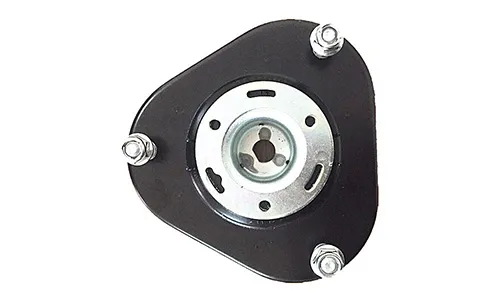
Rubber Formulation Analysis for Automotive Components
The project was not approached as a simple question of:
“What type of rubber is this?”
The manufacturer already knew that the key challenge was chemical resistance. The more useful analytical question was:
Does the benchmark rubber contain a low-level additive system that is absent from the development compound?
This distinction matters because automotive rubber compounds can contain an elastomer matrix, reinforcing fillers, processing oils, curing chemicals, antioxidants, antiozonants, plasticizers, and other functional additives.
Xinbodi’s rubber testing and analysis services therefore treat composition analysis as a multi-component investigation rather than assuming that one test can reveal a complete formulation.
A recent peer-reviewed review on reverse engineering of vulcanized rubber compounds likewise explains that reliable rubber formulation reconstruction normally requires complementary analytical approaches because polymers, fillers, oils, curatives, and minor additives behave very differently during analysis.
Rubber Compound Testing and Analysis: Why Minor Additives Can Be Missed
Low-level organic additives are particularly difficult to identify in vulcanized rubber.
The rubber network itself produces strong analytical signals, while carbon black, mineral fillers, processing oils, and other formulation ingredients can interfere with minor components. A conventional bulk analysis may therefore reveal the main elastomer and filler system while overlooking an additive present at a much lower concentration.
This was the central analytical difficulty in the automotive component.
Rather than repeating the previous screening approach, the laboratory designed a separation and enrichment strategy. The workflow first narrowed the possible chemical class based on the required acid/alkali resistance, then separated relevant fractions from the rubber matrix before concentrating the fraction containing the suspected minor components.
This type of workflow has a strong analytical basis. A published study on organic rubber additive analysis demonstrated that separating and enriching different fractions can help identify rubber additives that would otherwise be obscured by major components such as processing oils.
The specific solvents, instrumental parameters, additive identities, and concentrations used in the Xinbodi project are not disclosed here.
Rubber Reverse Engineering Workflow
The project followed a progressively targeted analytical strategy rather than running a fixed list of instruments.
| Step | Analytical objective |
|---|---|
| 1. Define the performance difference | Focus the investigation on acid and alkali resistance rather than general rubber identification |
| 2. Develop formulation hypotheses | Consider which component classes could contribute to the benchmark’s chemical resistance |
| 3. Separate the rubber matrix | Reduce interference from the main elastomer, fillers, oils, and other abundant components |
| 4. Enrich minor fractions | Increase the relative concentration of low-level candidate additives |
| 5. Characterize the enriched fraction | Identify characteristic compounds using appropriate analytical evidence |
| 6. Formulation validation | Introduce the identified additive system into a development compound and evaluate performance |
This illustrates an important difference between routine material identification and rubber deformulation and reverse engineering.
Material identification may tell the manufacturer what the principal rubber family is. Reverse engineering must go further and investigate the lower-level formulation components that differentiate one compound from another.
Chemical Analysis of Rubber: What Was Found?
After fraction separation and targeted enrichment, the laboratory identified a low-level additive system associated with the benchmark formulation that had not been identified in the earlier third-party analysis.
According to the project record, these additives were uncommon in the manufacturer’s existing rubber formulation practice, which explained why they had not previously been considered during development.
The Indonesian manufacturer subsequently sourced the identified additives and introduced them into its development formulation at the recommended experimental proportions.
Follow-up formulation trials showed an improvement in acid and alkali resistance.
However, this result should not be interpreted as evidence that these additives alone determine the chemical resistance of the rubber.
A rubber compound’s resistance to aggressive media also depends on the base elastomer, crosslink structure, filler system, plasticizer selection, compound morphology, and exposure conditions. The analytical finding therefore identified an important formulation difference and a useful development direction, rather than proving a universal additive recipe.
For projects where the objective is primarily to establish what components are present, Xinbodi’s chemical composition analysis services can be used before moving into more detailed formulation reconstruction.
What Rubber Formulation Analysis Can Tell Manufacturers
This case highlights an important point about rubber compound testing and analysis:
The largest ingredient is not always the ingredient responsible for the most meaningful performance difference.
For benchmark-based development, a useful analytical program may need to distinguish between:
- the main elastomer system;
- reinforcing and mineral fillers;
- processing oils and plasticizers;
- curing-related chemicals;
- antioxidants and protective additives; and
- low-level functional additives that require targeted separation or enrichment.
The strongest reverse-engineering projects also compare analytical findings with controlled formulation trials.
Analytical evidence can identify what is different between two rubber compounds. Experimental validation is still needed to determine how much that difference contributes to final performance.
Conclusion
In this automotive rubber reverse-engineering case, routine analysis was insufficient to reveal the formulation difference that mattered most.
By shifting from general screening to targeted separation, enrichment, and characterization, the investigation identified a previously overlooked low-level additive system in the German benchmark component.
The finding gave the Indonesian manufacturer a specific direction for its next formulation trials and contributed to improved acid and alkali resistance.
For manufacturers working on localization, supplier replacement, or competitor benchmarking, the value of rubber formulation analysis is therefore not simply obtaining a list of ingredients. It is narrowing a complex material problem into a smaller number of formulation variables that can be tested and validated.