
Agrochemicals and Pesticides Analysis and Testing
Xinbodi provides professional agrochemicals and pesticides analysis services to help manufacturers, formulators, and R&D teams understand product composition, verify active ingredients, and investigate formulation-related issues. We support the analysis of technical-grade pesticides, pesticide formulations, agricultural additives, and related chemical products through advanced analytical techniques.
Our customized testing workflows combine chemical composition analysis, ingredient identification, impurity analysis, and material characterization to support formulation development, quality control, supplier evaluation, and product improvement.
Agrochemicals & Pesticides Chemicals We Analyze
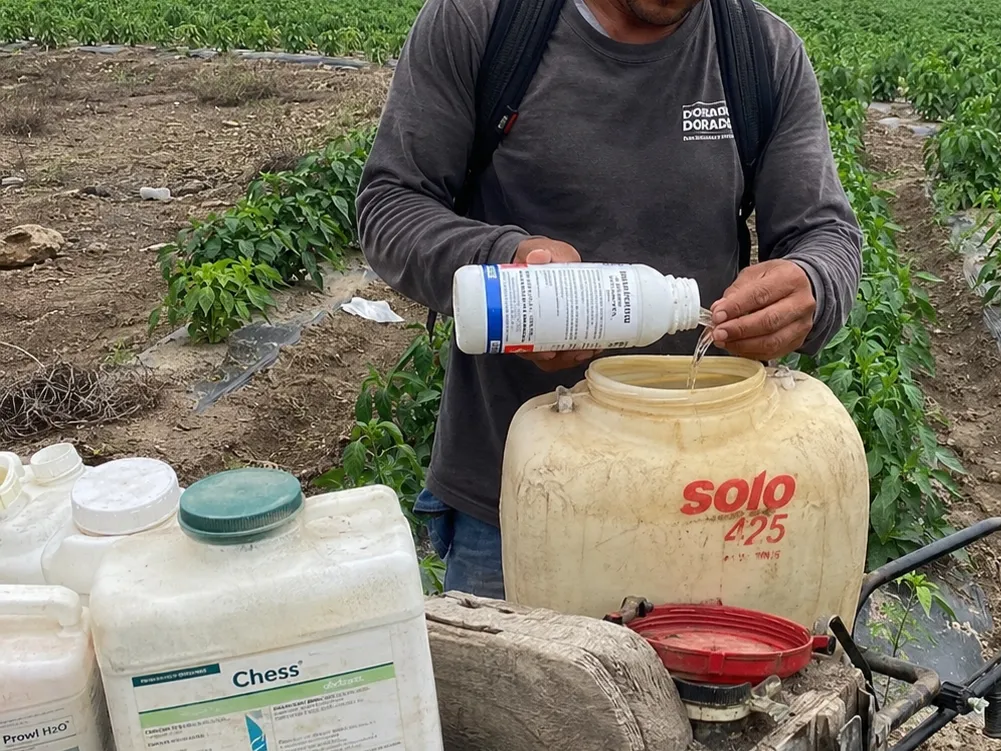
Crop Protection Products
Insecticides, Herbicides, Fungicides, Pesticide formulations, Seed treatment formulations, Technical-grade active ingredients, Crop protection active ingredients, Agrochemical intermediates, Plant growth regulators
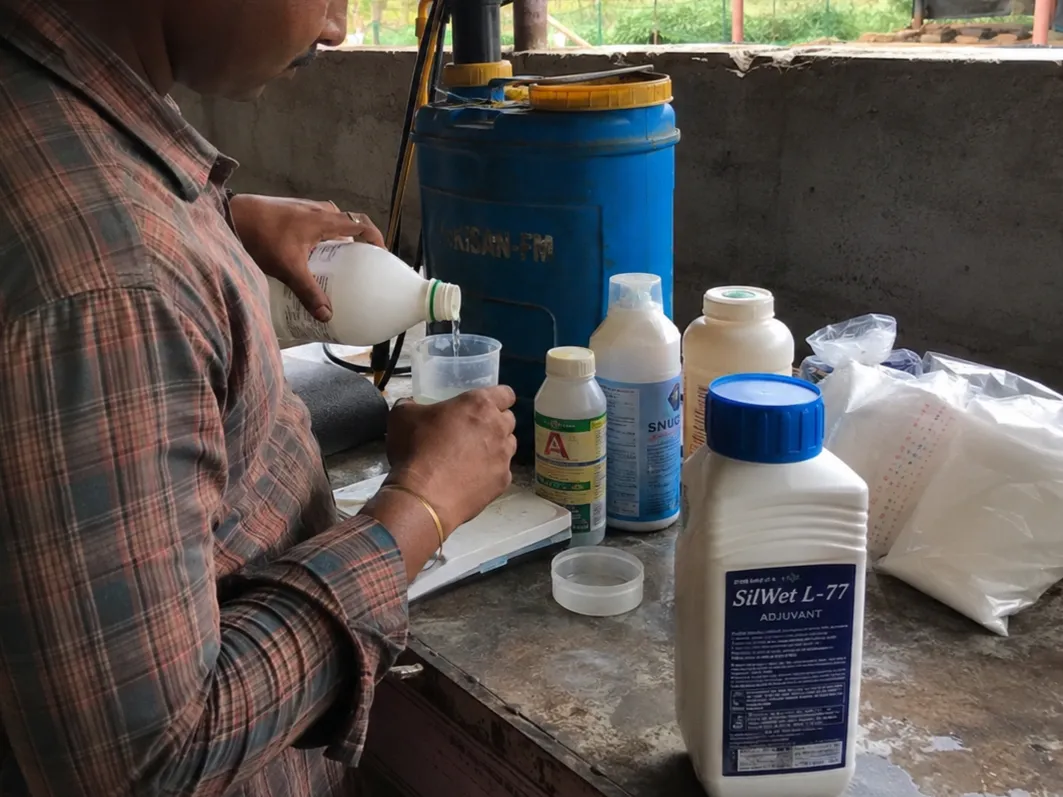
Crop Protection Formulation Aids
Crop protection adjuvants, Tank-mix adjuvants, Wetting agents, Dispersing agents Emulsifiers, Solubilizers, Penetrants and uptake enhancers, Solvents and carriers, Formulation stabilizers, Defoamers, Seed coating binders
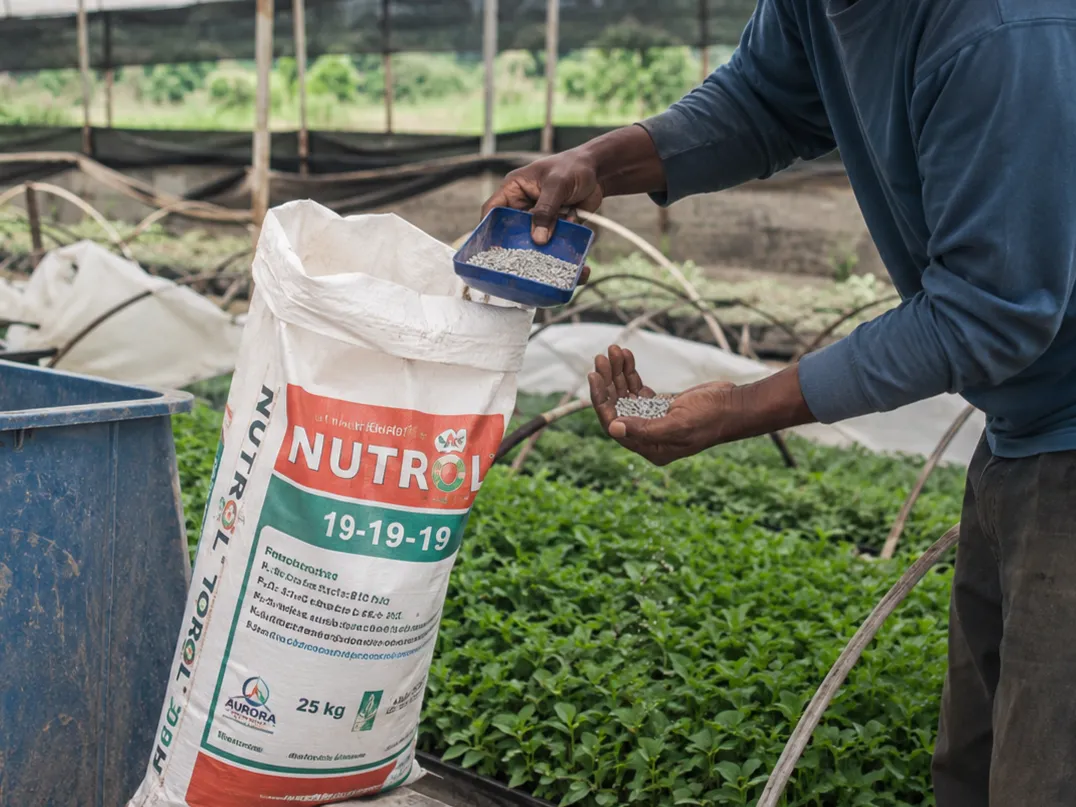
Fertilizer and Nutrient Products
Fertilizer additives, Micronutrient fertilizers, Controlled-release fertilizer additives, Fertilizer coatings, Fertilizer binders, Anticaking agents, Mineral nutrient formulations, Trace element formulations
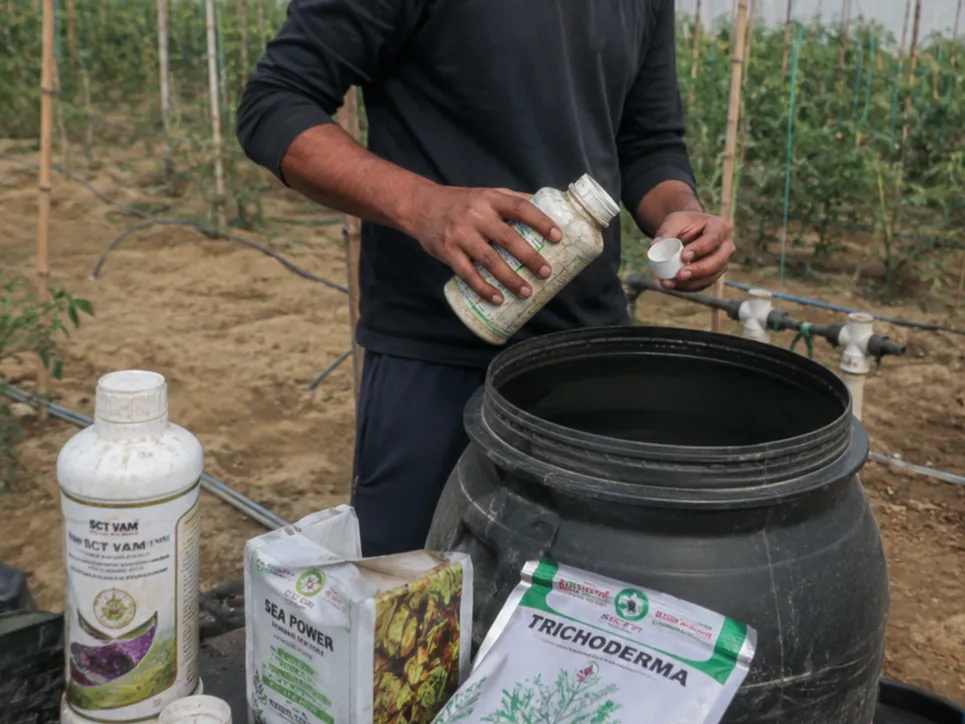
Biologicals and Plant Growth Products
Biopesticide formulations, Microbial formulation aids, Fermentation aids, Biological formulation stabilizers, Plant biostimulants Microbial products, Fermentation-derived active ingredients, Biological carriers and excipients
Common Analysis Needs
Analyze complete pesticide, adjuvant, fertilizer or biological formulations through sample separation, multi-method characterization and integrated data interpretation.
Typical analytical targets include:
- Active ingredients
- Surfactants and emulsifiers
- Wetting and dispersing agents
- Solvents and carriers
- Stabilizers and preservatives
- Inorganic salts and fillers
- Coating and binding materials
- Other functional additives
Results may include qualitative identification, quantitative or semi-quantitative information and formulation interpretation where technically feasible.
Identify unknown agrochemical raw materials, technical-grade products, intermediates or individual formulation ingredients.
Typical samples include:
- Unknown active ingredients
- Agrochemical intermediates
- Technical-grade active ingredients
- Surfactants and emulsifiers
- Wetting and dispersing agents
- Solvents and carriers
- Fertilizer raw materials
- Unknown formulation additives
The results can support incoming-material verification, supplier evaluation, procurement decisions and preliminary product research.
Identify and quantify a specified active ingredient, additive, impurity or defined class of compounds according to the client’s project objective.
Typical analytical targets include:
- Pesticide active ingredients
- Known impurities
- Residual solvents
- Specific surfactants
- Preservatives and stabilizers
- Trace nutrients
- Inorganic ions
- Metals and elemental impurities
Quantitative results may be provided when suitable analytical methods and reference standards are available.
Separate and characterize unknown impurities, degradation products or process-related by-products in active ingredients, intermediates and finished formulations.
Depending on the project, the workflow may include:
- Impurity enrichment and separation
- Molecular-weight determination
- Molecular formula evaluation
- Small-molecule structure elucidation
- Spectral interpretation
- Comparison with known impurities
- Possible source assessment
- Process-related technical interpretation
This service can support impurity control, product-purity improvement and production-process optimization.
Compare samples from different suppliers, production batches, product conditions or formulation versions.
Typical comparison projects include:
- Supplier-to-supplier comparison
- Batch-to-batch monitoring
- Technical material versus finished formulation
- Original versus replacement raw material
- Imported versus locally sourced material
- Target versus competitor product
- Normal versus abnormal sample
The comparison may cover active ingredients, additives, impurity profiles, solvents, inorganic components and degradation-related differences.
Investigate chemical or material differences associated with product abnormalities, quality complaints or production problems.
Typical issues include:
- Unexpected particles or foreign matter
- Precipitation and sedimentation
- Phase separation
- Discoloration
- Abnormal odor
- Reduced active ingredient content
- Formulation instability
- Poor dispersibility or wettability
- Caking or agglomeration
- Batch inconsistency
- Unexpected impurities
- Storage-related degradation
Xinbodi combines foreign-material identification, sample comparison and formulation analysis to determine likely causes and provide technically grounded improvement directions.
Our Customized Analytical Workflow
1. Project and Sample Review
Review the sample type, application, known formulation information, comparison samples and the specific technical question.
2. Sample Separation and Pretreatment
Separate organic and inorganic fractions, soluble and insoluble components, volatile and non-volatile materials, or enrich low-level impurities where necessary.
3. Instrumental Characterization
Select complementary techniques to analyze active ingredients, formulation additives, impurities, solvents, ions, elements and foreign materials.
4. Targeted Verification
Use reference standards, comparison samples or additional analytical methods to verify key components when required.
5. Integrated Reporting
Provide analytical findings, supporting evidence, quantitative or semi-quantitative results where feasible, comparison conclusions and project-specific interpretation.
Testing Methods for Dyes & Detergents Analysis
Xinbodi selects analytical methods based on the polymer type, product form, project goal, and the specific problem to be solved. For complex polymer systems, multiple methods are often combined for cross-verification.
- HPLC / LC-MS
Active ingredients, polar compounds, thermally sensitive substances, formulation additives, impurities and degradation products. - GC-MS / GC-MS/MS
Volatile and semi-volatile active ingredients, solvents, formulation components, impurity markers and degradation-related compounds. - Headspace GC-MS
Residual solvents, volatile impurities, odor-causing substances and formulation-related volatile compounds. - HRMS / GC-QTOF
Accurate-mass analysis, molecular formula evaluation and screening of unknown organic compounds. - NMR
Raw material identification, molecular structure confirmation, small-molecule structure elucidation and selected component-ratio estimation. - FTIR / ATR-FTIR
Raw material screening, functional group analysis, carriers, binders, surfactants and major organic component identification. - UV-Vis Spectroscopy
Selected active ingredients, chromophoric compounds, concentration comparison and formulation screening. - Ion Chromatography
Chloride, sulfate, phosphate, nitrate and other ionic components in fertilizer and agrochemical formulations. - ICP-MS / ICP-OES
Trace metals, micronutrients, catalyst residues, elemental impurities and inorganic component analysis. - XRF
Elemental screening of mineral carriers, fertilizer materials, fillers and inorganic formulation components. - XRD
Crystalline phase identification, inorganic salts, mineral carriers and solid-state material comparison. - SEM-EDS
Foreign particles, insoluble matter, agglomerates, carrier morphology and local elemental composition. - TGA / DSC
Volatile content, organic–inorganic ratio, melting behavior, thermal stability and sample comparison.
Typical Questions We Help Answer
- What is the active ingredient in this unknown agrochemical raw material?
- What are the major components in this pesticide formulation?
- Which surfactants, emulsifiers or dispersants are present?
- Can a specified active ingredient be accurately quantified?
- What is the structure of an unknown impurity or by-product?
- Why has the active ingredient content decreased during storage?
- What causes precipitation, caking or phase separation?
- Are two supplier samples chemically equivalent?
- Does a replacement raw material match the original product?
- What is the source of an unexpected particle or foreign material?
- Why does one production batch perform differently from another?
- Can the formulation be analyzed to support product development?
- Can a small amount of sample be used for preliminary identification?
- Can an impurity be separated before structural analysis?
Standard projects: 5–10 working days
Rush service may be available depending on scope.
FAQs
Can you reverse-engineer the full formulation?
We can often identify major components and explain differences, but complete formulation reconstruction is not always feasible—especially for complex additive systems—without standards and multiple complementary methods.
Do I need a reference/control sample?
Strongly recommended. Side-by-side comparison is one of the most powerful ways to pinpoint true differences and avoid false leads.
Can you quantify impurities at very low levels?
It depends on the impurity, matrix, and required limits. For ultra-trace needs, we may recommend targeted methods and calibration strategies (standards, recovery checks).
What if my matrix is very complex (surfactants, oils, salts)?
We routinely handle complex formulations. We select methods to reduce interference and may use fractionation or orthogonal techniques for confident identification.
Can you identify the cause of odor?
We can identify and compare volatile profiles (HS-GC/MS) and highlight likely contributors. For full odor-impact correlation, additional targeted approaches may be suggested depending on the situation.
Do you support stability or aging studies?
Yes—thermal screening and comparative stability analysis are common. We can also support investigation of storage-induced changes (discoloration, precipitation, degradation).