
A rubber manufacturer contacted Xinbodi after obtaining an accelerator that performed well at a relatively low dosage. The customer wanted to understand what type of accelerator it was, how it functioned in a sulfur-cured rubber system, and what dosage range could be used as a practical reference for future production.
Xinbodi Lab combined chemical analysis with formulation trials to characterize the additive and evaluate how it behaved in a natural rubber compound.
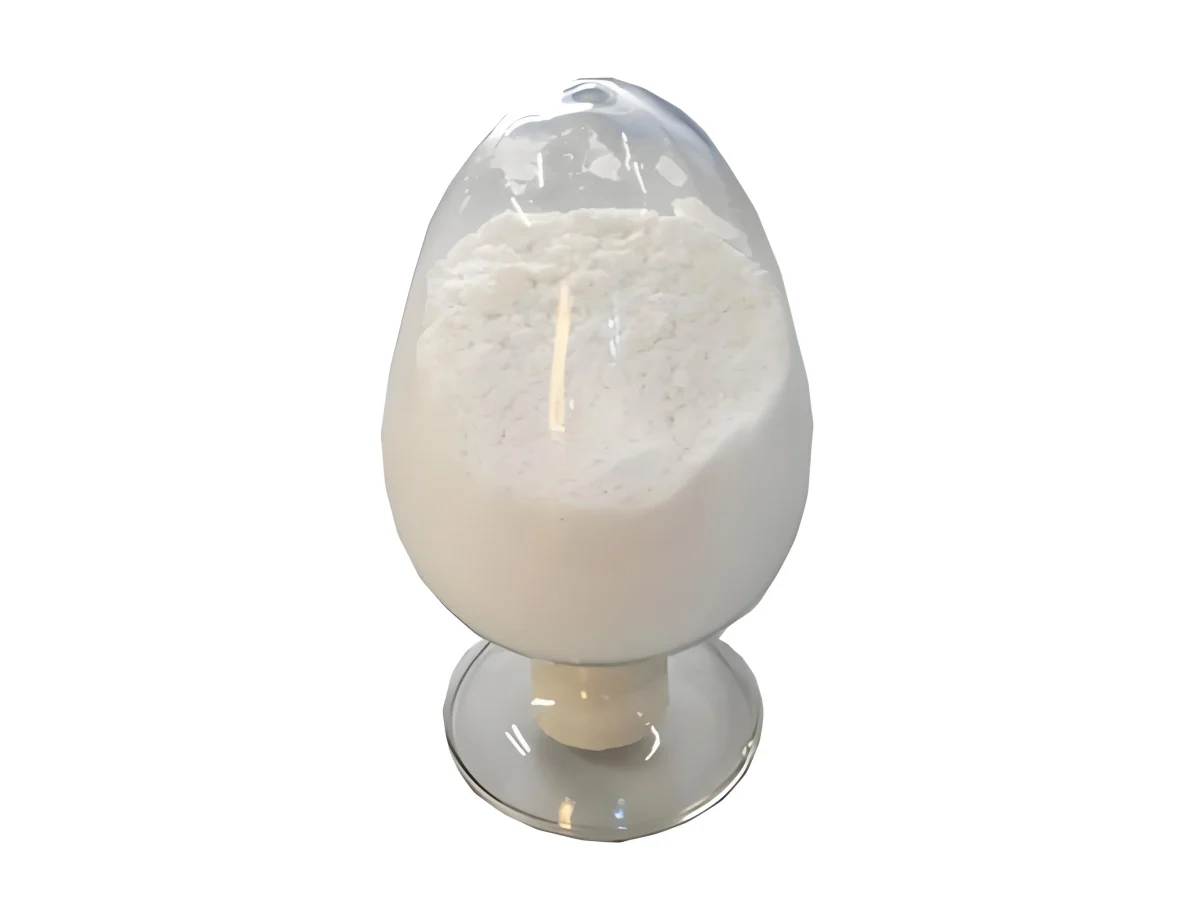
The Rubber Accelerator Was Identified as a Sulfenamide-Type Accelerator
Chemical analysis indicated that the sample belonged to the sulfenamide accelerator family, with characteristics consistent with CZ/CBS-type accelerators.
Sulfenamide accelerators are widely used in sulfur vulcanization because they can provide a useful balance between processing safety and cure efficiency. In this project, the identification gave the customer a much clearer starting point for selecting the accelerator system and designing subsequent formulation trials.
For manufacturers working with unknown rubber additives or competitor materials, chemical composition analysis can help determine the type and function of important formulation components before production trials begin.
Sulfenamide Accelerators Can Provide Good Scorch Safety and Efficient Vulcanization
The project showed that the accelerator provided a relatively long scorch period while still supporting an efficient curing response.
This behavior is one reason sulfenamide accelerators are commonly used in natural rubber and other sulfur-cured elastomer systems. Research on CBS and related sulfenamide accelerators has shown that accelerator structure can significantly affect cure kinetics and the properties of vulcanized natural rubber. A study published in the Journal of Applied Polymer Science compared several sulfenamide accelerators and demonstrated clear differences in cure behavior and final material properties.
Earlier research on conventional CBS–sulfur natural rubber systems also showed that cure conditions influence crosslink density and network structure, which in turn affect final physical properties. See the study published in Polymer.
Formulation Trials Supported a Practical Accelerator Dosage of About 0.5–2 phr
Based on the chemical analysis and formulation experiments, a dosage range of approximately 0.5–2 phr was used as a practical reference for this project.
The correct accelerator level cannot be determined from identification alone. It depends on the base rubber, sulfur level, activator system, fillers, processing conditions and target cure behavior.
For this reason, the customer did not receive only an ingredient name. The analysis was combined with formulation testing to determine how the accelerator could be used within the actual rubber system.
This type of work is closely related to polymer deformulation and formulation analysis, where the objective is to understand not only which components are present, but also how they function together in the formulation.
The Accelerator Performed Well in a Natural Rubber–Sulfur Cure System
In the customer’s natural rubber formulation trials, the sulfenamide-type accelerator was evaluated together with sulfur.
The resulting compounds showed a useful combination of cure behavior and final performance. The project results indicated improvements in aging resistance and physical-mechanical performance compared with the customer’s previous formulation approach.
The accelerator also showed good dispersion in the rubber compound, with only slight discoloration and no obvious blooming observed under the project conditions.
These observations were important because a rubber accelerator must perform well not only during vulcanization, but also during mixing, processing and final product use.
Xinbodi’s polymers and plastics testing and analysis services support similar projects involving elastomers, additives, formulation comparison and material-performance relationships.
The Analysis Helped the Customer Move From an Unknown Additive to a Defined Formulation Strategy
Before testing, the customer knew that the accelerator worked well but did not have enough information to use it confidently in production.
After the project, the customer had a clearer understanding of:
- the accelerator family;
- its likely role in sulfur vulcanization;
- its scorch and curing characteristics;
- a practical dosage range for formulation trials;
- its compatibility with a natural rubber system;
- its influence on dispersion, appearance and final performance.
The value of the project was therefore not simply identifying an unknown powder. The analysis converted an unfamiliar raw material into a usable formulation input that could support subsequent production and formulation decisions.
Project Summary
| Project Item | Finding |
|---|---|
| Sample | Rubber accelerator |
| Main identification | Sulfenamide-type accelerator |
| Comparable type | CZ/CBS-type |
| Application evaluated | Natural rubber sulfur vulcanization |
| Reference dosage | Approximately 0.5–2 phr |
| Key characteristics | Good scorch safety and efficient cure response |
| Formulation observations | Good dispersion, slight discoloration, no obvious blooming |
| Customer outcome | Clearer accelerator selection and formulation guidance |