
Need to identify the chemical composition of a fire extinguishing agent, compare a competitor’s formulation, or investigate unexpected product quality problems?
Xinbodi Laboratories provides fire extinguishing agent composition analysis and formulation reverse engineering to help manufacturers understand their products, identify key ingredients, compare formulations, and support new product development.
Whether you are investigating a dry powder, water-based extinguishing agent, or another specialty fire suppression material, laboratory analysis can help answer a critical question: What is actually inside the product, and how does its composition differ from the reference formulation?
Why Do Manufacturers Need Fire Extinguishing Agent Composition Analysis?
Fire extinguishing agents are formulated products. In addition to their primary extinguishing components, they may contain coatings, surfactants, stabilizers, anti-caking agents, and other functional ingredients.
Manufacturers commonly request chemical analysis for four reasons.
Competitor Benchmarking and Formula Reverse Engineering
A competitor’s extinguishing agent may offer better storage stability, dispersion, or handling characteristics.
Chemical composition analysis can help identify major components, characterize selected additives, and investigate differences between the reference product and an in-house formulation.
These findings provide a starting point for deformulation and chemical reverse engineering, supporting further formulation development rather than relying entirely on trial and error.
Supplier and Batch Comparison
Two products sold under similar specifications may contain different raw materials, additive systems, or impurity profiles.
Comparative analysis helps manufacturers investigate formulation consistency, evaluate alternative suppliers, and identify unexpected changes between production batches.
Product Quality Investigation
Fire extinguishing agents may develop problems such as powder caking, moisture absorption, sedimentation, phase separation, or unexpected deposits.
When these problems occur, chemical composition analysis can help investigate whether differences in ingredients, additives, or contamination are contributing factors.
Imported Product Replacement
For manufacturers seeking to develop alternatives to imported products, laboratory analysis can provide information about the reference agent’s chemical system and selected component levels.
The results can support raw material evaluation, formulation comparison, and subsequent R&D.
What Types of Fire Extinguishing Agents Can Be Analyzed?
Different fire suppression products require different analytical strategies. Xinbodi evaluates the sample composition, physical form, and analysis objective before recommending a testing plan.
Dry Powder Fire Extinguishing Agents
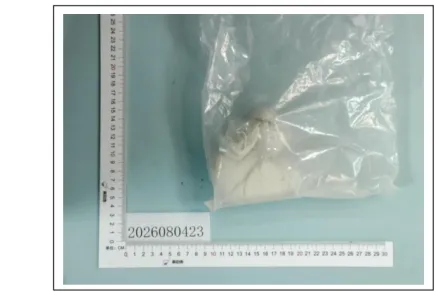
Dry powder formulations may contain inorganic salts, surface-treatment materials, and additives that influence moisture resistance and powder handling.
Common product categories include BC and ABC dry chemical agents.
Depending on the sample, analysis may investigate the primary chemical components, inorganic composition, organic surface treatments, and selected functional additives.
A dry powder investigation may also help answer whether two supplier samples have different chemical profiles or whether unexpected moisture and deposits are associated with a quality problem.
Research published in Fire and Materials has demonstrated that the base material and particle characteristics of dry powder extinguishing agents influence their thermal decomposition and residue properties. See this study on dry powder fire extinguishing agents.
This illustrates why the chemical composition of an extinguishing agent is relevant to formulation development and material evaluation.
Water-Based Fire Extinguishing Agents
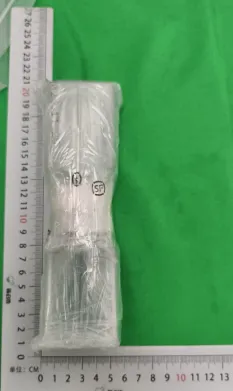
Water-based fire extinguishing agents can contain several interacting chemical systems.
Depending on the product, these may include surfactants, solvents, antifreeze agents, corrosion inhibitors, preservatives, and stabilizers.
Composition analysis may help manufacturers investigate:
- Surfactant identification and selected component levels
- Organic solvents and functional additives
- Inorganic ions and elemental composition
- Differences between competing formulations
- Unexpected sedimentation or phase separation
For complex water-based products, separating organic and inorganic components may be necessary to obtain a clearer formulation profile.
Aerosol Fire Suppression Materials
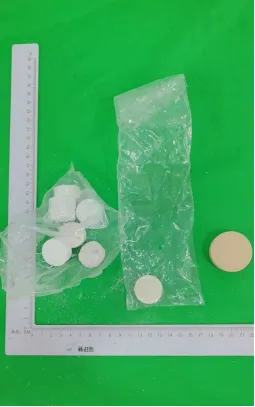
Certain aerosol fire suppression products involve solid chemical systems, while others may require investigation of residues generated during operation.
Analysis may be used to characterize selected raw materials, inorganic components, or collected deposits, depending on the project.
Because some aerosol-generating materials are reactive or otherwise hazardous, sample acceptance and the appropriate analytical approach must be confirmed before shipment.
Specialty Fire Suppressant Materials
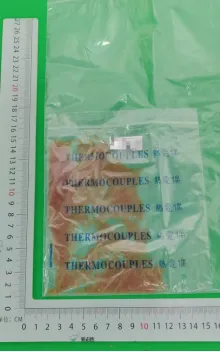
Other products may contain specialized organic or inorganic fire suppression compounds, including materials incorporated into fire-protection devices or related products.
Xinbodi can evaluate the feasibility of identifying selected components, investigating impurities, or comparing suitable reference samples according to their chemical properties and handling requirements.
How Is Fire Extinguishing Agent Composition Analysis Performed?
A complex extinguishing agent cannot always be characterized using a single analytical technique.
Xinbodi selects complementary methods based on the target components, sample matrix, and project objective.
| Analytical Method | Typical Analytical Purpose |
|---|---|
| FTIR | Organic components, functional groups, and material identification |
| GC-MS | Volatile and semi-volatile organic components |
| LC-MS | Selected non-volatile organic additives |
| ICP-OES / ICP-MS | Elemental composition and selected trace metals |
| XRF | Elemental screening of inorganic materials |
| XRD | Crystalline inorganic phase identification |
| Ion Chromatography | Selected inorganic ions |
| SEM-EDS | Particle morphology and local elemental composition |
For example, FTIR analysis may support the identification of organic coating materials, while elemental and crystalline phase analysis can provide information about inorganic components.
Where appropriate, sample separation and multiple analytical techniques are combined to improve component identification and support selected quantitative or semi-quantitative results.
The goal is not simply to generate instrument data, but to understand the chemical composition of the product and its relevance to the customer’s technical problem.
Fire Extinguishing Agent Reverse Engineering and Competitor Comparison
One of the most valuable applications of fire extinguishing agent composition analysis is understanding an existing commercial formulation.
Manufacturers may have a reference product that performs satisfactorily but lack sufficient information about its ingredients and formulation structure.
Through comparative chemical analysis, Xinbodi can help investigate three important questions.
What are the main ingredients in the benchmark product?
Identify the principal chemical system and selected functional components to establish a reference formulation profile.
How does our formulation differ from the benchmark?
Compare component identities, selected concentrations, additive systems, and impurity profiles to identify meaningful chemical differences.
What information can support further formulation development?
Translate analytical findings into practical information for raw material evaluation, formulation adjustment, and subsequent validation.
For complex products, the achievable level of formulation reconstruction depends on ingredient complexity, concentration, and the availability of suitable analytical reference standards.
Composition analysis can support development of a comparable formulation, but equivalent extinguishing performance must be established through appropriate product-level testing.
Impurity Analysis and Fire Extinguishing Agent Quality Investigation
Unexpected substances can affect the consistency of a formulated extinguishing agent.
For example, a manufacturer may discover abnormal deposits in a water-based product or unexpected inorganic components in a dry powder sample.
Comparative analysis of normal and abnormal samples can help distinguish formulation components from contaminants, degradation products, or unintended residues.
Xinbodi’s impurity analysis services can support investigations involving unknown substances, chemical contamination, and differences between qualified and suspect batches.
Where possible, submitting both the affected sample and a normal reference provides a stronger basis for interpretation.
What Will You Receive from Fire Extinguishing Agent Composition Analysis?
Deliverables are tailored to the material and project objective.
A typical analytical report may include:
- Identification of major chemical components
- Selected quantitative or semi-quantitative results
- Organic and inorganic composition information
- Identification of selected functional additives
- Reference and competitor sample comparison
- Impurity or abnormal residue findings
- Formulation interpretation and recommendations for further investigation
For reverse engineering projects, the report may also provide a reconstructed formulation profile and component ranges where technically feasible.
The final analytical scope is determined according to sample complexity and the information needed for the customer’s next technical decision.
Fire Extinguishing Agent Composition Analysis at Xinbodi
Xinbodi Laboratories provides chemical composition analysis, ingredient identification, formulation reverse engineering, and impurity investigation for manufacturers and R&D teams working with complex chemical products.
For fire extinguishing agent projects, our analytical approach focuses on helping clients understand existing formulations, investigate differences between products, and obtain useful chemical information for further development.
We can support manufacturers seeking to:
- Analyze an existing fire extinguishing agent
- Investigate a competitor’s chemical formulation
- Compare supplier or production batches
- Identify unexpected substances or deposits
- Evaluate the composition of an imported reference product
- Obtain analytical information for formulation development
Have a fire extinguishing agent sample you need to analyze?
Contact Xinbodi’s technical team with your product type, sample information, available SDS, and analysis objective. Our engineers can assess sample suitability and recommend a targeted analysis plan and quotation.
For international projects, confirm sample acceptance and shipping requirements with our team before sending hazardous, reactive, or pressurized materials.