
Materials testing helps manufacturers identify material composition, evaluate product performance, detect additives, impurities, defects, and understand possible causes of product failure. For R&D, quality control, supplier evaluation, and product improvement, materials testing turns a physical sample into useful technical insight.
Why Materials Testing Matters for Manufacturers
When a product does not perform as expected, the cause is often hidden in the material itself.
A plastic part may crack because of resin differences, filler content, aging, or processing issues. A coating may peel because of adhesion problems, contamination, or formulation imbalance. A rubber product may fail because of additive loss, curing problems, or material degradation.
Materials testing helps manufacturers answer practical questions:
- What is this material made of?
- Why did this product fail?
- Is this supplier sample suitable?
- What changed between two batches?
- Can this material be replaced?
- How can product performance be improved?
For manufacturers, materials testing is not only a laboratory check. It is a decision-making tool for product development, failure analysis, quality control, competitor formula benchmark and formulation improvement.
What we can provide you
- Composition and ratio analysis
Backed by 4,000+ m² R&D labs, 100+ precision instruments, and 60,000+ sample orders, we apply multi-method analysis to complex chemical and material samples. We identify key ingredients, additives, fillers, impurities, and estimated component proportions where technically possible. - Raw material selection guidance
We explain the role of key raw materials and support supplier comparison, material substitution, and cost reduction. Based in Shanghai, we help global manufacturers evaluate China-based alternatives and make informed sourcing decisions. - Formulation reverse engineering and optimization support
For suitable projects, internal experience shows reconstruction accuracy can exceed 90%, depending on sample complexity. We help manufacturers compare formula differences, improve product performance, and reduce R&D trial-and-error. - Beyond testing: R&D recommendations
We help translate test data into formulation improvement, failure diagnosis, process direction, and next-step validation. we provide suggested product manufacturing process direction to support small-scale validation, production adjustment, or further product development. - Dedicated technical communication team
We provide technical director support and a dedicated project communication team. Also provide a response within 24 hours, confidential project handling, and results for many projects in about 7–10 working days after sample receipt.

Materials Testing for Product Development
Materials testing can help identify key components, additives, fillers, impurities, thermal behavior, surface properties, molecular structure, and performance-related material differences.
This information can support:
- Raw material selection
- Additive or filler adjustment
- Product performance improvement
- Reference sample comparison
- Formulation development
- Scale-up and production decisions
For plastics, rubber, coatings, adhesives, and industrial chemical products, materials testing can show whether performance differences are related to composition, filler content, thermal properties, surface defects, molecular structure, or contamination.
Instead of relying only on repeated experiments, manufacturers can use materials testing to find a clearer technical direction.
Materials Testing for Failure Analysis
When a product fails, manufacturers need to know whether the problem comes from the material, formulation, supplier, production process, storage, or use environment.
Materials testing can compare failed samples with qualified samples to find abnormal differences, such as:
- Unexpected contaminants
- Missing or reduced additives
- Changes in filler content
- Material aging or degradation
- Surface defects
- Residues or impurity issues
- Thermal or structural changes
- Batch-to-batch material variation
The goal is not always to give one simple answer immediately. In many projects, materials testing provides evidence that helps narrow down possible causes and guide the next step of troubleshooting.
For quality teams, this can support supplier review, production adjustment, customer complaint response, product improvement, and future failure prevention.
What Can Be Tested?
The testing scope depends on the sample type and project goal.
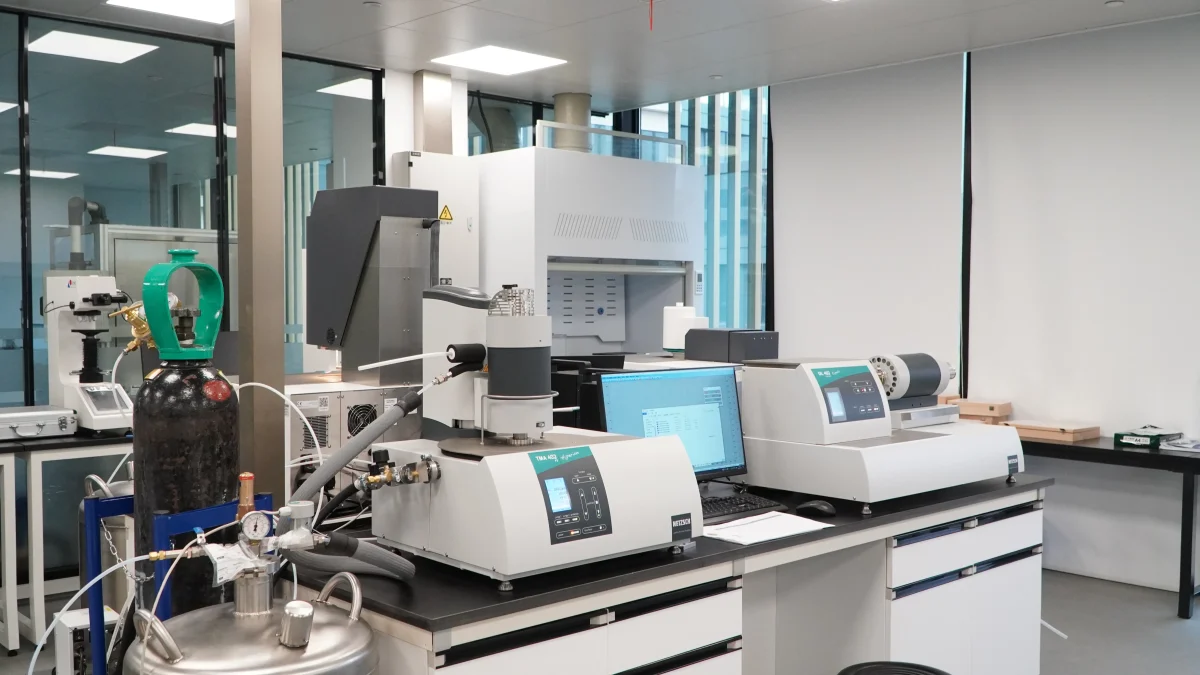
Common samples include plastics, rubber, coatings, adhesives, films, fibers, resins, composites, construction materials, electronic materials, lubricants, cleaning products, industrial additives, chemical auxiliaries and other chemical or material products.
Materials testing may focus on:
- Material composition
- Organic and inorganic components
- Additives, fillers, pigments, and stabilizers
- Impurities, residues, and contaminants
- Thermal properties
- Surface morphology
- Elemental composition
- Molecular weight distribution
- Mechanical or physical performance
- Differences between two or more samples
For product development, the focus is usually performance improvement and formulation direction. For failure analysis, the focus is usually sample comparison, abnormal components, and possible root causes.
Common Materials Testing Methods
Complex materials often require more than one test. A reliable testing plan should match the sample type, the customer’s question, and the decision the manufacturer needs to make.
Common analytical methods include:
- FTIR for material identification and functional group screening
- GC-MS for volatile and semi-volatile organic compounds
- LC-MS for complex organic additives
- ICP-MS or ICP-OES for trace elements and metals
- XRF for elemental screening
- SEM-EDS for surface morphology and elemental distribution
- TGA for filler content and thermal decomposition
- DSC for thermal behavior
- GPC for molecular weight distribution
- XRD for crystalline structure
- Py-GC-MS for polymer and rubber analysis
Why Choose Xinbodi Laboratories
Fast Response & Efficient Turnaround
Get a response within 24 hours, with technical director support and results for many projects delivered in about 7-10 working days after sample receipt.
Advanced Lab Capacity & Testing Methods
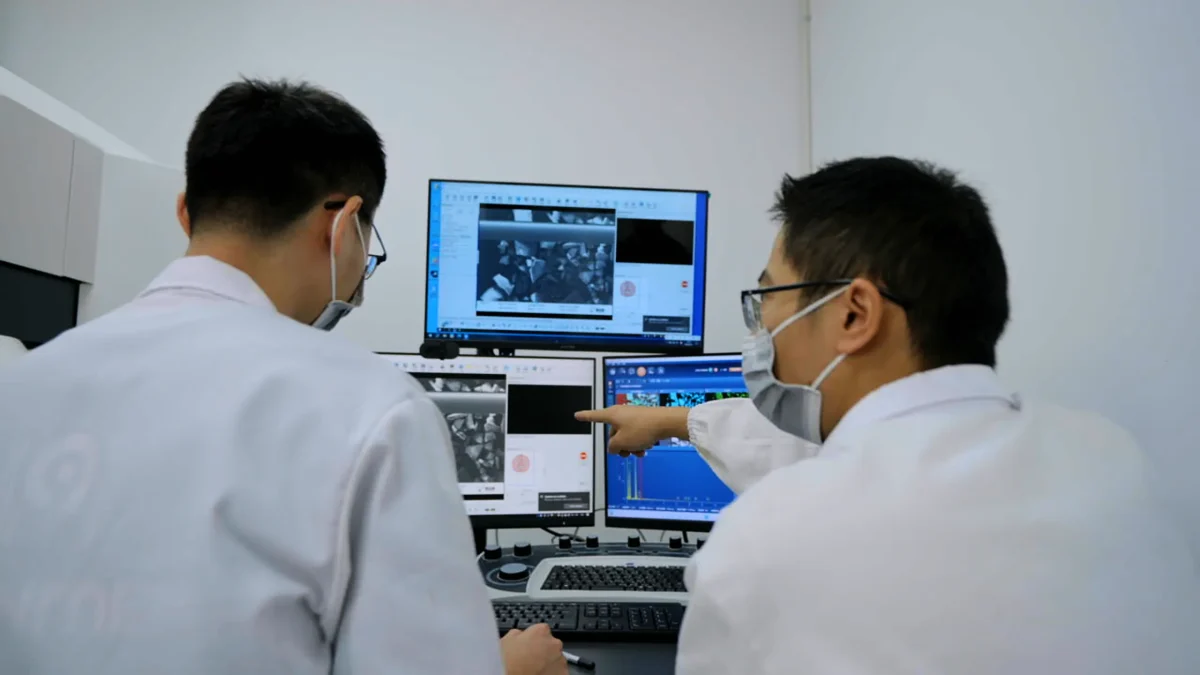
Backed by 4,000+m² R&D labs, 100+ precision instruments, and 60,000+ sample orders, we apply multi-method analysis to complex chemical and material samples.
High-Accuracy Formulation Reconstruction
For suitable deformulation and formulation reconstruction projects, internal experience shows reconstruction accuracy can exceed 90%, depending on sample complexity.
Beyond Testing: R&D Support
We turn test data and component analysis into formulation insights, failure diagnosis, raw material guidance, and next-step technical recommendations to help reduce cost and improve development efficiency.
China Supply Chain Advantage
Based in Shanghai, we help global manufacturers compare supplier samples, evaluate China-based alternatives, and make informed sourcing decisions.
Confidential Project Handling
We protect proprietary formulations, samples, supplier information, and IP-sensitive data throughout the testing and reporting process.
From Test Results to Better Product Decisions
Materials testing should not stop at raw data. Manufacturers need clear conclusions that can support real decisions: what changed, what may be causing the issue, which material should be compared, and what should be tested next.
Xinbodi Lab provides materials testing and technical analysis for global manufacturers that need support in product development, failure investigation, supplier evaluation, and formulation improvement.
If your team has a material sample, failed product, supplier sample, or competitor product that needs analysis, Xinbodi Lab can help turn testing results into practical technical insight.
Contact Xinbodi Lab to discuss your sample, testing objective, and recommended analysis plan.
FAQ
What is materials testing used for?
Materials testing is used to identify material composition, evaluate performance, compare samples, detect impurities or contaminants, and investigate product failure.
Can materials testing find the cause of product failure?
Materials testing can help identify possible causes by comparing failed and qualified samples. It may detect composition differences, contamination, additive changes, degradation, surface defects, or batch-to-batch variation.
Can materials testing support product development?
Yes. Materials testing can help R&D teams understand material properties, improve formulations, compare reference products, evaluate raw material alternatives, and reduce trial-and-error during development.
What materials can Xinbodi Lab test?
Xinbodi Lab can support testing for plastics, rubber, coatings, adhesives, resins, films, composites, electronic materials, industrial chemicals, and other chemical or material samples.