Chemical Composition Analysis & Testing Services
Identify what is in your product, material or unknown sample—and understand how composition differences affect performance.
Xinbodi provides worldwide chemical composition analysis and testing services to identify ingredients, quantify selected components, compare formulations, investigate additives and impurities, and understand differences between products, materials, suppliers or production batches.
What Is Compositional Analysis?
Compositional analysis determines which components are present in a material or product and, where technically appropriate, how much of selected components is present.
The analysis may cover polymers, resins, solvents, additives, fillers, pigments, surfactants, metals, minerals, ionic species, impurities and other organic or inorganic components.
A typical project answers three important questions:
- What is present? Identify the main and minor components.
- How much is present? Quantify or estimate selected component levels.
- What is different? Compare products, suppliers, batches or reference samples.
Compositional analysis is broader than a single chemical test. Complex samples often require several complementary techniques because no individual method can reliably characterize every component in a formulated product.

What Our Chemical Analysis Services Can Determine
Chemical Composition Analysis
Identify major and minor ingredients in products and materials
Quantitative Composition Testing
Determine selected component levels where suitable methods and standards are available
Product Composition Analysis
Analyze formulated products, finished goods and commercial samples
Material Composition Analysis
Identify polymers, resins, fillers, metals and other material components
Additive Analysis
Investigate plasticizers, antioxidants, stabilizers, surfactants and other functional additives
Chemical Formulation Analysis
Understand how ingredients and additives work together within a formulation
Composition Comparison
Compare suppliers, batches, reference samples or competitor products
Impurity & Contaminant Analysis
Identify unexpected substances, degradation products or foreign materials
What We Can Help You Solve
Verify Raw Materials and Suppliers
Confirm material identity, compare suppliers and investigate differences in additives, fillers, impurities or composition.
Compare Products and Formulations
Use chemical formulation analysis to compare your product with a competitor, benchmark or reference sample.
Investigate Product Failures
- cracking
- discoloration
- odor
- adhesion loss
- abnormal residue
- contamination
- reduced durability
Support Raw Material Substitution
- supplier qualification
- double sourcing
- imported-material replacement
- cost reduction
- formulation adjustment
Support Product Development
Understand how ingredients, additives and component ratios may influence product performance and help guide formulation optimization.
Common Materials and Products We Analyze
Our product and material composition testing can be adapted to raw materials, process intermediates, finished products and unknown samples.
What Components Can Be Analyzed?
Polymers and Resin Systems
Compositional analysis may investigate:
- Polymer and copolymer families
- Resin and binder systems
- Cured and crosslinked materials
- Molecular-weight distribution
- Polymer degradation
- Supplier and batch differences
- Blended or filled polymer systems
Organic Ingredients
Organic analysis may cover:
- Solvents and carrier systems
- Oils and lubricating components
- Surfactants and emulsifiers
- Plasticizers
- Antioxidants and stabilizers
- Preservatives
- Residual monomers and reactants
- Volatile and semi-volatile compounds
- Selected active ingredients
- Extractable organic components
Inorganic and Elemental Components
Relevant components include:
- Mineral fillers
- Pigments
- Metals and trace elements
- Catalysts and catalyst residues
- Crystalline inorganic phases
- Ionic species
- Flame-retardant elements
- Inorganic impurities
- Metallic and mineral contaminants
Surface and Layer Components
Surface-sensitive analysis may investigate:
- Surface residues
- Thin coatings
- Oxidation layers
- Interface contamination
- Transferred materials
- Multi-layer films
- Coating and substrate differences
- Components concentrated at the outermost surface
How Our Analytical Laboratory Selects the Right Chemical Analysis Methods
The analytical plan is selected according to the sample matrix, expected components, required detection limits and the decision the results must support.
Tell us about your sample and what you need to determine, and our experts will recommend a tailored analysis plan for your project.
Before testing, we consider:
- Is the sample primarily organic, inorganic, polymeric or mixed?
- Which components must be identified or quantified?
- Are the target components present at major, minor or trace levels?
- Is information required from the bulk, surface or a specific layer?
- Are reference or comparison samples available?
- Can the sample be dissolved, extracted, digested, cut or otherwise altered?
- Is the available sample quantity limited?
- Is the goal identification, quantification or comparison?
Complex products commonly require a staged workflow:
- Initial screening
- Targeted component identification
- Quantitative or semi-quantitative testing
- Cross-verification using complementary methods
- Integrated interpretation of the results
Our Compositional Analysis Capabilities
Polymer and Molecular Identification
- FTIR: Polymer families, functional groups, resins, coatings and organic materials
- Raman: Molecular fingerprints, pigments and selected crystalline materials
- Py-GC-MS: Polymers, rubber, cured resins, adhesives and complex organic matrices
- NMR: Molecular structures and selected chemical components
These methods can help identify the base material and major molecular components. Filled, blended, crosslinked or degraded products may require several techniques.
Mass Spectrometry Analysis
- GC-MS: Volatile and semi-volatile compounds, solvents, additives and organic residues
- LC-MS: Non-volatile, polar and thermally sensitive organic compounds
- HRMS: Accurate-mass analysis, molecular formula assignment and unknown compound screening
- Py-GC-MS: Polymers, rubber, cured resins, coatings and complex organic materials
- ICP-MS: Trace and ultra-trace elemental impurities
- TOF-SIMS: Surface molecular fragments and localized contamination
Mass spectrometry can support compound identification, impurity analysis, degradation-product investigation, targeted quantification and sample comparison across complex industrial materials.
Organic Ingredient Analysis
- GC-MS: Solvents, oils, volatile compounds, additives and extractable residues
- LC-MS: Non-volatile, polar and thermally sensitive organic compounds
- HPLC: Targeted separation and quantification of selected organic components
- GPC: Polymer molecular-weight distribution and comparison
Chromatographic methods may be used to separate complex mixtures before individual components are identified or quantified.
Elemental and Inorganic Analysis
- ICP-MS: Trace and ultra-trace elemental analysis
- ICP-OES: Quantitative major and minor elemental analysis
- XRF: Elemental screening of solids, powders and inorganic materials
- SEM-EDS: Localized elemental composition of particles, deposits and cross-sections
- XRD: Crystalline phase and mineral identification
- Ion Chromatography: Soluble anions, cations and ionic residues
These techniques may be used to characterize metals, fillers, pigments, minerals, ionic species and inorganic impurities.
Thermal Composition and Material Comparison
- TGA: Organic, inorganic, filler and residue fractions
- DSC: Thermal transitions, crystallinity and material differences
Thermal analysis is particularly useful when two polymer or formulated samples appear chemically similar but differ in filler content, crystallinity or thermal behavior.
Surface and Thin-Layer Analysis
- XPS: Surface elemental composition and chemical states
- TOF-SIMS: Surface molecular fragments and localized contamination
- SIMS: Surface, depth-profile and thin-layer compositional information
Surface-sensitive methods may be required when the abnormal material is located only on the outer surface or at a coating interface.
No single method is suitable for every product.
Industries We Serve

Chemicals
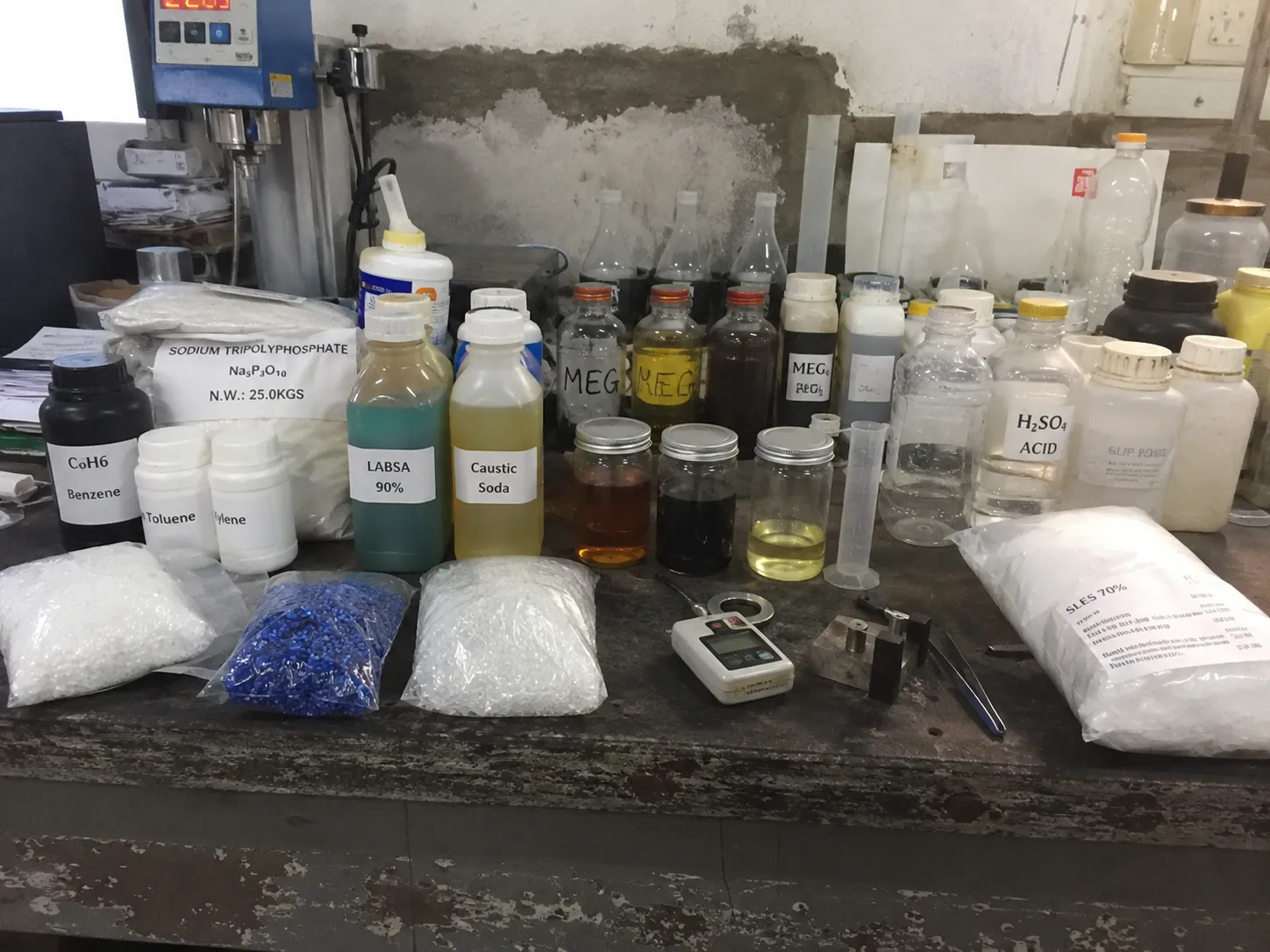
Agrochemicals, Industrial Chemicals, Dyes, Lubricants, Polymers, Plastics, Adhesives, Coatings, Rubber, Inks
Energy
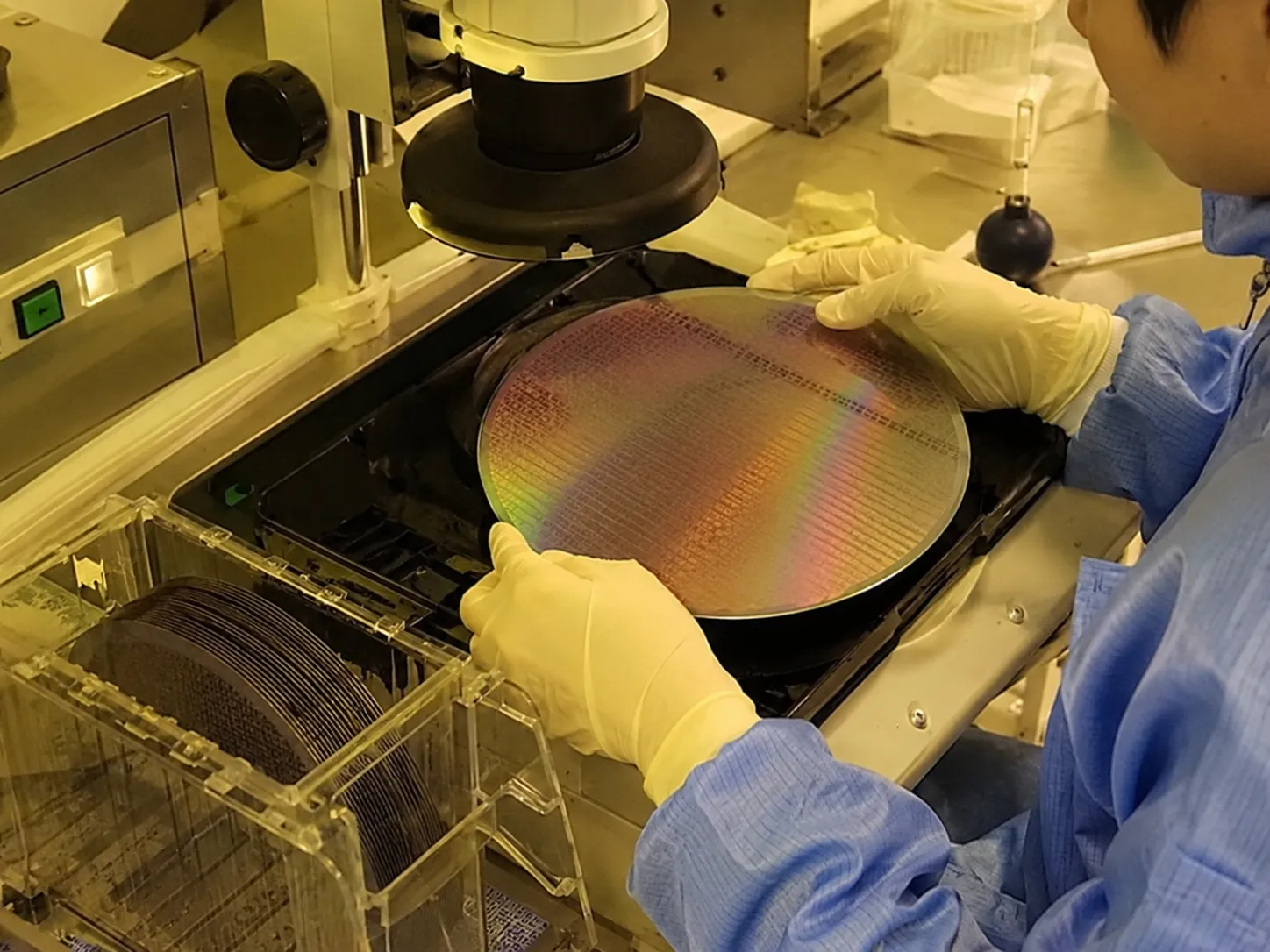
Aerospace, Semiconductors, Oil & Gas, Minerals, Biofuels, Battery Materials
Food & Healthcare
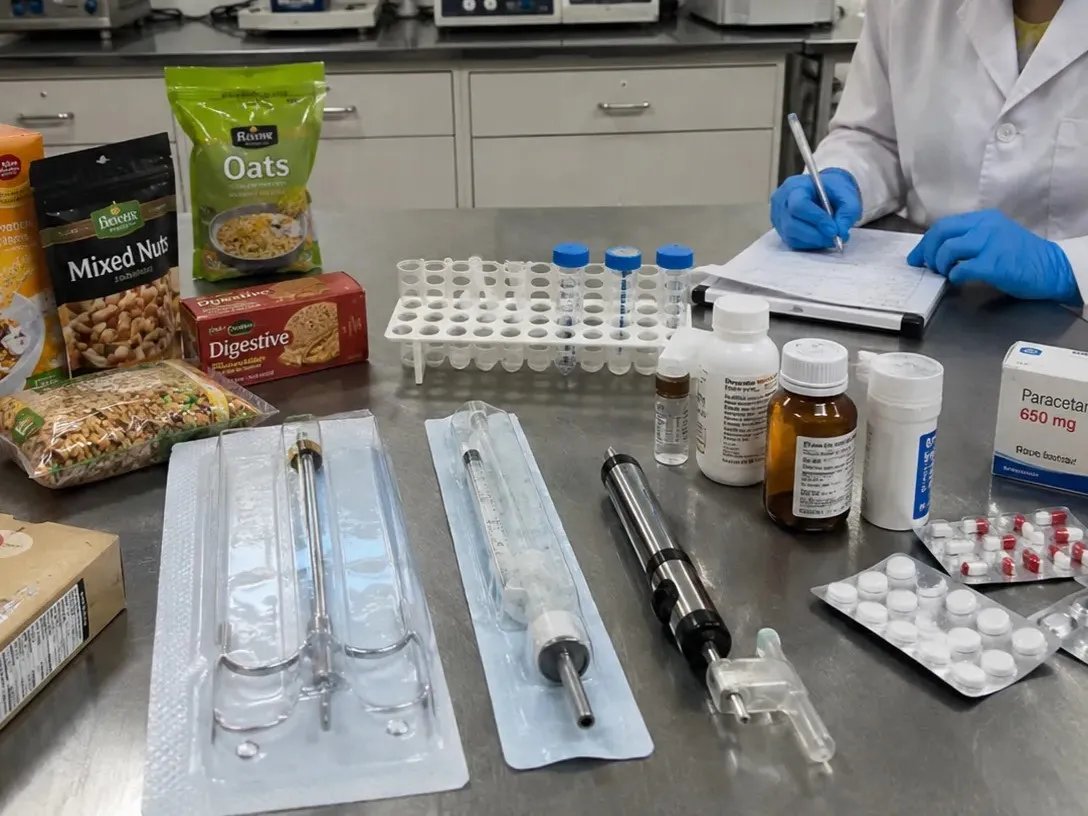
Food, Medical Devices, Pharmaceutical
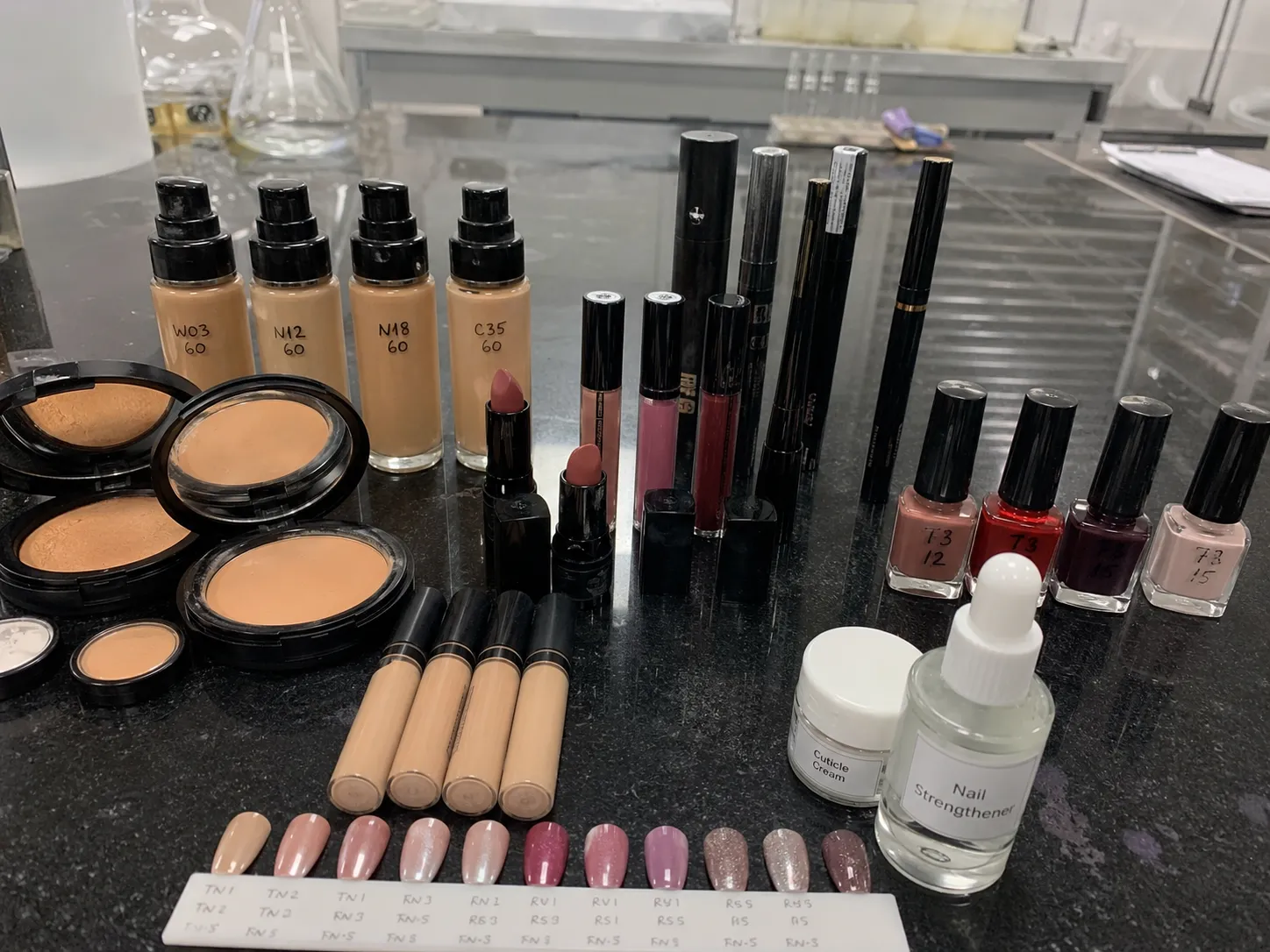
Cosmetics & Personal Care
Cosmetics Disinfection Products
Standard projects: 5–10 working days
Rush service may be available depending on scope.
Our Compositional Analysis Process
1. Project Review
2. Sample Preparation and Separation
3. Initial Screening
4. Targeted Identification and Quantification
5. Data Integration and Interpretation
6. Provide advice and guidance on production and raw materials
What You Will Receive
Depending on the project scope, a compositional analysis report may include:
- Identified major and minor components
- Quantitative or semi-quantitative results
- Additives, fillers, pigments and impurities detected
- Organic, inorganic, elemental and polymer findings
- Comparison between suppliers, batches or products
- Representative spectra, chromatograms, curves, images and elemental maps
- Sample-preparation and analytical-method information
- Technical interpretation of meaningful composition differences
- Method detection limits
- Clearly stated analytical limitations
- Recommendations for follow-up testing or validation
For comparison projects, we focus on what changed, how significant the difference is, and what it may mean for your product or process.

Why Choose Xinbodi Laboratories
7×24 Customer Support
Fast technical response within 24 hours.
Fast 5–10 Day Delivery
Efficient project turnaround after sample receipt.
Advanced Lab Capacity
4,000+ m² R&D labs and 1000+ precision instruments.
Cost-Efficient Analytical Services
Comparable analytical capabilities at typically 50–60% of U.S. and European laboratory pricing for similar project scopes.
100+ Master’s- and PhD-Level Experts
Extensive experience in solving complex material challenges.
90%+ Reconstruction Accuracy
Reliable support for suitable deformulation cases.
Practical R&D Support
Actionable solutions and production guidance with protected formulas and sample data.
China Supplier Comparison
Evaluate materials and sourcing alternatives.
FAQs
What can chemical composition analysis identify?
Chemical composition analysis can identify major and minor ingredients, polymers, resins, solvents, additives, fillers, pigments, metals, minerals, ionic species, impurities and other organic or inorganic components.
The exact information available depends on the sample type, component concentration and analytical methods required.
Can compositional analysis identify every ingredient?
Major ingredients, material classes, fillers, additives and important impurities can often be identified.
Trace additives, proprietary blends, reaction products and components with similar structures may require targeted methods, reference materials and further validation.
Can you identify an unknown material, product or residue?
Yes. Unknown products, materials, particles, deposits and residues can often be investigated using a combination of analytical techniques.
Depending on the sample, testing may identify the base material, major ingredients, additives, fillers, contaminants or other relevant components.
Can you determine the percentage of each component?
Selected components can be quantified when suitable analytical methods, representative samples and calibration standards are available.
Some ingredients may only be reported semi-quantitatively or as estimated ranges, particularly in complex formulations or when reference standards are unavailable.
How much do chemical analysis services cost?
The cost depends on sample complexity, the number of samples, required detection limits, analytical methods, and whether the project involves qualitative identification, quantitative measurement, or comparative analysis.
For multi-technique chemical composition projects, pricing typically starts from several thousand US dollars and may increase for complex formulations, trace-level testing, extensive sample preparation, or multiple comparison samples.
A tailored scope and quotation are prepared after reviewing the sample information, analytical objective, and required deliverables.
How much sample is required?
Sample requirements depend on the product type, formulation complexity and analytical methods required.
As a general guideline, about 100mL for liquid samples or about 10g for solid samples is often sufficient for many projects.
For complex, limited or unusual samples, please contact Xinbodi’s engineers before shipment so we can confirm the recommended sample quantity.
Do I need to know which testing method I need?
No.
Tell us what your sample is and what you need to determine. Our technical team will select an appropriate combination of analytical methods based on the sample matrix, target components, required detection limits and project objective.
Do I need to prepare or clean my sample before sending it?
Usually not unless our technical team gives specific instructions.
Depending on the project, sample preparation such as extraction, filtration, digestion, cutting, drying or separation may be performed in the laboratory.
If contamination or surface residue is the issue, do not clean the sample before consulting us, as this may remove important evidence.
Can you compare suppliers, production batches or competitor products?
Yes.
Common comparison projects include:
Supplier A vs. Supplier B
Old batch vs. new batch
Good sample vs. failed sample
Your product vs. competitor product
We focus on identifying meaningful differences in ingredients, additives, fillers, impurities, elemental composition or other relevant characteristics.
Do you only provide test data, or can you support R&D after analysis?
We provide more than raw analytical data.
Depending on the project, our technical team can help interpret composition differences, identify possible formulation or material issues, compare raw materials and support:
- formulation adjustment
- raw-material selection
- small-scale formulation trials
- product optimization
- scale-up and production considerations
The goal is to help clients move from analytical results to practical R&D and manufacturing decisions.
Is my sample and formulation information confidential?
Yes. All samples, formulation information, test data, and project details are handled confidentially. Xinbodi can sign a Non-Disclosure Agreement (NDA) with clients before the project starts to protect proprietary formulations and sensitive R&D information.