
Deformulation identifies, separates, and quantifies ingredients in chemical formulations to support product analysis, troubleshooting, and reformulation.
When a chemical product performs well, fails unexpectedly, or becomes too expensive to manufacture, the first question is often simple: what is actually in the formulation?
Deformulation helps manufacturers answer that question. Also known as chemical reverse engineering, formulation analysis, or product composition analysis, it is used to identify and quantify the ingredients in complex mixtures such as coatings, adhesives, cleaners, industrial additives, polymers, and specialty chemical products.
For R&D, procurement, and product engineering teams, deformulation is a practical tool for competitor product analysis, product failure investigation, raw material replacement, cost reduction, and formulation improvement. Instead of relying on guesswork, manufacturers can use lab-based chemical analysis to understand a product’s composition, compare samples, troubleshoot performance issues, and build a clearer path toward reformulation or product development.
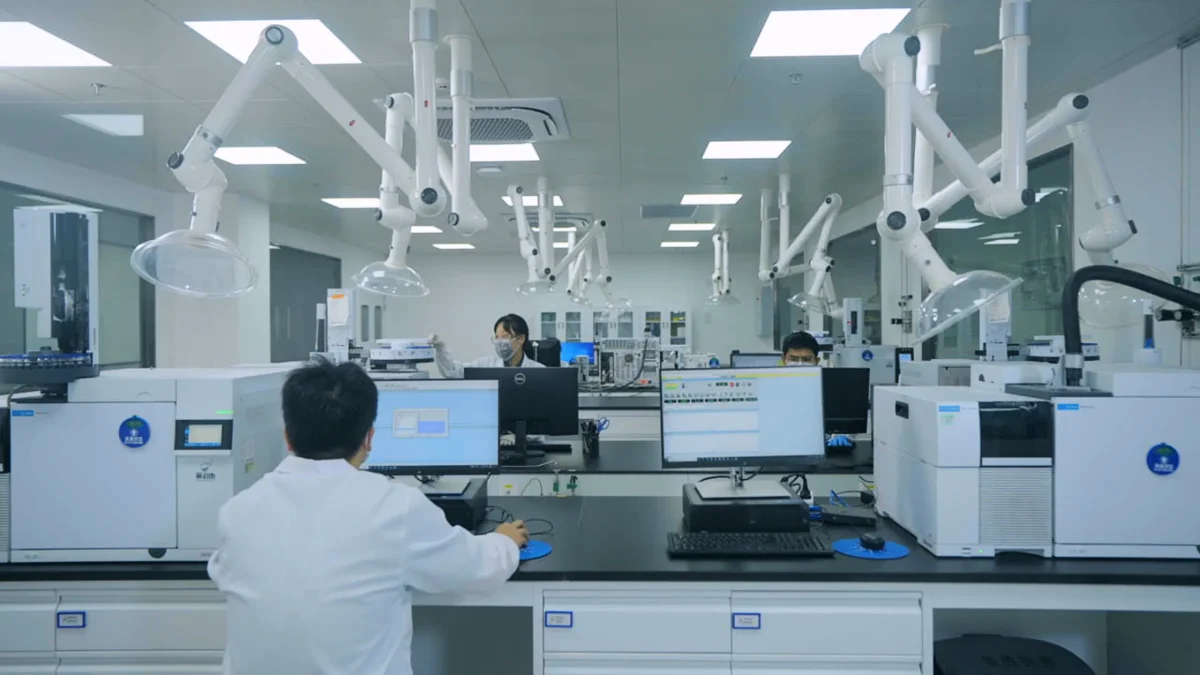
In manufacturing terms, deformulation analysis provides a technical view of the product’s chemical composition. It can help answer questions such as:
What ingredients are driving performance?
Why does one batch differ from another?
Which components may be causing separation, discoloration, viscosity change, or loss of stability?
Can a high-cost raw material be replaced?
How does a competitor’s formulation differ from your own?
A strong deformulation report does not stop at a chemical ingredient list. It connects analytical data to practical decisions in product development, quality control, sourcing, and reformulation.
Deformulation Analysis vs. Chemical Reverse Engineering
The terms are closely related, but they are not exactly the same.
Deformulation analysis focuses on determining what a product is made of. It identifies components, estimates concentrations, and explains the chemical composition of a finished product.
Chemical reverse engineering goes one step further. It uses deformulation data to understand formulation logic, ingredient interactions, performance drivers, and potential production pathways.
In real manufacturing projects, the two are often combined. Deformulation gives the data foundation, while reverse engineering turns that data into a practical roadmap for product matching, troubleshooting, optimization, or scale-up.
Why Manufacturers Use Deformulation?
Competitor Product Analysis
Manufacturers often use deformulation to understand why a competitor’s product performs better.
For example, a coating may have stronger adhesion, a cleaner may remove stains faster, or an additive may deliver better stability. Through competitor product analysis, we help identify whether the advantage comes from the resin system, surfactant package, solvent blend, filler selection, stabilizer, or additive ratio.
The goal is not blind copying. The goal is to understand the formulation strategy and build a better technical route.
Product Failure Investigation
Deformulation is also useful when a product fails during production, storage, shipping, or use.
Common issues include phase separation, precipitation, discoloration, viscosity change, gel formation, odor change, reduced adhesion, corrosion failure, poor cleaning power, or loss of stability.
Our laboratory often compares a failed sample with a normal control sample. By identifying chemical differences, we help determine whether the issue comes from raw material variation, contamination, incorrect ratios, additive incompatibility, oxidation, moisture, pH shift, or processing conditions.
Raw Material Replacement and Cost Reduction
When a raw material becomes expensive, unavailable, or difficult to import, deformulation can support raw material substitution and cost-down reformulation.
By identifying the functional chemistry and approximate dosage of a resin, solvent, surfactant, additive, or proprietary blend, manufacturers can screen alternative suppliers more efficiently.
The goal is not simply to find a cheaper ingredient. The goal is to reduce cost while maintaining performance, compatibility, stability, and manufacturability.
New Product Development and Reformulation
Deformulation can shorten early-stage R&D.
Instead of starting from zero, manufacturers can analyze market samples, legacy products, failed prototypes, or customer-submitted materials. This helps the team understand which ingredient systems are already working and where the formula can be improved.
It is especially useful for projects involving lower VOC content, better durability, improved storage stability, safer raw materials, or faster time to market.
Our 4-Step Deformulation Methodology
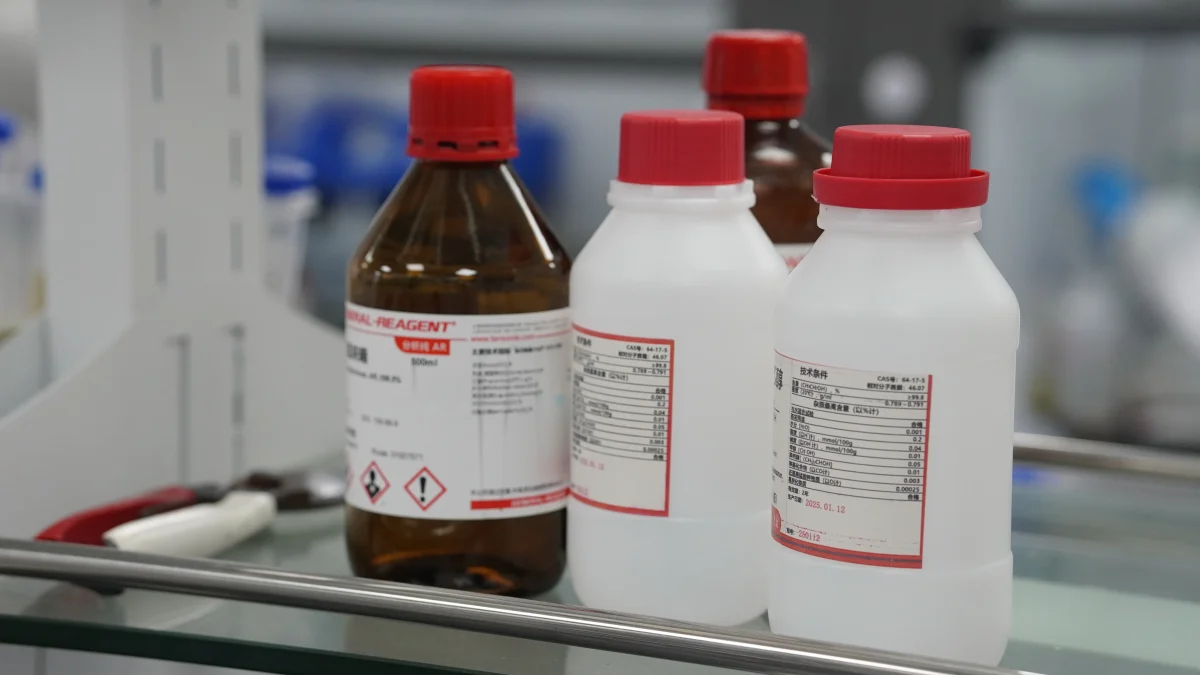
Reliable deformulation requires more than one instrument scan. Our laboratory uses a standardized four-step methodology refined through thousands of fine chemical and industrial product projects.
Step 1: Project Scoping
We start by clarifying the product type, sample condition, and business goal.
A cleaner, epoxy adhesive, coating film, powder additive, polymer composite, and water treatment chemical require different testing strategies. The method depends on whether the client needs ingredient identification, quantitative analysis, sample comparison, failure diagnosis, raw material replacement, or formula optimization.
Good scoping avoids unnecessary testing and makes the final report more useful.
Step 2: Sample Preparation
Complex formulations often contain multiple phases, including solvents, polymers, fillers, pigments, surfactants, trace additives, and impurities.
Before testing, we may use extraction, filtration, centrifugation, drying, digestion, distillation, or fraction separation. This helps isolate key components and reduce interference.
Proper sample preparation is critical. Without it, important ingredients may be missed or incorrectly measured.
Step 3: Multi-Instrument Analysis
No single test can fully analyze a complex formulation. We combine multiple techniques to build a more reliable composition profile.
FTIR identifies broad chemical classes such as polymers, resins, oils, surfactants, and fillers.
GC-MS detects volatile and semi-volatile compounds, including solvents, fragrance components, residual monomers, and certain additives.
LC-MS analyzes less volatile organic materials such as surfactants, stabilizers, preservatives, dyes, and higher-molecular-weight additives.
ICP-OES or ICP-MS detects metals, catalysts, inorganic additives, and trace contaminants.
XRD identifies crystalline inorganic materials such as mineral fillers, salts, and pigments.
TGA and DSC evaluate thermal behavior, filler loading, volatile content, and polymer transitions.
Together, these methods help reduce uncertainty and improve result reliability.
Step 4: Data Interpretation
Instrument data alone is not enough.
Our chemists integrate results from different techniques, estimate formulation ratios, identify likely raw material types, and explain each component’s function.
A useful deformulation report should answer practical questions: what was found, why it matters, and what the manufacturer should do next.
Depending on project scope, the report may include component identification, concentration estimates, sample comparison, contaminant findings, failure analysis, functional interpretation, and reformulation recommendations.
Why Work with Xinbodi Lab?
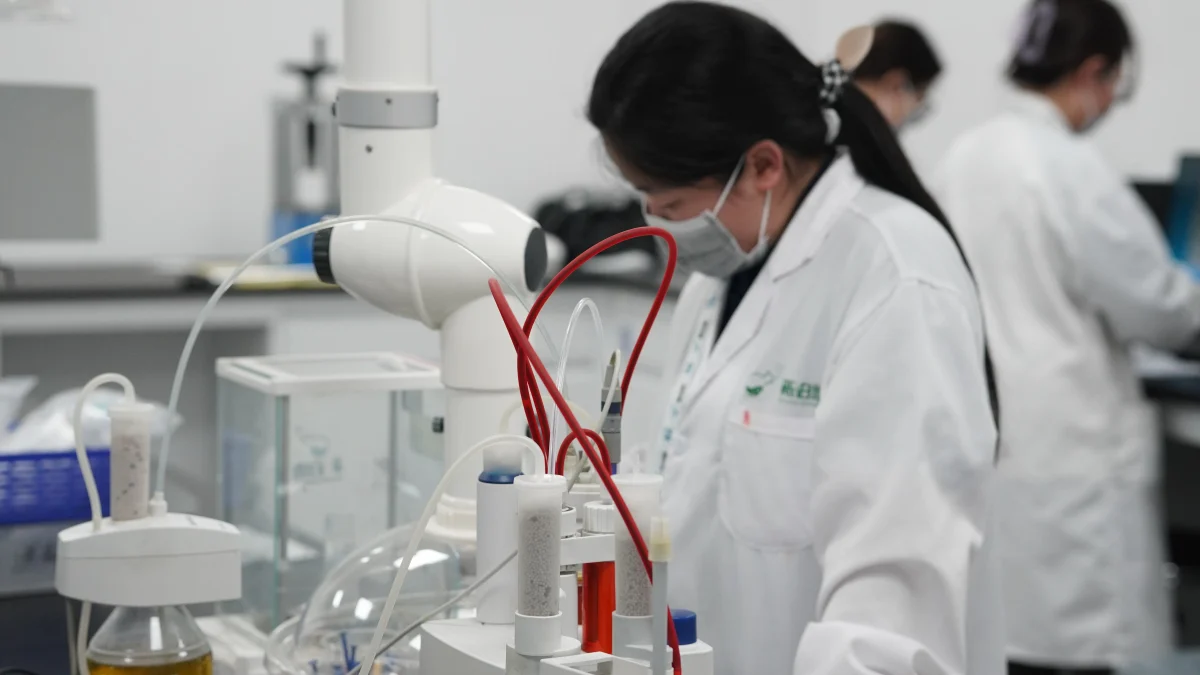
Xinbodi Lab helps manufacturers move beyond basic testing data. We provide chemical composition analysis, deformulation, failure analysis, impurity identification, material characterization, and formulation reconstruction for companies that need clear technical answers, faster development decisions, and practical R&D support.
For many standard projects, we can deliver results in about 7–10 working days after sample receipt, depending on sample complexity and testing scope. Clients receive a response within 24 hours, with technical director support available to help define project goals, select testing methods, and interpret results.
Our laboratory is backed by 4,000+m² of R&D space, 100+ precision instruments, and 60,000+ sample orders processed. For complex formulations and materials, we combine methods such as FTIR, Raman, GC-MS, LC-MS, HRMS, NMR, ICP-MS, ICP-OES, XRD, SEM/EDS, TGA, DSC, GPC, viscosity testing, and surface analysis to build a more complete understanding of the sample.
For manufacturers, our reports are designed for decision-making. A typical deliverable may include test methods, instrument conditions, raw data, spectra, graphs, micrographs, component interpretation, comparison results, conclusions, and next-step recommendations.
For suitable deformulation and formulation reconstruction projects, our internal experience shows reconstruction accuracy can exceed 90%, depending on sample type, formulation complexity, and validation needs. Our reports clearly distinguish confirmed findings, estimated composition, technical conclusions, and recommended next steps.
Based in Shanghai, Xinbodi is close to China’s chemical materials, manufacturing, and supplier ecosystem. This allows us to support overseas manufacturers with supplier sample comparison, China-based alternative material evaluation, raw material substitution, and sourcing-related technical decisions.
Your samples, formulations, supplier information, and IP-sensitive project data are handled under strict confidentiality throughout the testing, reporting, and follow-up support process.
If your team needs more than a basic ingredient list, Xinbodi Lab can provide a structured deformulation plan that connects chemical composition, formulation logic, performance risks, and manufacturing decisions.

FAQ
Can deformulation analysis identify every ingredient?
It can usually identify major components and many minor additives. Some trace materials, reactive ingredients, degraded compounds, or proprietary blends may require advanced testing or may only be estimated.
Can deformulation provide exact formulation ratios?
It can often provide approximate or semi-quantitative ratios. More precise results depend on the sample type, ingredient chemistry, and available reference standards.
Can deformulation exactly copy a competitor’s product?
Not always. It can reveal formulation architecture and key ingredients, but it may not fully recover proprietary processing details such as mixing sequence, temperature profile, curing conditions, or supplier-specific raw material differences.
When should I request deformulation analysis?
Request deformulation when you need to identify unknown ingredients, compare a competitor product, investigate failure, replace a raw material, reduce cost, improve performance, qualify a supplier, or develop a new formulation.