
Deformulation & Chemical Reverse Engineering Services
Xinbodi provides professional deformulation and reverse engineering services worldwide for chemical products, materials, and complex formulations.
Our deformulation laboratory uses advanced analytical techniques to identify ingredients, characterize formulations, and support formulation reverse engineering, competitor benchmarking, product improvement, and failure investigation.
Deformulation and Reverse Engineering Services
Deformulation and chemical reverse engineering is the analytical process of breaking down a formulated product into its individual components.
Using customized extractions and specialized instrumental techniques, we provide professional deformulation services for formulated products, helping manufacturers identify unknown ingredients, characterize complex product formulation compositions, and understand the structure of competitive products.
Deformulation and chemical reverse engineering turn analytical results into practical R&D guidance. Xinbodi helps clients understand competitor products, compare raw materials, investigate performance differences, reduce trial-and-error, and identify clearer formulation development directions.
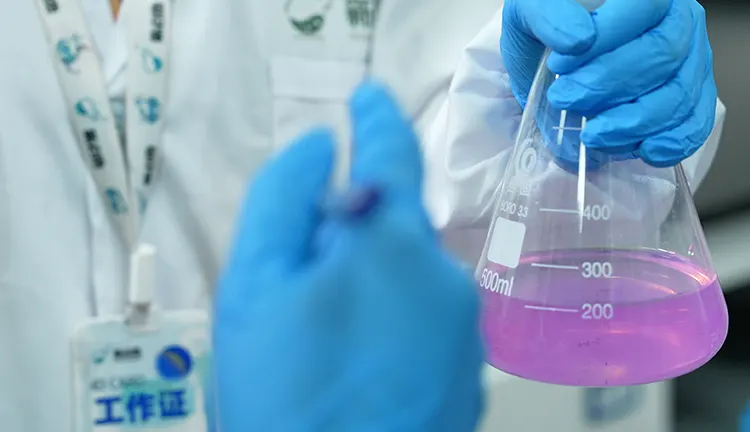
Applications of Deformulation and Chemical Reverse Engineering
Competitor Benchmarking & Product Development
Understand how competitor or reference products are formulated and why they perform differently. Comparative analysis can reveal differences in key ingredients, resin or solvent systems, additives, fillers, impurities, and component ratios.
Typical needs include:
- Competitor product characterization
- Formulation benchmarking
- Performance gap investigation
- New product development
- Product positioning and optimization
Raw Material Substitution & Supplier Comparison
Evaluate alternative suppliers, replacement materials, or discontinued raw materials using direct analytical comparison rather than relying only on datasheets.
Typical needs include:
- Supplier qualification
- Original vs. replacement material comparison
- Imported raw material substitution
- Cost-down reformulation
- Batch-to-batch variation
- Alternative sourcing and supply-chain risk reduction
Formulation Improvement & Performance Optimization
Identify which formulation components may be contributing to poor performance, instability, or processing issues, and provide analytical direction for targeted reformulation.
Typical needs include:
- Additive system optimization
- Stability improvement
- Adhesion, toughness, or compatibility improvement
- Cleaning or formulation performance issues
- Reducing trial-and-error in R&D
- Supporting formulation redevelopment
Failure Investigation & Quality Troubleshooting
Compare normal and abnormal samples to determine whether failures are linked to formulation differences, contamination, missing additives, raw-material changes, or unexpected impurities.
Typical needs include:
- “Good” vs. “bad” sample comparison
- Product consistency investigation
- Root cause analysis
- Defect reduction
- Impurity and contamination investigation
- Technical due diligence and supporting evidence
Products and Materials We Analyze Through Deformulation and Reverse Engineering
Xinbodi scientists have successfully deformulated a wide variety of chemical products and industrial materials, including:
- Pharmaceuticals: topicals, gels, creams, ointments, tablets
- Polymers & Plastics: PP, PE, PMMA, Nylon, PU, flexible/rigid PVC, copolymers & blends
- Specialty products: multilayer films, high-temperature engineered materials
- Coatings: paints, architectural coatings, finishes
- Adhesives & sealants: PSA, hot melt, waterborne; epoxy, PU, silicone
- Rubber products: NR, EPDM, TPE, Neoprene, SIS, SBS, NBR, EVA, PUR, silicone
- Medical devices and related materials
- Detergents & cleaners: consumer and industrial formulations
- Textiles: garments, upholstery applications
- Inks: printing, packaging, specialty inks
- Composites: glass/carbon filled, Kevlar reinforced, engineered composites
- Cosmetic & health products: cosmetics, skincare, beauty, disinfection products
Deformulation and Reverse Engineering Analytical Workflow
While each project is customized, deformulation often follows a structured approach:
- Goal definition: what you need to learn and how results will be used
- Screening & material family confirmation: rapid fingerprinting to guide the plan
- Targeted extraction/fractionation: separate organics/inorganics and additive fractions
- Component identification: confirm components with complementary techniques
- Quantitation: estimate or quantify key components where feasible
- Interpretation: link formulation differences to performance or failure modes
Industries Using Deformulation and Reverse Engineering Services

Chemicals
Agrochemicals, Industrial Chemicals, Dyes, Lubricants, Polymers, Plastics, Adhesives, Coatings, Rubber, Inks

Energy
Aerospace materials, Semiconductors, Oil & Gas, Minerals, Biofuels, Battery Materials

Food & Healthcare
Food, Medical Devices, Pharmaceutical

Cosmetics & Personal Care
Cosmetics Disinfection Products
Reports in 5–10 working days
24/7 Expert Support
Rush service may be available depending on scope.
Analytical Techniques for Deformulation and Reverse Engineering
Our deformulation and reverse engineering laboratory combines multiple analytical techniques according to sample characteristics and project goals.
Chromatography:
GC-MS, LC-MS, HPLC
Elemental Analysis:
ICP-MS, XRF
Microscopy and Material Characterization:
SEM, particle analysis
Method selection depends on what is known about the sample, target components, required detection limits, sample form (solid/liquid/multilayer), and whether destructive testing is allowed.
What You Receive
Deliverables are tailored to your project goal, whether for competitor benchmarking, formulation reconstruction, supplier comparison, product improvement, or failure investigation.
- Major and minor component identification with supporting analytical evidence
- Quantitative or semi-quantitative results where feasible
- Reconstructed formulation profile with key component ranges
- Comparison between samples (competitor vs. internal, good vs. bad, supplier A vs. B)
- Technical interpretation of formulation structure and the likely role of key ingredients
- Clear distinction between confirmed, measured, estimated, and inferred results
- Potential raw material or supplier alternatives
- Known analytical limitations and areas requiring further validation
- Practical recommendations for next-step testing, formulation trials, or product development
A useful deformulation and reverse engineering report should not only list ingredients. It should explain what the analytical results mean and how they can support practical R&D and formulation decisions.
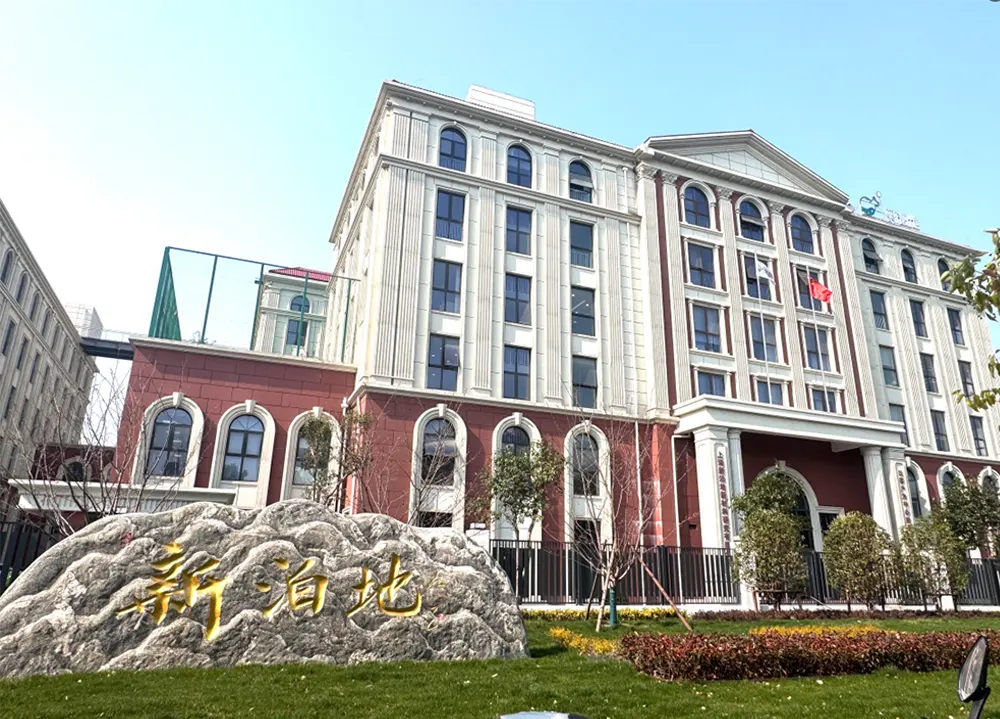
Why Choose Xinbodi Laboratories
7×24 Customer Support
Fast technical response within 24 hours.
Fast 7–10 Day Delivery
Efficient project turnaround after sample receipt.
Advanced Lab Capacity
4,000+ m² R&D labs and 1000+ precision instruments.
Cost-Efficient Analytical Services
Comparable analytical capabilities at typically 50–60% of U.S. and European laboratory pricing for similar project scopes.
100+ Master’s- and PhD-Level Experts
Extensive experience in solving complex material challenges.
90%+ Reconstruction Accuracy
Reliable support for suitable deformulation cases.
Practical R&D Support
Actionable solutions and production guidance with protected formulas and sample data.
China Supplier Comparison
Evaluate materials and sourcing alternatives.
FAQs
What is the difference between deformulation and chemical reverse engineering?
Deformulation focuses on separating, identifying and, where feasible, quantifying the components of a formulated product. Chemical reverse engineering uses these analytical results to understand how the formulation is built and to support formulation reconstruction, competitor benchmarking or product improvement.
At Xinbodi, deformulation and reverse engineering are integrated into the same analytical service to support formulation reconstruction, product development, and R&D.
Can a deformulation service identify every ingredient in a product?
Not always. Major ingredients and many minor components can often be identified, while trace additives, proprietary mixtures or very low-level components may require additional targeted analysis.
Xinbodi combines multiple analytical techniques and has access to more than 1,000 analytical instruments, allowing complex formulations to be investigated from different chemical, thermal and structural perspectives.
Can chemical reverse engineering determine the exact formula of a product?
In many suitable projects, chemical reverse engineering can reveal the major formulation structure and quantify key components with a high degree of accuracy.
Xinbodi’s formulation reconstruction rate can exceed 90% for technically suitable samples. However, an exact 1:1 formula cannot always be guaranteed, especially when trace additives, proprietary raw materials or complex reaction products are involved.
What is the difference between composition analysis and deformulation?
Composition analysis is generally used to identify what materials or chemical components are present in a sample.
Deformulation analysis goes further by separating complex formulation fractions, identifying key ingredients, estimating or quantifying their levels, and interpreting how the components work together.
For clients seeking formulation reconstruction, competitor benchmarking or product redevelopment, deformulation is usually the more appropriate approach.
Can you reverse engineer a competitor’s product?
Yes. Chemical reverse engineering services are commonly used for competitor benchmarking, formulation comparison and product development.
Xinbodi has supported more than 10,000 clients worldwide with formulation analysis and reverse engineering projects across chemicals, polymers, coatings, cleaners, cosmetics, lubricants and other formulated products.
Can deformulation help compare suppliers or different production batches?
Yes. Deformulation and comparative analysis can be used to investigate differences between:
- Supplier A and Supplier B
- original and replacement materials
- normal and abnormal batches
- your product and a competitor product
The analysis can help identify changes in ingredient type, concentration, impurities, additive systems or formulation balance.
How much sample is required for deformulation or reverse engineering?
Sample requirements depend on the product type, formulation complexity and analytical methods required.
As a general guideline, about 100mL for liquid samples or about 10g for solid samples is often sufficient for many projects.
For complex, limited or unusual samples, please contact Xinbodi’s engineers before shipment so we can confirm the recommended sample quantity.
Can international clients send samples to Xinbodi for reverse engineering?
Yes. Xinbodi accepts samples from clients worldwide for deformulation and chemical reverse engineering analysis.
We have supported more than 10,000 clients globally, and international clients can contact our technical team before shipping to confirm sample quantity, packaging requirements and the recommended analytical plan.
Is my sample and formulation information confidential?
Yes. All samples, formulation information, test data, and project details are handled confidentially. Xinbodi can sign a Non-Disclosure Agreement (NDA) with clients before the project starts to protect proprietary formulations and sensitive R&D information.
What information should I provide when requesting a deformulation service?
To help us design an efficient analytical plan, please provide as much of the following information as possible:
- sample type and application
- available sample quantity
- known formulation information
- your main technical objective
- whether a reference or competitor sample is available
- specific ingredients or differences you want to investigate
With extensive reverse engineering experience, a large-scale laboratory platform and more than 1,000 analytical instruments, Xinbodi can then recommend a targeted deformulation strategy based on your sample and project goals.