
What Is Chemical Analysis Service?
Chemical analysis services use advanced scientific techniques to identify, characterize, and quantify the components and properties of substances, help manufacturers understand exactly what is inside a material, product, residue, contaminant, or unknown sample.
In industrial manufacturing, problems rarely come with clear answers. A coating suddenly loses adhesion. A cleaning agent performs differently from previous batches. A competitor launches a product with significantly better performance. A raw material supplier changes formulation without notice.
In each of these situations, the key question is the same:
What has changed at the chemical level?
Chemical analysis provides the data needed to answer that question.
Why Choose Xinbodi Lab to provide chemical analysis service?
Extensive Industry Service Experience
Xinbodi Lab has provided chemical composition analysis, formula analysis, failure investigation and reverse engineering services for more than 20,000 companies worldwide. Through decades of project experience, we have built a proprietary database containing over 5 million raw material spectra and analytical reference records, enabling faster and more accurate component identification and comparative analysis.
Multi-Technique Analysis Strategy
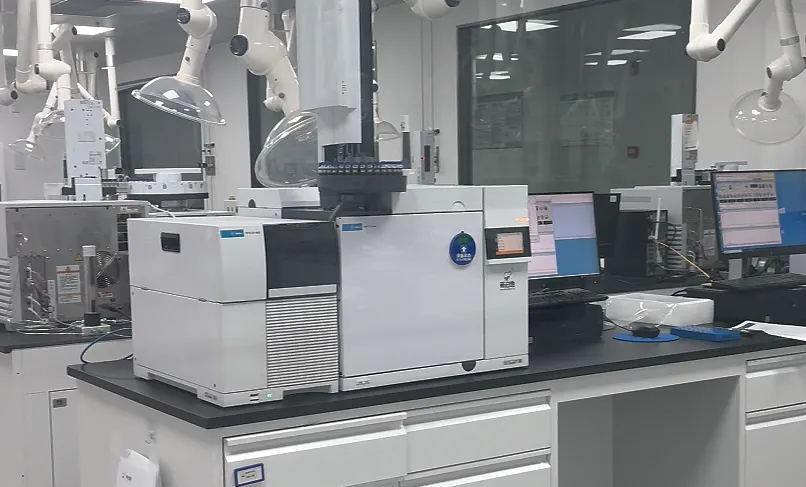
Our laboratory operates 100+ advanced analytical instruments, including FTIR, GC-MS, Py-GC-MS, XRF, DSC, TGA, ICP, IC, NMR, and GPC. By integrating multiple analytical techniques, we can effectively characterize complex formulations containing polymers, additives, fillers, surfactants, solvents, and trace ingredients.
For formulation analysis and reverse engineering projects, Xinbodi Lab achieves an average reconstruction accuracy of over 90%, helping manufacturers understand competitor products, identify alternative raw materials, troubleshoot quality issues, and accelerate product development.
Fast Technical Response and R&D recommendations
We provide technical director support and a dedicated project communication team. Also provide a response within 24 hours, confidential project handling, and results for many projects in about 7–10 working days after sample receipt.
Beyond testing, We help translate test data into formulation improvement, failure diagnosis, process direction, and next-step validation. we provide suggested product manufacturing process direction to support small-scale validation, production adjustment, or further product development.
China Supply Chain Advantage
Located in Shanghai, Xinbodi Lab helps global clients evaluate suppliers, identify China-based alternative raw materials, benchmark competitor products, make informed sourcing decisions and support localization projects within China’s manufacturing ecosystem.
Why Manufacturers Request Chemical Analysis
Product Failure Investigation
When a product cracks, discolors, corrodes, separates, loses viscosity, develops odor, or fails performance testing, the root cause is often hidden within the material itself.
Chemical analysis helps identify:
- Contamination
- Raw material variation
- Additive degradation
- Incorrect formulations
- Processing-related chemical changes
Understanding these factors can significantly reduce troubleshooting time and prevent recurring failures.
Competitor Product Analysis
Many manufacturers analyze competitor products to understand why they perform differently.
A complete analysis may reveal:
- Polymer systems
- Functional additives
- Filler packages
- Active ingredients
- Fragrance systems
- Surface treatment technologies
This information provides valuable insight for benchmarking and product development.
Supplier Verification
Materials supplied by different vendors may appear identical but contain significant formulation differences.
Chemical analysis can verify whether a supplied material matches historical specifications and identify hidden variations that may affect quality or performance.
Product Development and Formula Optimization
Chemical analysis is frequently used during R&D projects to evaluate existing formulations, improve performance, identify alternative ingredients, and reduce manufacturing costs.
Why Accurate Chemical Analysis Requires More Than One Test
One of the most common misconceptions is that a single analytical technique can fully identify an unknown material.
In reality, industrial products are often complex mixtures containing polymers, surfactants, additives, solvents, fillers, pigments, preservatives, inorganic salts, and trace functional ingredients.
No single instrument can reveal all of this information.
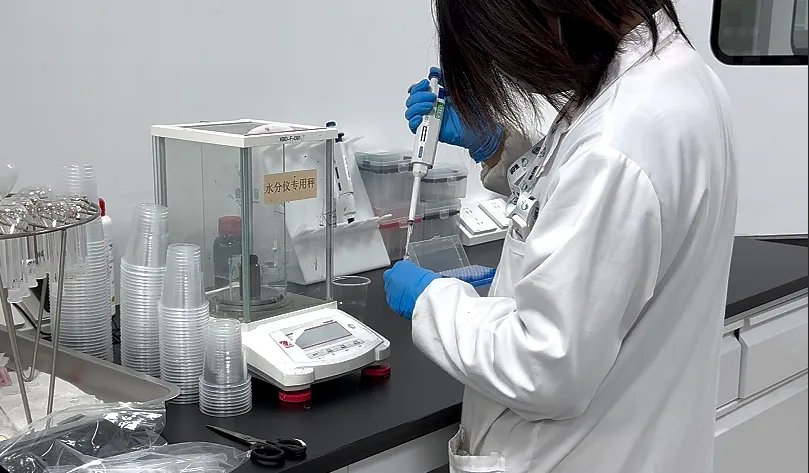
Professional chemical analysis typically combines multiple analytical techniques, each providing a different piece of the puzzle.
For example:
- FTIR may identify the polymer family.
- GC-MS may reveal volatile compounds and additives.
- LC-MS may identify non-volatile organic ingredients.
- ICP may determine elemental composition.
- IC may quantify inorganic ions.
- Thermal analysis may reveal filler content and material stability.
Only by integrating results from multiple techniques can analysts build a reliable understanding of the formulation.
What Can Chemical Analysis Identify?
Depending on the sample and project objectives, chemical analysis can identify:
Organic Components
- Solvents
- Plasticizers
- Surfactants
- Preservatives
- Fragrance ingredients
- Active ingredients
- Organic additives
Polymer Materials
- Polyethylene (PE)
- Polypropylene (PP)
- Polyurethane (PU)
- Epoxy resins
- Acrylic polymers
- Silicone materials
- Engineering plastics
Inorganic Components
- Mineral fillers
- Pigments
- Metal oxides
- Salts
- Functional inorganic additives
Trace Components and Contaminants
In many investigations, identifying a minor impurity can be more important than identifying the major ingredients.
Trace contamination is often responsible for:
- Product discoloration
- Odor generation
- Premature degradation
- Process instability
- Regulatory compliance issues
How Xinbodi Lab Performs Chemical Analysis
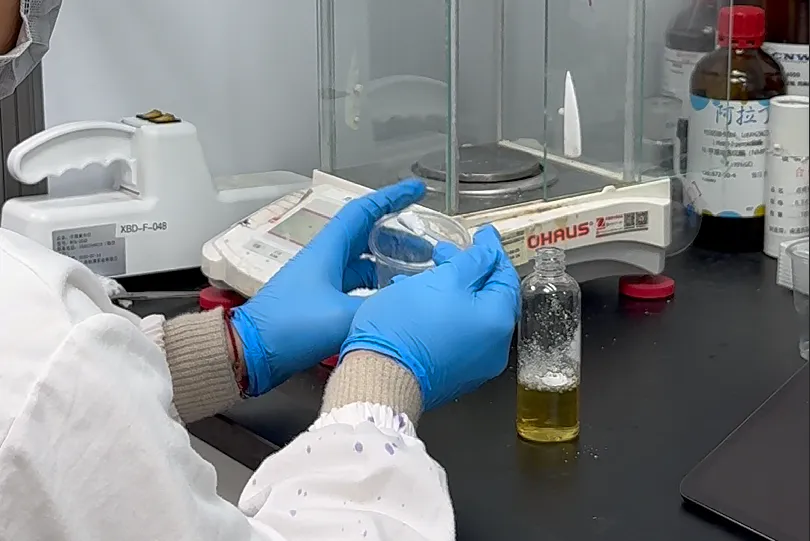
Step 1: Sample Evaluation
Analysts first evaluate:
- Appearance
- Physical state
- Color
- Odor
- Solubility
- Processing characteristics
These observations often provide valuable clues about material composition.
Step 2: Preliminary Material Identification
Rapid screening techniques such as FTIR, XRF, and thermal analysis are used to establish the overall material framework.
At this stage, analysts may determine whether a sample contains polymers, silicones, surfactants, inorganic fillers, metallic components, or other major constituents.
Step 3: Targeted Chemical Characterization
Additional techniques are selected according to the sample type.
Typical methods include:
- GC-MS
- LC-MS
- ICP-OES / ICP-MS
- IC
- SEM-EDS
- XRD
- NMR
- GPC
- DSC
- TGA
Each technique contributes different information regarding composition, structure, concentration, molecular weight, crystallinity, thermal behavior, or elemental distribution.
Step 4: Data Interpretation and Formulation Reconstruction
Generating spectra is only part of the process.
The most important step is interpreting the data and understanding how individual components function within the product.
Experienced analysts combine instrument results, chemical knowledge, and industry experience to determine likely formulation strategies and explain how composition affects product performance.
Industries We Support
- Adhesives and sealants
- Cleaning chemicals
- Metalworking fluids
- Coatings and paints
- Agricultural chemicals
- Plastic materials
- Rubber products
- Composite materials
- Electronic chemicals
- Specialty additives
- Advanced materials
Our laboratory has completed more than 60,000 sample analysis projects covering a wide range of industrial products and chemical systems.
Frequently Asked Questions
Can chemical analysis identify an unknown material?
In most cases, yes. By combining multiple analytical techniques, laboratories can usually determine the material type, major components, and many functional ingredients present in an unknown sample.
How long does chemical analysis take?
Project duration depends on sample complexity and testing scope. Many projects can be completed within 7–10 working days after sample receipt.
How much do chemical analysis services cost?
Pricing depends on the sample type, project objectives, analytical methods required, and overall technical complexity.
Contact Xinbodi Lab with your sample information, and our technical team will provide a customized quotation within 24 hours.
Can chemical analysis support product development?
Yes. Chemical analysis is widely used for competitor benchmarking, formula optimization, raw material substitution, supplier verification, quality improvement, and new product development.